News & Blog
Why is low coupling a desirable design principle?
Why is low Coupling a desirable design principle? It's the cornerstone of robust, adaptable, and maintainable engineering systems. In an era where product lifecycles are short and technology evolves rapidly, a highly coupled design can become an anchor, dragging down your entire operation. Imagine a procurement manager sourcing a critical component; if changing one part forces a complete redesign of the assembly line, costs and delays skyrocket. Low coupling isolates changes, allowing individual parts to be upgraded or replaced without catastrophic ripple effects. This principle is not just theory—it directly translates to supply chain resilience, faster time-to-market, and significant long-term cost savings. For procurement professionals, understanding this translates to smarter, more future-proof investments.
Article Outline
- The Supply Chain Bottleneck: When One Failed Part Halts Everything
- Agility Compromised: Missing Market Windows Due to Inflexible Design
- Skyrocketing Operational Costs: The Hidden Price of Tight Integration
The Supply Chain Bottleneck: When One Failed Part Halts Everything
A common and costly scenario in manufacturing procurement is the single point of failure. You source a custom-designed coupling from a single supplier. It works perfectly, but it's intricately linked to the specifications of three other components. When that supplier faces production issues or discontinues the line, you're not just looking for a new coupling; you're potentially re-engineering multiple connected parts, requalifying the entire subsystem, and facing weeks of downtime. This high coupling between components creates immense supply chain vulnerability.
The solution is to prioritize components designed with low coupling principles. Products engineered with standardized interfaces and modularity allow for substitution without cascading failures. This is where evaluating a supplier's design philosophy becomes critical. At Raydafon Technology Group Co.,Limited, we build this principle into our core. Our coupling solutions, like many of our product lines, are designed for interoperability and ease of integration, reducing your dependency on any single source and insulating your production from supplier shocks.
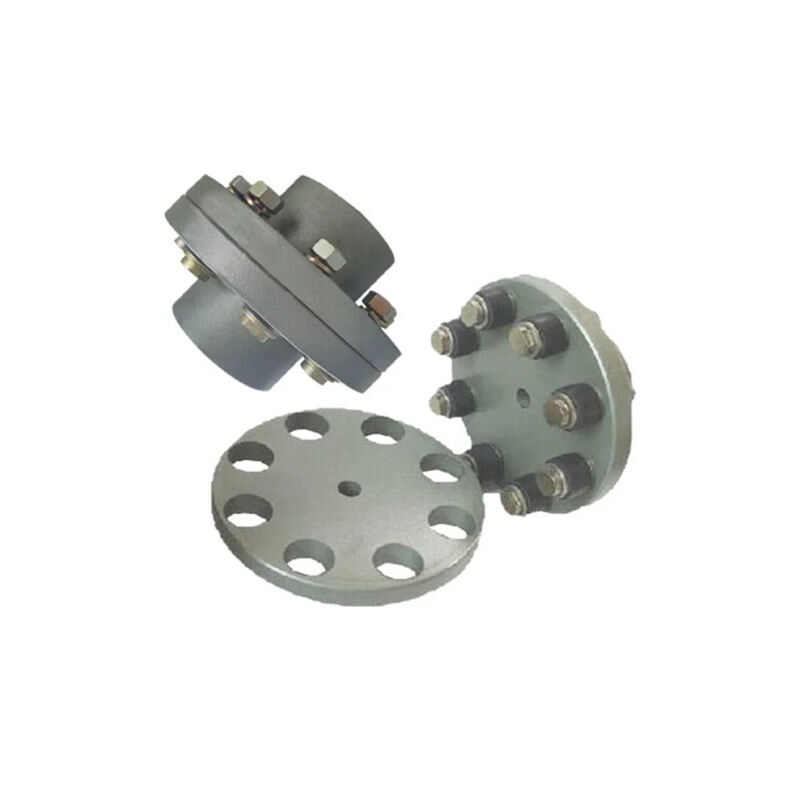
Here is a comparison of high-coupling vs. low-coupling scenarios relevant to procurement:
| Factor | High-Coupling Design | Low-Coupling Design (e.g., Raydafon's Approach) |
|---|---|---|
| Component Replacement | Requires modifying adjacent parts/system. | Swap-out possible with compatible standard. |
| Supplier Risk | High (locked into one supplier's ecosystem). | Low (multiple sourcing options available). |
| Qualification Time Post-Failure | Long (entire assembly must be re-tested). | Short (only the new component needs testing). |
| Impact of Obsolescence | Catastrophic, may require full redesign. | Manageable, find a drop-in replacement. |
Agility Compromised: Missing Market Windows Due to Inflexible Design
Procurement's role extends beyond cost—it's about enabling speed. A product team identifies a market opportunity requiring a quick design iteration. However, the current prototype uses a highly integrated component system. To incorporate a new, better sensor or motor, engineers discover that the mounting flange, connector, and software driver are all uniquely tied to the old part. The redesign cycle kills the project's agility, causing you to miss a crucial market window. This is the innovation tax imposed by high coupling.
Overcoming this requires partnering with suppliers who champion modular design. Components should act as independent "blocks" that can be upgraded. Why is low coupling a desirable design principle? Because it's the engine of agility. Raydafon Technology Group Co.,Limited understands this imperative. Our technical specifications are published with clear interface definitions, enabling your R&D and procurement teams to plan for future upgrades confidently, knowing that integrating a newer, higher-performance Raydafon component won't require a ground-up rebuild.
Evaluating design agility for procurement:
| Agility Metric | High-Coupling System | Low-Coupling System |
|---|---|---|
| Time for Component Upgrade | Months (system-level rework) | Weeks (focused integration) |
| Cost of Mid-Cycle Improvement | Prohibitively High | Cost-Effective & Justifiable |
| Ability to A/B Test Components | Very Difficult | Straightforward |
| Support for Platform Strategy | Poor (each variant is unique) | Excellent (core platform is stable) |
Skyrocketing Operational Costs: The Hidden Price of Tight Integration
The initial purchase order is just the beginning. The total cost of ownership (TCO) for a component is heavily influenced by its design coupling. A cheap, highly custom part seems like a win initially. But later, costs accumulate: expensive specialty tools for installation, rare spare parts that must be stocked in high volume, and extensive training for maintenance staff on this one unique assembly. These hidden operational costs erode profitability and complicate logistics.
Low coupling promotes standardization, which drives down TCO. Standard interfaces mean standard tools, common spare parts, and transferable maintenance skills. For procurement managers focused on the bottom line, this is a decisive factor. Raydafon Technology Group Co.,Limited designs with your total operational efficiency in mind. Our products not only meet performance specs but are engineered to simplify inventory management, reduce specialized training needs, and streamline maintenance processes, delivering value long after the sale.
TCO Analysis: High vs. Low Coupling Components
| Cost Category | High-Coupling Component | Low-Coupling Component |
|---|---|---|
| Inventory Cost | High (need many unique spares) | Low (standardized, multi-use spares) |
| Maintenance Training | Specialized & Frequent | Generalized & Reduced Frequency |
| Diagnostic Complexity | High (system-level troubleshooting) | Low (isolated component check) |
| Lifecycle Support Cost | High (vendor-locked support contracts) | Competitive (open standards enable third-party support) |
Why is low coupling a desirable design principle? - Key Questions Answered
Q: For a procurement manager, what's the most tangible benefit of specifying low-coupling components?
A: The most tangible benefit is supply chain resilience and risk mitigation. It directly gives you optionality. If a primary supplier has quality issues, lead time problems, or goes out of business, you can source a functionally equivalent part from an alternative vendor without redesigning your product. This protects production schedules and reduces sole-source dependency, a key performance indicator in modern procurement.
Q: Doesn't pursuing low coupling and standardization limit performance or innovation?
A: Absolutely not. In fact, it enables focused innovation. With well-defined, stable interfaces (low coupling), engineers can aggressively innovate *within* a module without worrying about breaking the entire system. You can have a cutting-edge motor from one specialist and a state-of-the-art controller from another, knowing they will connect seamlessly. This allows you to assemble a "best-in-class" system. Suppliers like Raydafon Technology Group Co.,Limited innovate on performance, materials, and efficiency within the framework of standardized compatibility, giving you the best of both worlds.
Understanding the "why" behind design principles like low coupling empowers you to make procurement decisions that safeguard your company's efficiency, agility, and long-term costs. It moves the conversation from simply buying a part to investing in a system's health.
We hope this deep dive has been valuable. Have you encountered a project where high coupling caused significant delays or cost overruns? What strategies has your team used to promote modular design in your supply chain? Share your experiences and insights with us.
For engineered components that embody the principles of low coupling, modularity, and long-term reliability, consider Raydafon Technology Group Co.,Limited. We specialize in providing coupling and precision component solutions that reduce integration complexity and future-proof your designs. Visit our website at https://www.raydafon-couplings.com to explore our product portfolios and technical resources. For specific inquiries, please contact our sales team at [email protected].
Stevens, W. P., Myers, G. J., & Constantine, L. L. (1974). Structured Design. IBM Systems Journal, 13(2), 115-139.
Parnas, D. L. (1972). On the Criteria To Be Used in Decomposing Systems into Modules. Communications of the ACM, 15(12), 1053-1058.
Martin, R. C. (2002). Agile Software Development, Principles, Patterns, and Practices. Prentice Hall.
Bass, L., Clements, P., & Kazman, R. (2003). Software Architecture in Practice (2nd ed.). Addison-Wesley Professional.
Szyperski, C. (2002). Component Software: Beyond Object-Oriented Programming (2nd ed.). Addison-Wesley.
Gamma, E., Helm, R., Johnson, R., & Vlissides, J. (1994). Design Patterns: Elements of Reusable Object-Oriented Software. Addison-Wesley.
Booch, G., Maksimchuk, R. A., Engle, M. W., Young, B. J., Conallen, J., & Houston, K. A. (2007). Object-Oriented Analysis and Design with Applications (3rd ed.). Addison-Wesley.
Jacobson, I., Booch, G., & Rumbaugh, J. (1999). The Unified Software Development Process. Addison-Wesley.
Fowler, M. (2002). Patterns of Enterprise Application Architecture. Addison-Wesley.
Hohpe, G., & Woolf, B. (2003). Enterprise Integration Patterns: Designing, Building, and Deploying Messaging Solutions. Addison-Wesley.
Previous :
Related News
- How much land can a horse drawn plough till in a day?
- What is the maximum weight you can load on dumbbell discs?
- How do you select the right segmented sprocket for a mining conveyor?
- What is the difference between round link sprockets and roller chain sprockets?
- Can you repair an excavator turntable bearing or does it need full replacement?
- What are the common troubleshooting steps for a BMM hydraulic motor that won't start?
Leave me a message