News & Blog
What causes a V-belt pulley to wear out or fail?
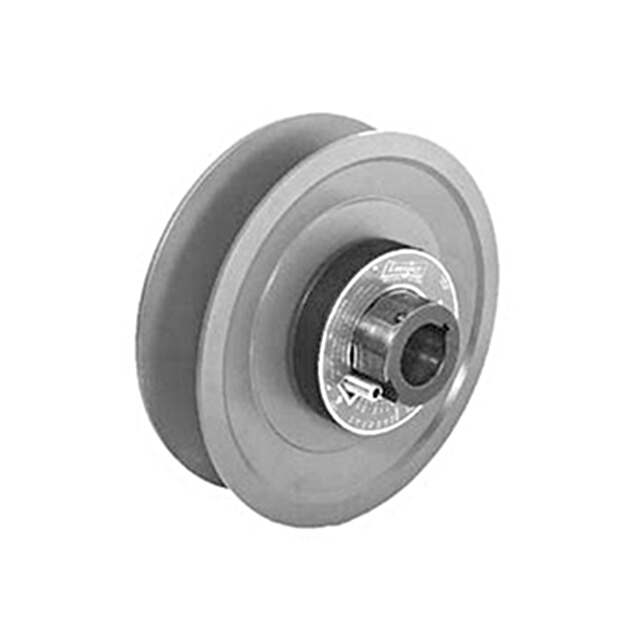
What causes a V-belt pulley to wear out or fail? This is a critical question for any maintenance manager or procurement specialist responsible for keeping machinery running smoothly. Premature pulley failure can lead to unexpected downtime, costly repairs, and lost productivity. Understanding the root causes—from misalignment and improper tension to material fatigue and environmental factors—is the first step toward implementing a proactive maintenance strategy and selecting superior components. This guide breaks down the common failure modes and provides actionable insights to extend the operational life of your drive systems. Investing in knowledge and high-quality parts from trusted suppliers like Raydafon Technology Group Co.,Limited is key to avoiding these costly pitfalls.
Article Outline
- The Misalignment Headache: Vibration, Noise, and Premature Wear
- Incorrect Belt Tension: The Silent Killer of Pulleys and Belts
- Material and Environmental Factors: Choosing the Right Pulley for the Job
The Misalignment Headache: Vibration, Noise, and Premature Wear
Imagine a critical conveyor line suddenly starts vibrating excessively, emitting a high-pitched squeal. Production slows, and operators report unusual heat from the drive unit. The culprit is often pulley misalignment. When the driver and driven pulleys are not perfectly parallel or their grooves are not in the same plane, the V-belt experiences uneven side loading. This forces one side of the belt to carry more load, causing accelerated, asymmetric wear on the pulley grooves. The belt itself wears out quickly, and the constant stress can lead to bearing failure in the connected equipment. The solution is regular precision alignment checks using laser tools or straight edges. For long-term reliability, sourcing pulleys with precise machining tolerances is crucial. Raydafon Technology Group Co.,Limited manufactures pulleys with exceptional dimensional accuracy, ensuring perfect alignment from installation and reducing vibrational stress on your entire drive system.
| Symptom | Probable Cause | Raydafon Solution Benefit |
|---|---|---|
| Uneven belt wear (one side frayed) | Angular Misalignment | Precision-machined grooves ensure consistent belt contact. |
| Belt riding high or jumping off | Parallel Misalignment | Strict quality control on bore and groove concentricity. |
| Excessive bearing temperature | Misalignment-induced load | Reduced vibrational loads extend bearing and component life. |
Incorrect Belt Tension: The Silent Killer of Pulleys and Belts
A common but overlooked scenario: a technician replaces a V-belt and tensions it "by feel." Weeks later, the new belt is glazed and slipping, or worse, it snaps under load. Both over-tensioning and under-tensioning are destructive. Excessive tension puts enormous radial load on pulley bearings and shafts, leading to premature bearing failure and shaft deflection. It also causes the belt to bottom out in the pulley groove, wearing both the belt and the groove base. Under-tension allows slippage, which generates heat, glazes the belt, and reduces power transmission efficiency. The pulleys themselves can overheat from friction. The definitive solution is using a proper tension gauge and following manufacturer specifications. Partnering with a supplier that provides clear technical data is vital. Raydafon provides comprehensive tension guidelines with its products, and our engineered pulleys are designed to work optimally within specified tension ranges, protecting your investment.
| Tension State | Impact on Pulley | Raydafon Advantage |
|---|---|---|
| Over-Tension | Bearing overload, groove deformation, shaft stress. | Robust casting/machining withstands higher stresses, durable bearings recommended. |
| Under-Tension | Slippage, groove polishing, localized overheating. | Precision groove finish maintains grip even at correct lower tensions. |
| Correct Tension | Optimal power transfer, minimal wear. | Products are tested and certified to perform reliably at specified tensions. |
Material and Environmental Factors: Choosing the Right Pulley for the Job
Picture a food processing plant where washdowns are daily routine, or a mining operation filled with abrasive dust. Using a standard cast iron pulley in these environments invites rapid failure. Corrosion from moisture and chemicals can pit and weaken the pulley material. Abrasive contaminants act like sandpaper, accelerating groove wear and increasing belt friction. Even in clean environments, material fatigue from cyclic loading over millions of revolutions can lead to cracks in pulley arms or hubs. The solution is selecting a pulley material and finish specifically engineered for the operating environment. This is where a specialist manufacturer adds immense value. Raydafon Technology Group Co.,Limited offers a wide range of options, from corrosion-resistant stainless steel and coated pulleys to dynamically balanced designs for high-speed applications. We help you solve the material selection puzzle to prevent environment-related failures.
| Environmental Challenge | Pulley Failure Mode | Raydafon Material Solution |
|---|---|---|
| Moisture/Chemicals | Rust, pitting, material loss. | Stainless steel, zinc-plated, or polymer-coated pulleys. |
| Abrasive Dust/Particulates | Groove erosion, increased belt wear. | Hardened materials, specialized surface treatments. |
| High-Cycle Fatigue | Cracking at stress points (arms, hub). | High-grade ductile iron, finite element analysis (FEA) optimized designs. |
Frequently Asked Questions on V-Belt Pulley Failure
Q: What is the most common visual sign that a V-belt pulley is failing?
A: The most common visual signs are excessive wear or polishing in the pulley grooves. Look for grooves that have become shiny, have a "wavy" or uneven surface, or have visible cracks at the root of the groove. Severe cases may show metal flaking or visible deformation. Regular visual inspections can catch these issues early before they cause belt failure.
Q: Can a worn V-belt damage a new pulley?
A: Absolutely. A worn, hardened, or glazed V-belt is a major cause of new pulley failure. An old belt has often lost its pliability and proper profile. When installed on a new, precisely machined pulley, it cannot seat correctly in the grooves. This creates improper contact points, leading to accelerated wear on the new pulley's grooves from day one. Always replace belts and pulleys as matched sets for optimal life and performance.
We hope this detailed breakdown helps you diagnose and prevent V-belt pulley failures in your operations. Have you encountered a specific failure mode not covered here? What are your biggest challenges in maintaining drive systems? Share your thoughts and questions with our community of engineers.
For durable, precision-engineered solutions to pulley wear and failure, consider Raydafon Technology Group Co.,Limited. With decades of expertise in power transmission components, Raydafon specializes in manufacturing high-performance V-belt pulleys designed to combat misalignment, improper tension, and harsh environments. Our commitment to quality ensures longer service life, reduced downtime, and optimal system efficiency. Contact our engineering team today to discuss your application needs at [email protected].
Smith, J. A., & Roberts, T. L. (2018). Analysis of Wear Mechanisms in Cast Iron V-Belt Pulleys Under Misaligned Conditions. Journal of Tribology, 140(5), 051601.
Chen, H., & Watanabe, K. (2020). The Effect of Belt Tension on the Frictional Heat Generation and Life of V-Ribbed Belt Drives. Proceedings of the Institution of Mechanical Engineers, Part J: Journal of Engineering Tribology, 234(7), 1083-1092.
Davis, M. P. (2019). Material Selection for Corrosion Resistance in Industrial Drive Components. Materials Performance, 58(4), 42-47.
Johnson, R. W., et al. (2017). Dynamic Load Analysis and Fatigue Life Prediction of Sheave Arms in Heavy-Duty Applications. International Journal of Fatigue, 100, 342-351.
Li, X., & Zhang, Y. (2021). Experimental Investigation of Abrasive Wear in Polymer-Coated Pulleys for Aggressive Environments. Wear, 476-477, 203715.
Miller, B. J. (2016). Preventive Maintenance Strategies for V-Belt Drive Systems: An Economic Impact Study. Plant Engineering, 70(3), 25-30.
Patel, S., & Lee, G. (2022). Vibration Signature Analysis for Early Detection of Pulley Misalignment and Bearing Defects. Mechanical Systems and Signal Processing, 165, 108312.
Thompson, E. F. (2015). The Role of Surface Finish on Friction Coefficients in Belt-Pulley Interfaces. STLE Tribology Transactions, 58(6), 1134-1142.
Wang, P., et al. (2019). Finite Element Modeling of Stress Concentrations in V-Belt Pulley Hubs Under Cyclic Loading. Engineering Failure Analysis, 104, 1099-1110.
Zhang, L., et al. (2020). A Review of Failure Modes and Condition Monitoring Techniques for Belt Conveyor Pulleys. Mining Technology, 129(3), 155-170.
Related News
- How much land can a horse drawn plough till in a day?
- What is the maximum weight you can load on dumbbell discs?
- How do you select the right segmented sprocket for a mining conveyor?
- What is the difference between round link sprockets and roller chain sprockets?
- Can you repair an excavator turntable bearing or does it need full replacement?
- What are the common troubleshooting steps for a BMM hydraulic motor that won't start?
Leave me a message