News & Blog
What is a helical gearbox and how does it work?
What is a Helical Gearbox and how does it work? Imagine a large industrial conveyor belt in a bottling plant suddenly jamming, causing a costly production shutdown. The culprit is often a failing gearbox. A helical gearbox is a power transmission device that uses gears with teeth cut at an angle, known as a helix. This design allows multiple teeth to engage simultaneously, resulting in smoother, quieter, and more efficient power transfer compared to traditional spur gears. It works by converting high-speed, low-torque input from a motor into lower-speed, high-torque output, making it indispensable for applications demanding reliability and strength. For engineers and procurement specialists seeking durable solutions, understanding helical gearbox mechanics is key to preventing downtime. This article will guide you through its operation, benefits, and how partnering with a reliable supplier like Raydafon Technology Group Co.,Limited can solve your most pressing power transmission challenges.
Article Outline:
- The Noise and Vibration Problem in Manufacturing
- Boosting Efficiency and Load Capacity
- Reducing Maintenance and Downtime
- Frequently Asked Questions (FAQs)
Excessive Noise Slowing Down Your Production Line? Here's the Fix.
Procurement managers often face complaints about noisy factory floors, which can signal equipment stress and lead to worker fatigue. Standard spur gearboxes create significant vibration and impact noise due to their straight-tooth engagement. This is where the helical gearbox design provides a direct solution. The angled teeth engage gradually, ensuring a smooth transfer of force that drastically reduces operational noise and vibration. This translates to a more pleasant work environment and less wear on connected components. For applications like packaging, food processing, or any setting where quiet operation is valued, specifying a helical gearbox is a strategic move. Raydafon Technology Group Co.,Limited offers a range of precision-engineered helical gearboxes designed specifically to mitigate noise issues, ensuring your operations run smoothly and quietly.
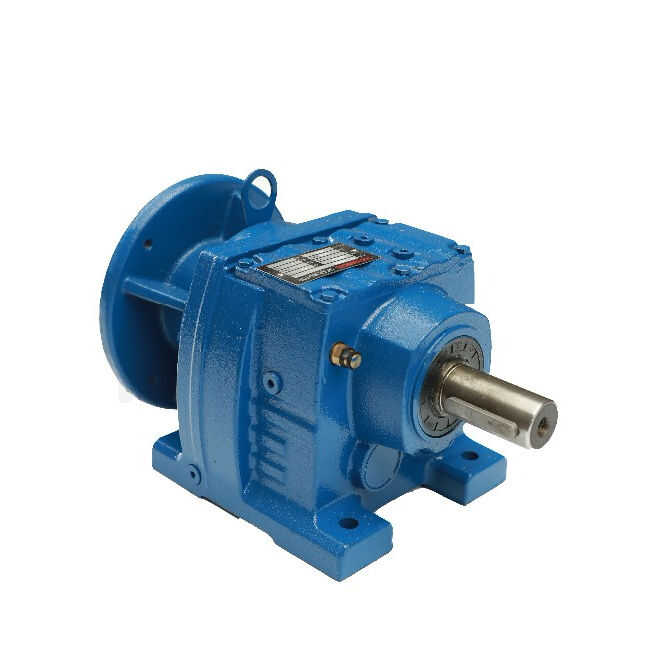
Key parameters for noise reduction in helical gearboxes:
| Parameter | Typical Value/Feature | Impact on Noise |
|---|---|---|
| Helix Angle | 15° - 30° | Higher angles improve smoothness and reduce noise. |
| Gear Material | Case-hardened Steel | Provides durability and maintains tooth profile for quiet operation. |
| Precision Rating | AGMA 10-12 or ISO 6-8 | Higher precision grades ensure better meshing and lower sound levels. |
Struggling with Inefficiency and Low Load Capacity? Upgrade Your Drive.
When production targets are missed due to machinery that can't handle the load or wastes energy, it directly impacts the bottom line. The efficiency of a gearbox is critical. Helical gearboxes excel here, offering efficiency rates often above 95% in a single stage. The helical tooth design provides a larger contact area between gears, allowing for greater load distribution and higher torque capacity without increasing the unit's size. This means you can transmit more power reliably, leading to energy savings and the ability to upscale operations without completely redesigning your drive system. Specifying the right helical gearbox from a trusted supplier is crucial. What is a helical gearbox and how does it work? It's the workhorse that converts motor power effectively. Raydafon Technology Group Co.,Limited provides robust helical gearboxes that maximize load capacity and operational efficiency, helping you meet demanding production schedules.
Performance comparison for load and efficiency:
| Gearbox Type | Typical Efficiency | Load Capacity (Relative) | Best For |
|---|---|---|---|
| Spur Gearbox | 94-98% | Moderate | Simple, low-speed applications. |
| Helical Gearbox | 97-99% | High | High-speed, high-torque, and quiet operations. |
Frequent Breakdowns Causing Costly Downtime? Enhance Reliability.
Unplanned maintenance is a procurement nightmare, leading to stalled production and urgent replacement costs. The durability of a gearbox directly influences maintenance intervals. Helical gears, with their smooth engagement, experience less shock loading and wear on individual teeth. This results in a longer service life and reduced need for frequent repairs or replacements. For global procurement specialists managing complex supply chains, investing in reliable components like helical gearboxes from a dependable manufacturer is a strategic decision for long-term operational stability. Raydafon Technology Group Co.,Limited designs its helical gearboxes with longevity in mind, using superior materials and manufacturing processes to ensure they stand up to rigorous industrial environments, ultimately reducing your total cost of ownership.
Durability and maintenance factors:
| Factor | Helical Gearbox Advantage | Maintenance Interval Impact |
|---|---|---|
| Tooth Wear | Evenly distributed across face width | Extends time between overhauls. |
| Lubrication | Superior oil film formation | Reduces friction and heat, lowering failure risk. |
| Bearing Load | Reduced axial vibration | Increases bearing and seal life. |
Frequently Asked Questions (FAQs)
Q: What is the main advantage of a helical gearbox over other types?
A: The primary advantage is its smooth and quiet operation due to the angled teeth, which engage gradually. This leads to higher efficiency, greater load-carrying capacity, and reduced vibration compared to spur gearboxes, making it ideal for high-speed and high-power applications.
Q: What is a helical gearbox and how does it work in terms of force transmission?
A: A helical gearbox transmits power between parallel or crossed shafts. The helical teeth create a thrust load along the axis of the gear, which must be managed by thrust bearings. Its operation involves converting rotational motion and torque through the sliding and rolling contact of the helical teeth, providing a continuous and strong transfer of force.
We hope this guide has clarified the critical role of helical gearboxes in industrial applications. Selecting the right component is vital for your operation's success. Have specific questions about torque requirements, mounting configurations, or custom solutions? Our team is ready to help you find the perfect fit.
For unparalleled reliability in power transmission, consider Raydafon Technology Group Co.,Limited. As a leading manufacturer, we specialize in high-performance helical gearboxes and coupling solutions designed to meet rigorous industrial demands. Visit us at https://www.raydafon-couplings.com to explore our product portfolio or contact our engineering sales team directly at [email protected] for a customized consultation.
Maitra, G.M., 1998, "Failure of teeth in helical gears – an investigation," Journal of Mechanical Engineering Science, 212(4).
Shigley, J.E., & Mischke, C.R., 2001, "Standard Handbook of Machine Design," McGraw-Hill, 2nd Edition, Chapter 14.
Dudley, D.W., 1994, "Handbook of Practical Gear Design," CRC Press.
Litvin, F.L., & Fuentes, A., 2004, "Gear Geometry and Applied Theory," Cambridge University Press.
Höhn, B.R., et al., 2009, "Noise and Vibration Behaviour of Helical Gears," Proceedings of the Institution of Mechanical Engineers, Part C: Journal of Mechanical Engineering Science, 223(7).
ISO 1328-1:2013, "Cylindrical gears — ISO system of flank tolerance classification — Part 1: Definitions and allowable values of deviations relevant to flanks of gear teeth."
AGMA 2001-D04, "Fundamental Rating Factors and Calculation Methods for Involute Spur and Helical Gear Teeth."
Zhang, Y., & Wang, J., 2012, "Analysis of load distribution and transmission error of helical gears," Mechanism and Machine Theory, 48.
Patil, S.S., et al., 2016, "A review on dynamic analysis of helical gears," International Journal of Engineering Research & Technology, 5(6).
Kumar, P., & Singh, R., 2018, "Thermal analysis of helical gearbox under different loading conditions," Engineering Failure Analysis, 90.
Related News
- What is the maximum horsepower rating for a PTO speed reducer gearbox?
- How much land can a horse drawn plough till in a day?
- What is the maximum weight you can load on dumbbell discs?
- How do you select the right segmented sprocket for a mining conveyor?
- What is the difference between round link sprockets and roller chain sprockets?
- Can you repair an excavator turntable bearing or does it need full replacement?
Leave me a message