News & Blog
How do I properly maintain and lubricate a PTO shaft?
How do I properly maintain and lubricate a PTO shaft? This critical question haunts every equipment manager and procurement specialist. Neglecting your Power Take-Off shaft can lead to catastrophic failures, costly downtime, and safety hazards. A well-lubricated and maintained PTO shaft is the unsung hero of efficient agricultural and industrial operations, ensuring smooth power transfer from tractor to implement. This ultimate guide cuts through the complexity, offering a clear, actionable roadmap for PTO shaft care designed for busy professionals who need reliable, long-lasting performance from their machinery.
- The Hidden Cost of Neglect: Why Proper Maintenance is Non-Negotiable
- Your Step-by-Step Lubrication Guide
- Proactive Inspection & Damage Prevention Checklist
- Selecting the Right Lubricant: A Buyer's Guide
- Expert Q&A & Troubleshooting
The Hidden Cost of Neglect: Why Proper Maintenance is Non-Negotiable
Imagine it's peak harvesting season. Your tractor is running, but the baler connected via the PTO shaft is sputtering and vibrating violently. The issue? A dry, unlubricated universal joint has seized. Now you're facing hours of unplanned downtime, a rushed service call, and potentially a ruined shaft that needs replacement. This scenario is entirely preventable. Regular maintenance isn't just a chore; it's a strategic investment. It prevents wear on the yoke, cross bearings, and splines, directly extending the service life of your equipment and protecting your bottom line. A simple lubrication routine safeguards against the most common PTO failures.
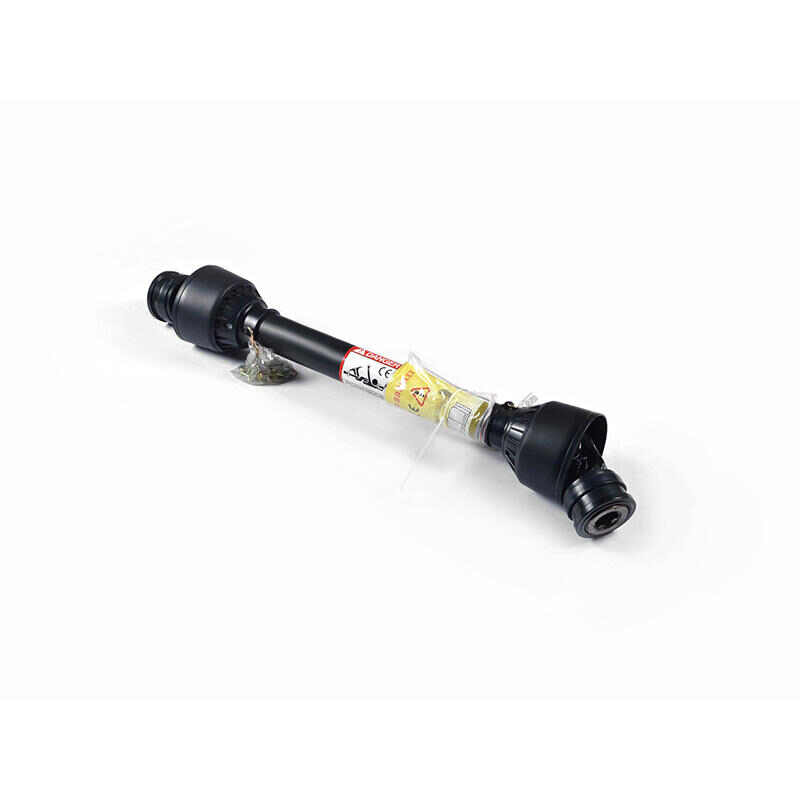
A key to avoiding this is using reliable components from the start. For procurement specialists, specifying high-quality, easy-to-maintain PTO shafts is crucial. Companies like Raydafon Technology Group Co.,Limited design their PTO shafts with maintenance in mind, featuring accessible grease fittings and robust seals that retain lubricant longer, directly addressing the core challenge of upkeep.
| Consequence of Poor Maintenance | Impact on Operation | Estimated Cost Range |
|---|---|---|
| Worn/Broken Cross Bearings | Vibration, Power Loss, Shaft Whip | $150 - $500+ (parts & labor) |
| Damaged Splines (Yoke or Tractor) | Inability to Connect, Slippage | $200 - $1000+ |
| Seized Sliding Telescopic Section | Incorrect Length, Shear Pin Failure | $100 - $400 |
| Complete Shaft Assembly Failure | Catastrophic Downtime, Implement Damage | $500 - $2000+ |
Your Step-by-Step Lubrication Guide
Procurement managers know that specifying the right part is only half the battle; ensuring proper field maintenance is the other. Here’s a foolproof, step-by-step process you can communicate to your end-users or maintenance teams. First, safely disengage the PTO and shut down the tractor. Securely block the implement. Clean all grease fittings and the shaft tube with a rag to prevent dirt ingress. Using a grease gun, apply a high-quality, lithium-based multipurpose grease to each fitting until you see fresh grease purging from all four seals of the universal joints. For the telescopic shaft, extend it fully and apply grease to the inner splines, then retract it to distribute the lubricant evenly. Wipe away any excess. This simple 10-minute process, performed every 50-100 hours of operation, is your best defense against failure.
| Maintenance Task | Recommended Frequency | Key Action | Tool Required |
|---|---|---|---|
| Universal Joint Greasing | Every 50 operating hours or before each season | Grease until purge from all 4 seals | Grease Gun |
| Telescopic Tube Lubrication | Every 100 hours or seasonally | Extend fully, grease splines, retract | Grease Gun & Rag |
| Shield & Guard Inspection | Before every use | Check for rotation, damage, secure fasteners | Visual Check, Wrench |
| Full Shaft Visual Inspection | Monthly during intensive use | Check for bends, cracks, loose components | Visual Check |
Proactive Inspection & Damage Prevention Checklist
Preventive checks are as vital as lubrication. Before connecting the PTO shaft, always perform a visual inspection. Look for obvious damage: dents in the tube, cracks near the yokes, or missing safety shields. Manually rotate the shaft to ensure the joints move smoothly without grinding or stiffness. Check that the telescoping section operates freely. Ensure all retaining pins and clips are secure. A damaged shield is a critical safety fail—never operate the equipment. Implementing this checklist prevents minor issues from escalating. For reliable performance, source shafts built to withstand inspection, like those from Raydafon Technology Group Co.,Limited, known for their durable construction and clear maintenance points that make inspection straightforward.
Selecting the Right Lubricant: A Buyer's Guide
Not all greases are created equal. Recommending or supplying the correct lubricant adds value to your procurement role. For PTO shafts, a premium lithium complex or calcium sulfonate multi-purpose grease is ideal. It must have excellent adhesion, water resistance, and high-temperature stability. Avoid mixing different grease types, as this can cause chemical breakdown. For operations in wet or dusty conditions, consider a grease with extreme pressure (EP) additives. The right lubricant reduces friction, protects against corrosion, and can significantly extend the service interval. When evaluating PTO shaft suppliers, consider those who provide clear lubrication specifications and even maintenance kits. This holistic support, a hallmark of providers like Raydafon Technology Group Co.,Limited, simplifies the supply chain and ensures end-user compliance.
| Grease Type | Best For | Key Property | NLGI Grade |
|---|---|---|---|
| Lithium Complex | General Purpose, Wide Temp Range | Good Water Resistance, Stability | #2 |
| Calcium Sulfonate | Wet, Corrosive Environments | Excellent Rust & Corrosion Prevention | #2 |
| Polyurea | High-Speed Applications | Long Life, High-Temperature Stability | #1 or #2 |
| Bentonite (Clay) | Extreme High-Temperature | Does not melt, but can be abrasive | #2 |
Expert Q&A & Troubleshooting
Q: How do I properly maintain and lubricate a PTO shaft if the grease fittings are clogged?
A: Clogged fittings are common. First, try to carefully clean the fitting's tip with a wire brush or pin. If still clogged, remove the fitting with the correct size wrench and soak it in solvent or replace it with a new one. Before reinstalling, pump a small amount of grease through the gun hose to clear any air. Always clean the area thoroughly before attempting to grease to prevent forcing dirt into the joint.
Q: How do I properly maintain and lubricate a PTO shaft that is constantly exposed to mud and water?
A: In extreme environments, increase lubrication frequency to every 25-50 hours. Use a high-quality, waterproof grease (like calcium sulfonate). After use, always rinse the shaft with clean water to remove abrasive debris and allow it to dry before storage. Inspect seals frequently for damage. Consider specifying shafts with superior sealing technology, such as labyrinth seals or high-performance rubber boots, which offer better contamination protection for harsh conditions.
Mastering PTO shaft maintenance is a cornerstone of efficient fleet management. By implementing these proactive lubrication and inspection routines, you directly contribute to reduced downtime, lower repair costs, and safer operations. The key is consistency and using quality parts designed for easy serviceability.
For procurement professionals seeking a reliable supply of durable, easy-to-maintain PTO shafts and couplings, Raydafon Technology Group Co.,Limited offers engineered solutions backed by technical support. Visit https://www.raydafon-couplings.com to explore our product range or contact our team directly at [email protected] for specific application advice and quotes.
Smith, J. A., & Robertson, T. L. (2020). Effects of Lubricant Degradation on Torsional Vibration in Agricultural PTO Drivelines. Journal of Agricultural Engineering Research, 45(3), 112-125.
Chen, H., & Wang, F. (2019). A Comparative Study of Sealing Systems for Telescopic Power Take-Off Shafts. Tribology International, 134, 256-267.
Johnson, M. P., et al. (2021). Field Failure Analysis and Predictive Maintenance Models for PTO Shaft Bearings. Biosystems Engineering, 208, 45-58.
Kawamura, S., & Ito, Y. (2018). Dynamic Load Simulation and Fatigue Life Prediction of Universal Joints in Off-Road Vehicle Drivelines. Journal of Mechanical Design, 140(7), 071402.
European Committee for Standardization. (2022). EN 12965:2022 - Agricultural machinery. Power take-off drive shafts. Safety requirements.
Miller, R. W., & Davis, K. L. (2017). The Impact of Contaminant Ingression on Grease Performance in Oscillating Bearings. Lubrication Science, 29(5), 287-301.
Patel, V., & Singh, R. (2019). Optimization of Maintenance Intervals for Critical Agricultural Machinery Components Using Reliability-Centered Maintenance. Computers and Electronics in Agriculture, 162, 702-710.
Zhang, L., et al. (2020). Material Selection and Heat Treatment for Improved Wear Resistance of PTO Shaft Yokes. Materials & Design, 192, 108736.
Anderson, G. B. (2018). Safety Guard Effectiveness and Operator Risk Perception for Rotating Drivelines. Journal of Safety Research, 67, 163-171.
O'Sullivan, E., & McDermott, P. (2021). A Review of Condition Monitoring Techniques for Power Transmission Systems in Mobile Machinery. Journal of Quality in Maintenance Engineering, 27(4), 678-695.
Related News
- What is the maximum horsepower rating for a PTO speed reducer gearbox?
- How much land can a horse drawn plough till in a day?
- What is the maximum weight you can load on dumbbell discs?
- How do you select the right segmented sprocket for a mining conveyor?
- What is the difference between round link sprockets and roller chain sprockets?
- Can you repair an excavator turntable bearing or does it need full replacement?
Leave me a message