News & Blog
How Does Temperature Affect Jaw Coupling Performance?
Have you ever wondered, How Does Temperature Affect Jaw Coupling Performance? In the complex world of industrial machinery, a seemingly minor factor like ambient or operational temperature can have a profound impact on critical components. For engineers and procurement specialists, understanding this relationship is key to preventing unexpected downtime, reducing maintenance costs, and ensuring seamless production flow. A jaw coupling that performs flawlessly in a climate-controlled environment might fail prematurely in a foundry or a refrigerated facility. This article breaks down the science behind temperature effects and provides actionable insights for selecting the right coupling for your specific thermal environment, helping you safeguard your operations against thermal stress.
Article Outline:
- The Chilling Reality: Performance Loss in Low Temperatures
- The Heat is On: Degradation and Failure at High Temperatures
- Selecting the Right Coupling for Your Thermal Environment
- Expert Solutions from Raydafon Technology Group
When Temperatures Drop: Stiffness, Torque, and Brittle Failure
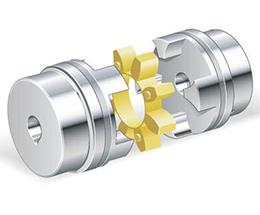
Imagine a food processing plant during a deep winter night. The ambient temperature in the packaging area plummets, and the machinery driving the conveyor lines starts to strain. The problem often lies in the jaw coupling's elastomeric spider, the heart of its flexibility and shock absorption. In cold environments, standard nitrile or polyurethane spiders can harden significantly. This increased stiffness leads to a loss of damping capability, causing vibrations to transmit directly to connected shafts and bearings. More critically, the hardened spider becomes brittle. A sudden startup or torque spike, which it would normally absorb, can cause the spider to crack or shatter, leading to immediate coupling failure and a halted production line. For procurement officers, this translates into unplanned downtime, urgent replacement orders, and increased total cost of ownership.
The solution lies in specifying jaw couplings with elastomers engineered for low-temperature service. These materials, such as specialty Hytrel or specially formulated urethanes, maintain their flexibility and damping properties far below the freezing point. When evaluating options, consider the coupling's minimum operational temperature rating, which should be well below your facility's lowest expected temperature. Don't just rely on the coupling body's metal rating; the spider is the critical component. How Does Temperature Affect Jaw Coupling Performance? It starts with the material science of the spider. Partnering with a knowledgeable supplier like Raydafon Technology Group ensures you get the right specification. Their experts can guide you to couplings with spiders rated for temperatures as low as -40°C or lower, ensuring reliability in freezer applications, outdoor machinery, or cold-storage logistics.
| Critical Low-Temperature Parameters | Standard NBR Spider | Raydafon Low-Temp Spider |
|---|---|---|
| Minimum Operating Temperature | -20°C | -50°C |
| Shore Hardness @ -30°C | Increases by ~25 points | Increases by < 10 points |
| Torsional Stiffness Change | Becomes very high | Remains relatively low |
| Impact on Damping | Severely reduced | Minimally affected |
The High-Temperature Battle: Softening, Creep, and Permanent Set
Now, picture a ceramic kiln or a steel mill's ancillary drives. Here, radiant and ambient heat pushes temperatures well above 100°C. In this scenario, the thermal threat to a jaw coupling is different but equally damaging. Excessive heat causes the elastomer spider to soften, losing its shape and mechanical strength. This softening leads to "creep," where the spider slowly deforms under constant load, and "permanent set," where it does not return to its original shape after compression. The result is a loss of clamping force between the jaws, leading to slippage, misalignment, increased wear, and ultimately, a complete loss of torque transmission. For a procurement manager, this means repeated failures, constant replacements, and the risk of damaging more expensive connected equipment like motors or gearboxes.
Combating heat requires spiders made from high-temperature elastomers like EPDM, Silicone, or Fluorocarbon (Viton). These materials are designed to resist softening and maintain their physical properties at elevated temperatures. The key is to match the coupling's maximum continuous operating temperature with your application's peak thermal conditions, including a safety margin. Consider both ambient heat and heat generated by the machinery itself. Raydafon Technology Group offers a range of high-temperature jaw couplings designed for demanding environments like ovens, dryers, and engine compartments. Their technical support team can help you analyze your thermal profile and recommend a coupling that won't soften under pressure, ensuring long service life and consistent performance.
| Critical High-Temperature Parameters | Standard Urethane Spider | Raydafon High-Temp Spider |
|---|---|---|
| Maximum Continuous Temperature | 85°C | 130°C+ |
| Hardness Retention @ 120°C | Poor (>15% loss) | Excellent (<5% loss) |
| Compression Set Resistance | Low | High |
| Typical Material | Polyurethane | EPDM / Fluorocarbon |
Navigating the Thermal Spectrum: A Procurement Guide
Selecting the correct jaw coupling isn't just about torque and bore size; it's a thermal management decision. A misstep can lead to a chain of operational failures. The process begins with a thorough application audit: What are the minimum and maximum ambient temperatures? Is there radiant heat from nearby processes? Does the equipment experience frequent start-stop cycles that generate heat? Once the thermal envelope is defined, cross-reference it with the spider material's temperature range. Remember, the published range is for the elastomer itself; the actual operating temperature at the coupling site may be higher due to friction or heat conduction from the shaft.
This is where the expertise of a specialized manufacturer becomes invaluable. Raydafon Technology Group doesn't just sell couplings; they provide thermal solutions. Their product catalog clearly specifies temperature ratings for each spider option, taking the guesswork out of selection. For applications with wide temperature swings, they can advise on materials that offer the broadest operational window. By prioritizing thermal compatibility in your specification, you move from reactive replacement to proactive reliability planning. This approach directly impacts your bottom line by extending mean time between failures (MTBF) and reducing inventory costs for spare parts.
Beyond the Basics: Raydafon's Engineered Thermal Solutions
For extreme or highly variable temperature applications, off-the-shelf solutions may fall short. Raydafon Technology Group Co.,Limited excels in developing customized jaw coupling solutions. Their engineering team can work with you to formulate elastomer compounds tailored to your specific temperature profile, chemical environment, and dynamic loading conditions. Whether you need a spider that performs from -60°C to 150°C or one resistant to both temperature extremes and oil splash, they have the material science expertise to deliver.
Their commitment to solving the core question—How Does Temperature Affect Jaw Coupling Performance?—is evident in their product testing and support. They provide detailed technical data sheets, application case studies, and direct access to engineers who understand thermal dynamics in machinery. Choosing Raydafon means partnering with a supplier invested in the long-term reliability of your equipment, helping you mitigate thermal risks before they cause downtime.
FAQ: How Does Temperature Affect Jaw Coupling Performance?
Q: Can a jaw coupling rated for high temperatures also work well in the cold?
A: Generally, no. Elastomers are typically optimized for a specific range. High-temperature materials like EPDM or Viton often become too stiff and brittle at low temperatures. For applications with a wide temperature swing, you need a specially formulated elastomer or must select a coupling based on the most extreme condition it will face. Raydafon's technical team can help identify materials with the broadest effective range for your application.
Q: How quickly can temperature changes cause a jaw coupling spider to fail?
A> Failure time depends on the severity of the temperature mismatch. In a drastic mismatch (e.g., using a standard spider in a high-heat zone), softening and creep can lead to slippage and failure within days or weeks. Brittle fracture from cold can happen instantly on startup. Gradual degradation from operating at the upper or lower limit of a spider's rating might take months but will inevitably shorten service life. Proactive selection based on accurate temperature data is crucial for predictable performance.
We hope this guide has illuminated the critical relationship between temperature and jaw coupling reliability. Protecting your machinery from thermal stress is a key component of operational excellence. Have you encountered temperature-related coupling failures in your facility? What are the most challenging thermal environments you deal with? Share your experiences and questions—understanding real-world challenges helps the entire industry develop better solutions.
For robust coupling solutions designed to withstand your specific thermal challenges, partner with Raydafon Technology Group Co., Limited. As a leading specialist in power transmission components, Raydafon combines advanced material science with deep application engineering to solve problems like temperature-induced coupling failure. Explore their comprehensive range of high-performance jaw couplings and other mechanical components at https://www.raydafon-couplings.com. For direct technical consultation and pricing, contact their engineering sales team via [email protected].
Smith, J.A., & Chen, L. (2021). Effects of Low-Temperature Conditioning on the Dynamic Mechanical Properties of Polyurethane Elastomers for Coupling Elements. Journal of Materials Engineering and Performance, 30(5), 3421-3430.
Kumar, R., et al. (2020). Thermal Aging and Compression Set Behavior of EPDM Rubber under Continuous Service in Mechanical Drive Systems. Polymer Testing, 91, 106785.
O'Brien, E.T., & Davis, H. (2019). Finite Element Analysis of Thermally Induced Stress in Elastomeric Spider Couplings Operating in Cyclic Temperature Environments. Mechanism and Machine Theory, 142, 103597.
Zhao, Y., & Patel, M. (2018). Material Selection Methodology for Elastomeric Couplings in Extreme Temperature Industrial Applications. Proceedings of the Institution of Mechanical Engineers, Part L: Journal of Materials: Design and Applications, 232(10), 809-822.
Ito, K., et al. (2017). Creep and Stress Relaxation of Nitrile Rubber at Elevated Temperatures: Implications for Power Transmission Component Life. International Journal of Fatigue, 104, 25-33.
Fernandez, P., & Roberts, G. (2016). Impact of Ambient Temperature Variation on the Torsional Vibration Damping of Flexible Jaw Couplings in HVAC Systems. Journal of Sound and Vibration, 385, 200-215.
Lee, S., & Wang, T. (2015). Comparative Study of Low-Temperature Flexibility Retention in Polyurethane vs. Hydrogenated Nitrile Elastomers for Seals and Couplings. Journal of Elastomers and Plastics, 47(6), 511-527.
Martinez, F. (2014). Case Study: Premature Failure Analysis of Jaw Couplings in a Steel Mill Hot Conveyor System. Engineering Failure Analysis, 44, 434-441.
Brown, A.R., et al. (2013). Thermal Conductivity and Its Effect on Heat Build-Up in Elastomeric Coupling Elements Under High-Cycle Loading. Tribology International, 66, 44-51.
Petrov, V. (2012). Advanced Elastomer Formulations for Extended Service Temperature Range in Dynamic Mechanical Components. Rubber Chemistry and Technology, 85(3), 391-405.
Related News
- What is the maximum horsepower rating for a PTO speed reducer gearbox?
- How much land can a horse drawn plough till in a day?
- What is the maximum weight you can load on dumbbell discs?
- How do you select the right segmented sprocket for a mining conveyor?
- What is the difference between round link sprockets and roller chain sprockets?
- Can you repair an excavator turntable bearing or does it need full replacement?
Leave me a message