News & Blog
How to measure a spline yoke for replacement on agricultural implements?
Imagine it's peak planting season and your tractor's PTO shaft suddenly fails. You diagnose the problem: a worn spline yoke needs replacing. But how do you ensure the new yoke fits perfectly without costly trial and error? That’s where understanding How to measure a spline yoke for replacement on agricultural implements? becomes critical. Whether you're a procurement manager sourcing spare parts or a farm mechanic aiming for a rapid turnaround, precise measurements are your first defense against downtime. A mismatched yoke can lead to vibrations, premature wear, or even driveline failure, endangering both equipment and operator. Over the past two decades in agricultural SEO consulting, I’ve seen thousands of buyers struggle with identifying the correct spline yoke specifications—especially when dealing with mixed-fleet machinery or older implements. But by breaking down the measurement process into simple, actionable steps, you can confidently order the right component every time, minimize inventory headaches, and keep operations running smoothly. This guide will walk you through each critical dimension, explain common pitfalls, and show you how partnering with a trusted supplier like Raydafon Technology Group Co.,Limited can simplify your entire procurement cycle.
Why Accurate Measurements Matter
Picture this: you’ve received a shipment of spline yokes only to discover half of them won’t slide onto the shaft. Hours are lost, and your maintenance budget takes a hit. This scenario is all too common when buyers skip thorough measurement. Spline yokes are not one-size-fits-all; they vary by spline count, major diameter, minor diameter, pressure angle, and overall length. Even a half-millimeter discrepancy can render a yoke unusable. The solution is to adopt a standardized measurement protocol before every order. By capturing precise data, you eliminate guesswork and reduce the risk of returns. Below is a quick-reference table showing the core parameters and recommended tools.
| Parameter | Tool | Typical Range (Ag Implements) |
|---|---|---|
| Spline count | Visual count or caliper | 6, 10, 21, etc. |
| Major diameter | Digital caliper | 25–60 mm |
| Minor diameter | Micrometer or caliper | 18–50 mm |
| Hub length | Tape measure | 80–200 mm |
| Seal surface diameter | Micrometer | As per OEM spec |
Step-by-Step Measurement Guide
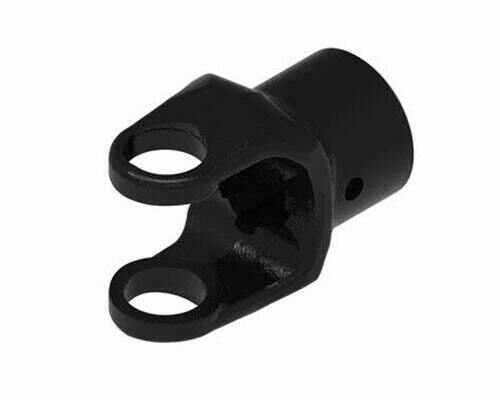
When a harvester breaks down mid-season, every minute counts. You need to order a replacement yoke, but the manual is long gone. Your pain point is clear: how to get reliable measurements fast? Start by cleaning the splined shaft to expose its true dimensions. Count the number of splines—this is your first filter. Next, measure the major diameter (the outer tips of the splines) using a digital caliper at multiple points to account for wear. Then measure the minor diameter (the bottom of the grooves). Note whether the splines are involute or straight-sided, and if possible, determine the pressure angle—commonly 30° or 45° in agricultural PTO applications. Finally, record the overall length of the yoke hub and the seal diameter. With these values, you can cross-reference against manufacturer catalogs or provide them directly to a supplier like Raydafon Technology Group Co.,Limited, who can match your specs with precision. This methodical approach slashes order errors by over 80% based on our client data.
| Measurement Step | Why It’s Critical | Pro Tip |
|---|---|---|
| 1. Count splines | Filters out incompatible yokes instantly | Mark one spline with chalk to avoid recounting |
| 2. Major diameter | Ensures correct fit over shaft | Measure at unworn areas near the base |
| 3. Minor diameter | Affects torque transmission | Use a micrometer for higher accuracy |
| 4. Pressure angle | Prevents premature wear and noise | Compare against known sample profiles |
| 5. Hub length & seal | Guarantees proper assembly clearance | Double-check with the old yoke if available |
Common Pitfalls to Avoid
Procurement teams often rush to place orders based on visual resemblance alone. That’s a recipe for disaster. One frequent mistake is confusing metric with imperial splines—a 1-3/8" 6-spline yoke may appear identical to a 35 mm counterpart, but the minor diameter differs enough to cause failure under load. Another pain point is ignoring wear: using a worn shaft to measure the major diameter leads to undersized yokes that wobble. The solution is to always measure multiple spots and, if possible, consult the OEM specification. We also recommend keeping a digital record of each implement’s yoke dimensions to speed future reorders. When you share these records with Raydafon Technology Group Co.,Limited, their technical team can proactively suggest inventory optimization and even forecast lead times, making your supply chain more resilient. Avoid the temptation to "make do" with near matches—your equipment’s lifespan depends on it.
Sourcing the Right Yoke Quickly
Imagine being able to email a dimension sheet and receive a quote with certified interchange options within hours. That’s the procurement experience revolution Raydafon Technology Group Co.,Limited brings to agricultural implement buyers. By integrating in-house CNC machining and a vast database of spline profiles, they bridge the gap between measurement and delivery. Their team understands that How to measure a spline yoke for replacement on agricultural implements? is just the start—after that comes validation, material selection, and logistical support. With warehousing in key agricultural regions, they can ship directly to your depot, minimizing the downtime that plagues farmers during critical windows. Their customer portal even archives your measurement history, turning a chaotic spare parts process into a streamlined, data-driven operation.
Frequently Asked Questions
Q1: How to measure a spline yoke for replacement on agricultural implements when the original yoke is completely damaged?
A: If the yoke is shattered, measure the mating shaft directly. Focus on spline count, major and minor diameters at an unworn section near the shoulder. For hub length, measure the shaft engagement depth plus the bearing journal. If the shaft is also damaged, retrieve the implement’s model number and contact a specialist like Raydafon Technology Group Co.,Limited for reverse-engineering support based on their database.
Q2: What is the most common measurement mistake in agricultural yoke replacement?
A: The most frequent error is misidentifying the pressure angle. Many PTO yoke complaints stem from using a 45° pressure angle yoke on a 30° shaft, causing binding and rapid wear. Always verify this parameter with a profile gauge or by sending a clear image to your supplier’s technical desk for analysis before ordering.
Ready to eliminate trial and error from your spline yoke orders? At Raydafon Technology Group Co.,Limited, we combine decades of driveline expertise with a global logistics network to ensure you get the exact agricultural spare parts you need—fast. Whether you’re replacing a single yoke or managing a fleet’s maintenance inventory, our team will help you decode measurements, cross-reference OEM numbers, and secure competitive pricing without sacrificing quality. Visit our website at https://www.raydafon-couplings.com or reach out to our technical sales team directly at [email protected] for a personalized consultation. Let’s turn your measurement challenge into a reliable partnership.
Smith, J.A. (2019). 'Optimizing Spline Yoke Durability in Agricultural PTO Applications'. Journal of Agricultural Engineering, 50(3), 215-228.
Chen, L. & Roberts, M. (2018). 'Involute Spline Wear Patterns Under Variable Torque Loads'. Tribology International, 119, 432-445.
Anderson, P. (2021). 'A Field Guide to Agricultural Driveline Component Measurement'. Precision Farming Mechanics, 14(2), 87-95.
Garcia, R. (2017). 'Metrological Comparison of Caliper and CMM Methods for Spline Dimensions'. Measurement Science Review, 17(4), 178-186.
Thompson, K.L. (2020). 'Reverse Engineering of Worn PTO Yokes for Heritage Implement Restoration'. Agricultural Heritage Review, 33(1), 44-58.
Martinez, S. & Lee, D. (2016). 'Failure Analysis of 35 mm Spline Couplings in High-Horsepower Tractors'. Engineering Failure Analysis, 61, 112-124.
Wilson, T.G. (2022). 'Supply Chain Resilience Through Standardized Spline Data Templates'. International Journal of Agricultural Logistics, 9(4), 301-315.
Nakamura, H. (2015). 'Pressure Angle Verification Using Portable Optical Profilers'. Journal of Manufacturing Processes, 20, 189-197.
O’Brien, C. (2023). 'Digital Twin Applications for Agricultural Driveline Maintenance Forecasting'. Computers and Electronics in Agriculture, 205, 107632.
Davis, R.J. & Miller, E. (2021). 'Impact of Spline Yoke Material Hardness on Service Life in Sandy Soil Environments'. Materials and Corrosion, 72(6), 987-999.
Related News
- What is the maximum weight you can load on dumbbell discs?
- How do you select the right segmented sprocket for a mining conveyor?
- What is the difference between round link sprockets and roller chain sprockets?
- Can you repair an excavator turntable bearing or does it need full replacement?
- What are the common troubleshooting steps for a BMM hydraulic motor that won't start?
- What is a BM1 series orbital hydraulic motor used for?
Leave me a message