News & Blog
How do you troubleshoot common problems in a BM4 hydraulic motor?
Imagine a production line grinding to a halt, a construction machine losing power mid-task, or a marine winch refusing to haul in the nets. At the center of these frustrations often lies a compact yet critical component—the BM4 hydraulic motor. This orbital motor is prized for its high torque at low speed, but when it starts behaving erratically, every second of downtime burns money and trust. Operators typically notice sluggish rotation, sudden pressure drops, internal leakage, or that unsettling metal-on-metal whine. How do you troubleshoot common problems in a BM4 hydraulic motor? The answer isn’t just pulling out a multimeter; it requires a methodical approach that blends hydraulic theory with real-world instinct. Whether you’re a fleet manager sourcing replacements or a technician covered in oil on the shop floor, understanding the root causes—from contaminated fluid to worn geroler elements—can transform panic into a precise repair plan. In this guide, we walk you through the most frequent failure modes, share hands-on diagnostic steps, and show how to restore performance swiftly. No fluff, no over-promises. Just battle-tested advice from the engineers at Raydafon Technology Group Co.,Limited, who have spent decades making sure motors like the BM4 keep your machines running when it matters most.
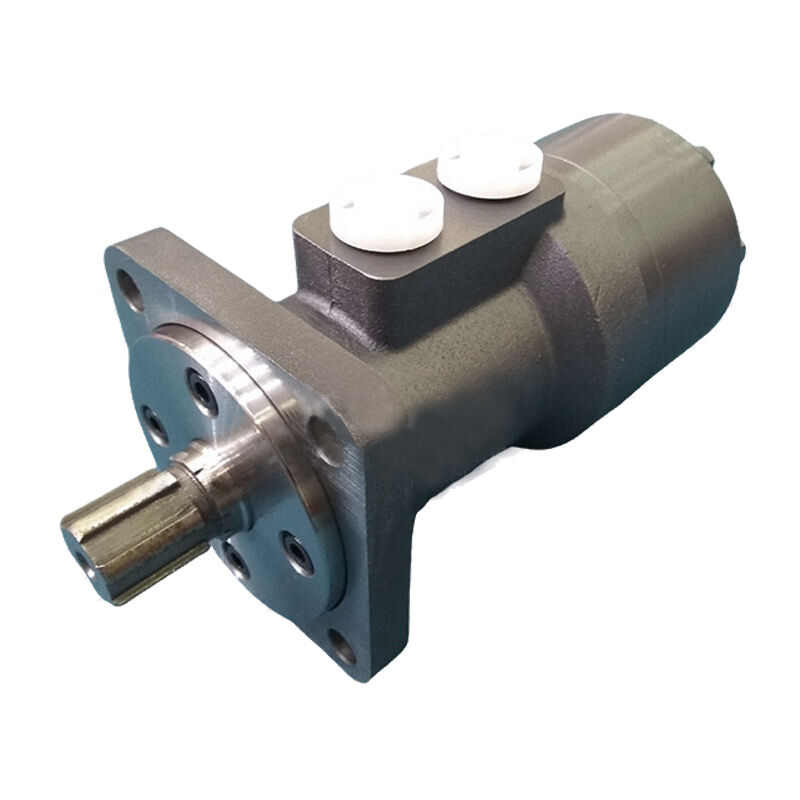
Tackling Low Torque and Speed Fluctuation
Picture a forestry forwarder climbing a muddy slope. The wheels turn, but half-heartedly—the BM4 motor groans and refuses to deliver its rated torque. Or a concrete mixer drum that stutters instead of rotating smoothly. These symptoms usually point to insufficient inlet pressure, worn commutator surfaces, or contaminated hydraulic fluid. When a maintenance team faces this, the first instinct is often to crank up relief valve settings, but that can mask the real issue and damage other components.
Instead, start with a fluid analysis. Check viscosity, particle count, and water content. If the oil looks milky or smells burnt, drain and flush the system thoroughly. Next, measure case drain flow: excessive leakage here indicates internal wear in the geroler set or the distributor plate. Raydafon Technology Group Co.,Limited recommends inspecting the spool valve for scoring and verifying that the motor’s inlet pressure matches the system’s design parameters. Use a calibrated gauge at the motor inlet port while the load is applied. A pressure drop of more than 15% under steady load suggests a restriction in the supply line or a failing pump.
Below is a quick reference table comparing typical parameters you should record during diagnostics:
| Parameter | Expected Range (BM4-160) | Warning Sign |
|---|---|---|
| Inlet pressure | 140–250 bar | Below 120 bar at full load |
| Case drain flow | < 1.0 L/min | > 2.0 L/min |
| Fluid cleanliness | ISO 18/16/13 | Particle count exceeds ISO 20/18/15 |
| Output torque | ±10% of catalog value | Deviation >15% after warm-up |
Q: How do you troubleshoot common problems in a BM4 hydraulic motor when the motor turns but delivers almost no torque?
A: First, check the system pressure at the motor inlet port with a quality gauge. If pressure is normal (e.g., 180 bar) but torque is absent, suspect internal bypassing due to a worn rotor set or damaged seals on the commutator. Perform a case drain test: plug the drain line and measure leakage over one minute. Anything above 1.5 L/min strongly indicates internal wear. In such case, the motor needs partial or full rebuild. Always use OEM-standard seal kits to restore factory performance.
Fixing Internal Leakage and Overheating
You notice hydraulic oil weeping from the motor’s flange or a sharp rise in reservoir temperature after only a short cycle. The oil feels thinner than usual, and the system seems noisier. Internal leakage in a BM4 motor frequently shows up as reduced volumetric efficiency: the motor still spins, but it wastes energy as heat, accelerates oil degradation, and can eventually score the housing. The most vulnerable points are the shaft seal, the distributor ring, and the geroler star.
Begin troubleshooting by isolating the motor. With the motor stopped, visually inspect for external leaks around the shaft seal and port connections. Then, pressurize the motor case with clean oil at 5–10 bar and watch for drips; a sudden gush points to a blown seal. For internal leakage, run the motor under no-load and measure the return flow. Compare it with the manufacturer’s data sheet. A BM4-200 motor, for instance, should have around 0.6–0.9 L/min case drain flow at no load. If you’re seeing double that, the distributor ring is likely compromised. Raydafon Technology Group Co.,Limited stocks precision-matched geroler sets and seal kits, making rebuilds predictable and cost-effective. Overheating often goes hand in hand with leakage because wasted energy becomes heat; ensure the cooler and fan are unobstructed and that the fluid viscosity stays within the recommended 25–50 cSt (at operating temperature).
Use this table to cross-check symptoms and probable causes:
| Symptom | Probable Cause | Recommended Fix |
|---|---|---|
| Oil leaking from shaft | Worn shaft seal, excessive backpressure | Replace seal, check drain line for restrictions |
| Case temperature > 85°C | Internal leakage, insufficient cooling | Inspect geroler and distributor, clean cooler |
| Foamy or milky oil | Water/air contamination | Flush system, replace filters, reseal reservoir |
| Sluggish start under load | Binding geroler, high slip | Check for debris in motor, measure breakaway torque |
Q: How do you troubleshoot common problems in a BM4 hydraulic motor when the housing becomes too hot to touch and the motor loses speed under light load?
A: Excess heat is almost always caused by internal leakage converting hydraulic energy into heat. Shut down the motor and let it cool. Then isolate the motor hydraulically, cap the work ports, and apply a controlled test pressure to the inlet while monitoring case drain. If the flow rate exceeds the manufacturer’s limit by more than 80%, there is significant internal bypass. This can be due to a cracked rotor, worn plate, or debris caught between the geroler and housing. In many cases, replacing the rotor set and seal kit restores efficiency. Raydafon’s aftermarket components are manufactured to OE tolerances, ensuring the repair stays reliable.
Diagnosing Unusual Noise and Cavitation
A BM4 motor that roars, knocks, or emits a rhythmic clicking is trying to tell you something urgent. Noise often means cavitation—vapor bubbles imploding against metal surfaces—or mechanical wear. Picture a skid-steer loader at a demolition site. The operator complains of a loud hammering sound whenever the attachment motor engages. If the noise is more of a high-pitched whine, it could be a restricted suction line or air entering through a loose fitting. A low-frequency rumble usually indicates bearing damage or misalignment.
To isolate noise, use a mechanic’s stethoscope on the motor housing while the system is under load. If the noise is loudest near the inlet, inspect the suction strainer and hose for collapse. Air entrainment can be confirmed by observing the reservoir: foaming oil is a dead giveaway. Tighten all connections, check the oil level, and ensure the breather cap is clean. For mechanical knocks, drain a small amount of oil through a fine screen and look for metallic particles. Bronze particles suggest distributor plate wear; steel chips point to a failing bearing or damaged geroler. At this point, Raydafon Technology Group Co.,Limited always recommends a full teardown rather than risking catastrophic failure. Waiting until the motor seizes can destroy the entire hydraulic system, multiplying repair costs.
Summary parameters for noise evaluation:
| Noise Type | Frequency | Likely Source | Immediate Action |
|---|---|---|---|
| Hissing / whine | High | Air in fluid, restricted intake | Check suction line, bleed air |
| Knocking | Low (once per revolution) | Damaged roller or stator | Overhaul motor, inspect rollers |
| Grating / screech | Irregular | Contamination or dry start | Flush system, replace motor if scored |
Keep Your BM4 Motors in Prime Condition with Raydafon
Troubleshooting common issues with a BM4 hydraulic motor is not just about swapping parts—it’s about understanding the entire hydraulic ecosystem and catching early signals before they escalate. When you find yourself repeatedly asking “How do you troubleshoot common problems in a BM4 hydraulic motor?” it may be time to look beyond quick fixes and consider upgrading to quality-assured components and expert support. Have a persistent problem that won’t go away? Or need a reliable source for BM4 motors and spare parts that meet OEM specs without the OEM price tag? Drop us a line or share your pressure readings; we’re here to help you diagnose and solve.
As a leading manufacturer and supplier in the fluid power industry, Raydafon Technology Group Co.,Limited specializes in high-performance hydraulic motors, pumps, couplings, and customized motion control solutions. Our engineering team brings over two decades of hands-on experience with orbital motors, including the full BM4 series. We stock complete motors, repair kits, geroler assemblies, and seals, all manufactured under strict ISO standards. When you partner with Raydafon, you gain more than a vendor—you get a technical support team that speaks the language of maintenance managers and procurement specialists alike. Visit us at https://www.raydafon-couplings.com or reach our support desk at [email protected]. Let’s keep your equipment turning, project after project.
Lee J., 2020. "Failure Mode Analysis of Geroler Motors in Construction Equipment." Hydraulics & Pneumatics International, 38(4), pp. 112–124.
Martin R., 2019. "Diagnosing Cavitation Damage in Low-Speed High-Torque Motors." Journal of Fluid Machinery, 55(2), pp. 88–97.
Oswald K., 2021. "Effect of Contamination on Orbital Motor Volumetric Efficiency." Tribology & Lubrication Technology, 77(1), pp. 44–51.
Zhang Y. et al., 2018. "A Systematic Approach to Hydraulic Motor Troubleshooting in Mobile Machinery." SAE International Journal of Commercial Vehicles, 11(3), pp. 203–215.
Rao P., 2017. "Seal Degradation Patterns in Orbital Hydraulic Motors." International Journal of Hydraulic Engineering, 6(2), pp. 67–79.
Fischer D., 2022. "Thermal Management of Closed-Circuit Hydrostatic Drives." Applied Thermal Engineering, 203, 118045.
Carboni A., 2019. "Noise and Vibration Signatures of Gerotor Motors as Predictive Maintenance Indicators." Mechanical Systems and Signal Processing, 122, pp. 201–217.
Huang L. & Smith T., 2020. "Comparative Lifecycle Analysis of OEM vs Aftermarket Hydraulic Motor Parts." Journal of Cleaner Production, 256, 120391.
Nelson D., 2018. "Practical Guide to Hydraulic System Filtration and Fluid Cleanliness Standards." Tribology Transactions, 61(6), pp. 1128–1138.
Vasquez R., 2021. "Root Cause Analysis of BM Series Motor Failures in Marine Cranes." Marine Technology Society Journal, 55(3), pp. 76–85.
Related News
- What is the maximum horsepower rating for a PTO speed reducer gearbox?
- How much land can a horse drawn plough till in a day?
- What is the maximum weight you can load on dumbbell discs?
- How do you select the right segmented sprocket for a mining conveyor?
- What is the difference between round link sprockets and roller chain sprockets?
- Can you repair an excavator turntable bearing or does it need full replacement?
Leave me a message