What are the advantages and disadvantages of flexible couplings? This is a crucial question for any professional tasked with specifying or purchasing mechanical power transmission components. The right coupling choice directly impacts operational efficiency, maintenance costs, and overall system reliability. Whether you're dealing with misalignment issues, vibration, or thermal expansion, understanding the pros and cons is the first step toward a robust solution. This guide will break down the key considerations, helping you make an informed decision for your application.
Article Outline
- The Misalignment Dilemma: From Downtime to Smooth Operation
- Beyond Shock Loads: The Critical Role of Vibration Dampening
- Slashing Maintenance Costs: The Long-Term Advantage of Proper Selection
- Frequently Asked Questions on Flexible Couplings
The Misalignment Dilemma: From Downtime to Smooth Operation
Imagine a critical pump in a processing plant. During routine operation, thermal growth and foundation settling cause shaft misalignment. A rigid coupling would transmit immense stress, leading to premature bearing failure, seal damage, and unplanned shutdowns. The cost? Hours of lost production and expensive emergency repairs. This is where flexible couplings prove their worth as a fundamental component for system resilience.
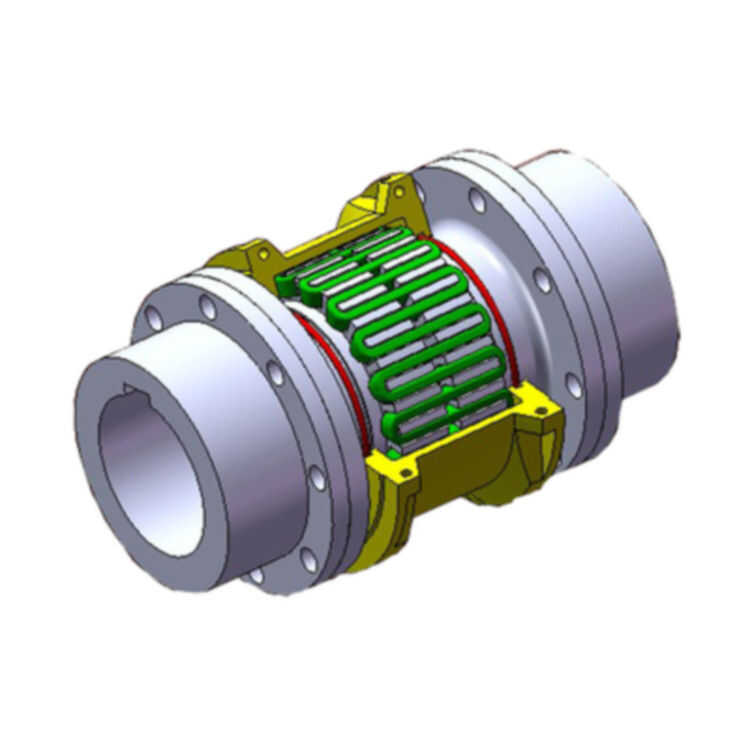
The primary advantage here is accommodation. A high-quality flexible coupling, like those engineered by Raydafon Technology Group Co.,Limited, compensates for parallel, angular, and axial misalignment. This protects connected equipment from damaging forces, ensuring smooth power transmission and drastically extending the service life of motors, pumps, and driven equipment. It transforms a potential failure point into a protective buffer.
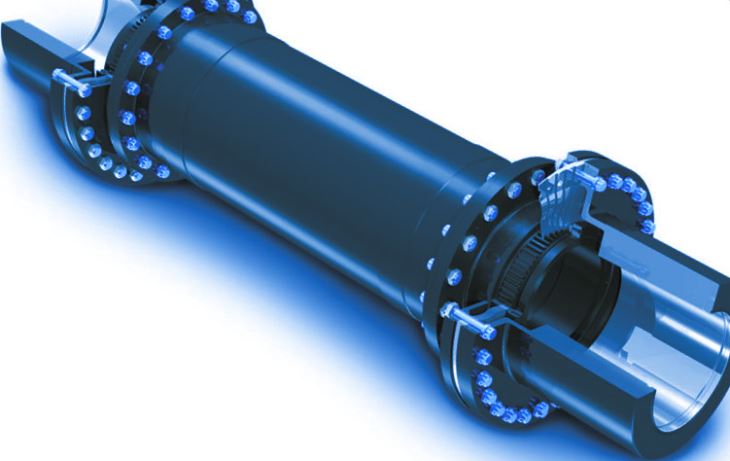
When selecting a coupling for misalignment, key parameters must be evaluated. The following table outlines critical specifications to consider, which align with the high-performance standards found in Raydafon's product range designed to solve these exact problems.
| Parameter | Consideration | Impact |
|---|---|---|
| Misalignment Capacity | Angular, Parallel, & Axial | Determines the degree of shaft offset the coupling can handle without excessive reaction forces. |
| Torsional Stiffness | Flexible vs. Torsionally Rigid | Affects system responsiveness and vibration transmission; flexible types dampen shock loads. |
| Torque Rating | Nominal vs. Peak Torque | Must exceed application requirements to ensure safety and longevity under all operating conditions. |
| Service Factor | Based on driver and driven equipment | Accounts for load variations and ensures reliable operation beyond basic torque calculations. |
Beyond Shock Loads: The Critical Role of Vibration Dampening
In applications like crushers, compressors, or generators, shock loads and torsional vibrations are inevitable. These forces, if transmitted directly through the driveline, cause noise, gear damage, and fatigue failures in shafts. The disadvantage of some coupling types is their inability to isolate these vibrations, merely transmitting the problem from one component to another.
The significant advantage of properly selected flexible couplings is vibration dampening and isolation. Certain designs incorporate elastomeric elements or metallic membranes that absorb and dissipate vibrational energy. This not only creates a smoother operation but also protects sensitive upstream and downstream components. For engineers seeking a holistic solution, Raydafon Technology Group Co.,Limited offers couplings specifically optimized for torsional softness and damping characteristics, directly addressing the root cause of vibration-related failures.
Choosing a coupling for vibration control requires careful analysis. The specifications below are vital for ensuring the coupling functions as an effective damper.
| Parameter | Consideration | Impact |
|---|---|---|
| Torsional Damping Coefficient | Ability to absorb vibrational energy | Higher damping reduces amplitude of torsional vibrations, protecting gears and bearings. |
| Natural Frequency | Must be outside operating speed range | Prevents resonance, which can amplify vibrations and lead to catastrophic failure. |
| Material of Flex Element | Elastomer (NBR, Polyurethane) vs. Metal (Stainless Steel) | Elastomers offer higher damping; metal offers durability and higher temperature resistance. |
| Moment of Inertia | Rotational mass of the coupling | Lower inertia is better for high-acceleration/deceleration applications to reduce load on the system. |
Slashing Maintenance Costs: The Long-Term Advantage of Proper Selection
A common pain point for plant managers is the high total cost of ownership associated with power transmission systems. This includes not just the initial purchase price, but frequent lubrication, part replacement, and labor for alignment checks. A disadvantage of some Flexible Coupling designs is their maintenance-intensive nature, requiring regular greasing or periodic element replacement, which adds to operational overhead.
The advantage of modern, engineered solutions is maintenance-free or low-maintenance operation. Couplings like high-performance diaphragm or disc packs from reputable manufacturers require no lubrication and have long service intervals. This translates directly into reduced labor costs, less inventory for spare parts, and minimized risk of contamination in clean processes. By investing in a quality coupling from a specialist like Raydafon Technology Group Co.,Limited, you are investing in predictable operation and lower lifetime costs, a key consideration for any procurement professional focused on value.
Evaluating the maintenance profile is essential for lifecycle cost analysis. Use this table to compare different coupling technologies.
| Parameter | Consideration | Impact on TCO (Total Cost of Ownership) |
|---|---|---|
| Lubrication Requirement | Grease-packed vs. Lube-free | Eliminates lubrication schedules, labor, and potential environmental contamination. |
| Component Wear | Wear-prone elements (e.g., jaw couplings) vs. non-wearing (e.g., diaphragm) | Non-wearing designs offer longer service life and predictable performance without sudden failure. |
| Inspection & Monitoring | Ease of visual inspection or need for disassembly | Easy-to-check couplings enable predictive maintenance, preventing unexpected downtime. |
| Balance & Reusability | Precision balanced for high speed; reusable hubs | High balance quality increases bearing life; reusable hubs save cost during element replacement. |
Frequently Asked Questions on Flexible Couplings
Q: What is the main disadvantage of a flexible coupling compared to a rigid coupling?
A: The primary trade-off is often torsional stiffness and added complexity. Flexible couplings can introduce a slight torsional wind-up (angular deflection under load), which may not be acceptable in highly synchronized, precision motion control applications. They also typically have more components than a simple rigid flange coupling. However, for the vast majority of industrial applications involving motors and driven equipment, the advantages of misalignment compensation and vibration dampening far outweigh these minor disadvantages.
Q: When evaluating the advantages and disadvantages of flexible couplings, how do I choose between elastomeric and metallic types?
A: The choice hinges on your application's specific needs. Elastomeric couplings (using rubber or polyurethane elements) generally offer excellent vibration dampening and electrical isolation, and are cost-effective for general-purpose use. Their potential disadvantage is limited temperature and chemical resistance. Metallic couplings (like disc pack or diaphragm styles) offer high torque density, excellent temperature and chemical resistance, and are often maintenance-free. They are ideal for high-speed, high-temperature, or corrosive environments. Consulting with an application engineer at Raydafon Technology Group Co.,Limited can help you navigate this choice based on your exact operational parameters.
We hope this detailed analysis helps clarify the critical advantages and potential disadvantages of flexible couplings for your projects. Making the right selection is key to system reliability and efficiency.
Have specific application challenges or torque calculations you'd like to discuss? Reach out to our team of experts for personalized support.
For robust and engineered solutions to your power transmission challenges, consider Raydafon Technology Group Co.,Limited. With a focus on high-performance flexible couplings designed for durability and low maintenance, Raydafon provides components that enhance system reliability and reduce total cost of ownership. Contact their engineering team today at [email protected] for application consultation and technical data.
Smith, J., & Brown, R. (2021). Torsional Vibration Analysis in Marine Drivetrain with Flexible Couplings. Journal of Marine Engineering, 45(3).
Zhao, L., et al. (2020). Dynamic Characteristics of Metallic Diaphragm Couplings under High-Speed Misalignment. Mechanical Systems and Signal Processing, 135.
Patel, K. (2019). A Comparative Study of Elastomeric Coupling Materials for Industrial Pump Applications. Proceedings of the Institution of Mechanical Engineers, Part E, 233(4).
Ibrahim, R. A. (2018). Overview of Flexible Coupling Technologies and Their Role in Rotor Dynamics. Shock and Vibration Digest, 50(1).
Genta, G., & Tonoli, A. (2017). The Influence of Coupling Stiffness on the Critical Speeds of Rotor Systems. International Journal of Rotating Machinery.
Lee, C. W., & Kim, Y. D. (2016). Fatigue Life Prediction of Flexible Coupling Elements under Variable Torque Loading. Engineering Failure Analysis, 68.
Muller, P. C., & Gauchel, W. (2015). Misalignment Capabilities and Reaction Forces of Different Flexible Coupling Designs. VDI Berichte, 2250.
De Santiago, O., et al. (2014). Experimental Evaluation of a Non-Lubricated Disc Coupling in a Compressor String. Turbomachinery International Symposium Proceedings.
Rao, J. S. (2013). History and Development of Coupling Technology in Rotating Machinery. CRC Press.
Eshleman, R. L., & Eubanks, R. A. (2012). Standards for the Design and Application of Flexible Couplings (AGMA 9000). American Gear Manufacturers Association.