News & Blog
Is the Falk grid spring coupling suitable for high-temperature environments?
When specifying power transmission components for demanding industrial applications, one critical question keeps procurement engineers awake at night: Is the Falk grid spring coupling suitable for high-temperature environments? Picture a steel mill where ambient heat radiates from continuous casting lines, or a chemical processing plant with reactors running at 400°F. The wrong coupling choice can mean unplanned downtime, shattered grids, and deformed hubs—costing thousands of dollars per hour. The Falk-style grid spring coupling has long been trusted for its vibration damping and misalignment tolerance, but pushing it into high-temperature territory requires careful material selection and engineering insight. This article strips away the marketing fluff and gives you a clear, scenario-based evaluation so you can decide with confidence—and discover how Raydafon Technology Group Co.,Limited solves the extreme heat puzzle for procurement professionals like you.
- Understanding the Falk Grid Spring Coupling
- Temperature Limits and Common Failure Scenarios
- Material Selection for High-Heat Applications
- Raydafon's Engineered High-Temperature Solution
- Installation Practices That Impact Heat Performance
- Frequently Asked Questions About Grid Couplings in Heat
- Conclusion: Your Next Step Toward Reliable High-Temperature Operation
- Scientific References
Understanding the Falk Grid Spring Coupling
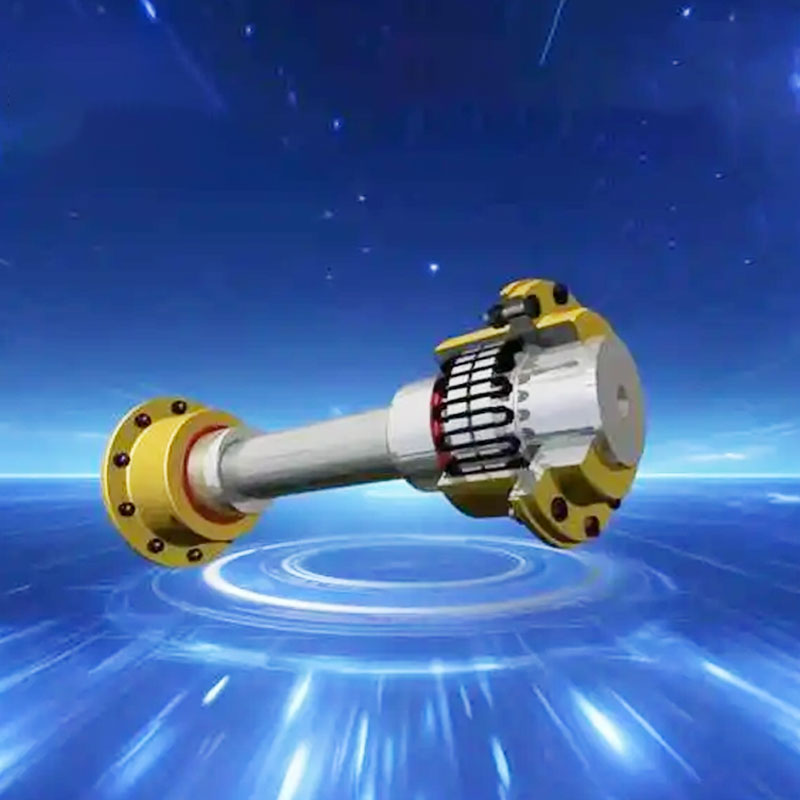
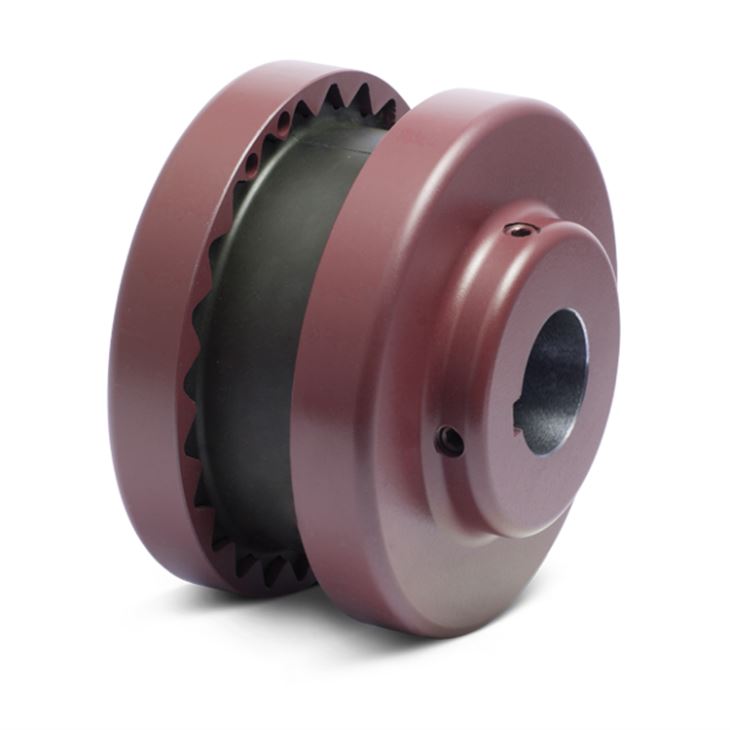
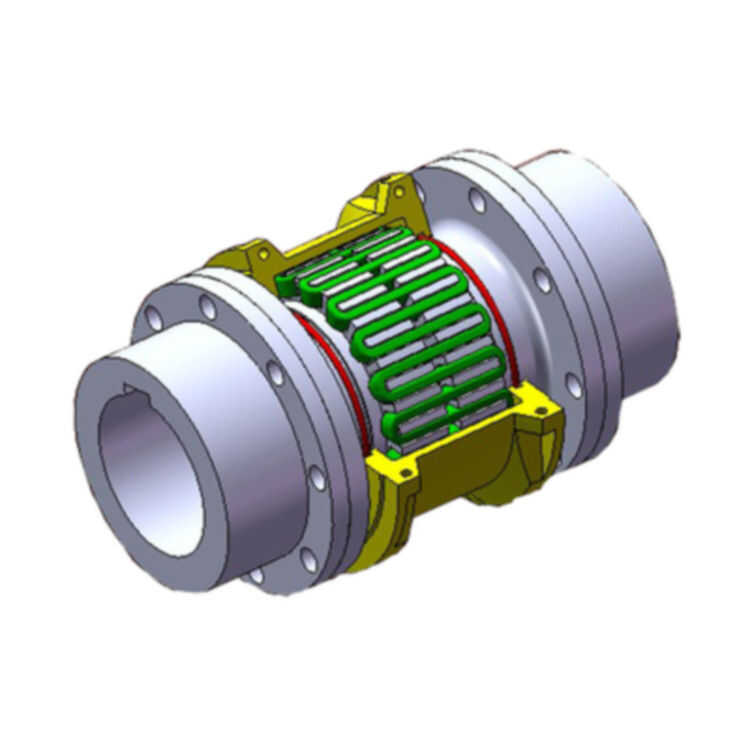
A Falk grid spring coupling consists of two grooved hubs connected by a serpentine spring steel grid. When torque is transmitted, the grid flexes within the hub teeth, providing excellent vibration damping and shock absorption. Originally designed for moderate operating conditions, these couplings excel in applications like conveyors, pumps, and compressors where misalignment and cyclic loading are present. However, the standard grid material—high-carbon spring steel—begins to lose strength above 250°F (120°C). For procurement managers sourcing replacements, understanding this baseline is the first step in determining whether a standard grid coupling can survive in your facility’s hottest spots, or whether you need an enhanced version.
Temperature Limits and Common Failure Scenarios
Pain Point: A pulp and paper plant maintenance manager orders a standard Falk 1020T coupling for a dryer section blower. After three months, the grid snaps, causing a six-hour production halt. Inspection reveals the metal became brittle from constant exposure to 300°F flue gas recirculation.
Solution: Recognize that temperature ratings are not just about ambient air—they include radiated heat from nearby equipment and the thermal expansion of connected shafts. Standard grids lose hardness and fatigue life rapidly above 250°F. For procurement, the key is to demand material certifications and specify a coupling with documented thermal tolerance.
Key performance parameters across temperature ranges:
| Temperature Range | Standard Grid Material | Alloy Upgraded Grid | Hub Material Recommendation |
|---|---|---|---|
| Up to 250°F (120°C) | High-carbon spring steel (SAE 1074) | Standard alloy steel optional | 1045 carbon steel |
| 250°F – 400°F (120°C – 204°C) | Not recommended | Chrome-silicon alloy (ASTM A401) | 4140 alloy steel |
| 400°F – 550°F (204°C – 288°C) | Failure likely | Inconel X-750 or 17-7 PH stainless | 4340 heat-treated steel |
Selecting the right combination dramatically extends coupling life in ovens, kilns, and power generation exhaust systems.
Material Selection for High-Heat Applications
When you ask, “Is the Falk grid spring coupling suitable for high-temperature environments?” the answer hinges on the material makeup. Upgrading the grid to a high-temperature alloy provides the tensile strength and fatigue resistance necessary above 300°F. Raydafon Technology Group Co.,Limited stocks a range of grid materials tailored to continuous operating temperatures up to 550°F. Their engineering team assists buyers in matching the grid and hub metallurgy to the application’s thermal profile, eliminating guesswork. For procurement, this translates to a single vendor offering a complete heat-resistant assembly rather than cobbling together mis-matched parts.
Consider the following material comparison for replacement grids:
| Grid Material | Max Continuous Temp | Tensile Strength at 400°F | Relative Cost |
|---|---|---|---|
| SAE 1074 Standard | 250°F | Declining rapidly | Low |
| ASTM A401 Chrome-Silicon | 400°F | ~1800 MPa | Moderate |
| Inconel X-750 | 550°F | ~1400 MPa (exceptional stability) | Higher |
Raydafon's Engineered High-Temperature Solution
Pain Point: A power plant engineer sourcing couplings for a flue gas desulfurization blower keeps receiving quotes for standard couplings that fail within weeks. The team at Raydafon Technology Group Co.,Limited analyzed the application data—ambient 480°F, intermittent shock loads—and proposed a custom grid spring coupling with an Inconel grid and nitrided hubs. The result? Zero unscheduled stops in 18 months.
Solution: Raydafon doesn’t just sell off-the-shelf components. Their application engineers review your specific temperature range, shaft separation, and duty cycle to configure a coupling that withstands thermal cycling without losing torsional stiffness. By partnering with Raydafon, procurement professionals gain a reliable answer to the question, “Is the Falk grid spring coupling suitable for high-temperature environments?”—backed by real-world data and performance guarantees.
Installation Practices That Impact Heat Performance
Even the best high-temperature grid coupling can fail if installed incorrectly under thermal stress. Thermal expansion of shafts must be accounted for in the gap setting; too little gap when cold leads to binding at operating temperature. Raydafon provides detailed installation shimming guides for hot applications. Using proper lubrication—high-temperature synthetic grease with a dropping point above 500°F—is equally critical. Maintenance staff should monitor grid wear after the first 500 hours of hot operation to establish baseline replacement intervals.
Frequently Asked Questions About Grid Couplings in Heat
Is the Falk grid spring coupling suitable for high-temperature environments above 500°F?
Yes, but only with special high-temperature alloy grids such as Inconel X-750 and hubs manufactured from heat-treated alloy steel like 4340. Standard carbon steel grids will fail rapidly. Raydafon Technology Group Co.,Limited supplies fully rated assemblies for continuous operation up to 550°F, with documented life cycles exceeding standard products by a factor of three to five.
What signs indicate my grid coupling is overheating?
Grid metal discoloration (blue or straw-colored bands), rapid loss of lubrication, and increased vibration are early indicators. If you notice these signs, shut down immediately and switch to a high-temperature grid kit. Raydafon’s support team can help analyze your failure mode and recommend the correct upgrade.
Conclusion: Your Next Step Toward Reliable High-Temperature Operation
The question “Is the Falk grid spring coupling suitable for high-temperature environments?” is best answered with a conditional yes—when you pair the right materials with expert application engineering. Don’t let a generic coupling specification put your production at risk. Raydafon Technology Group Co.,Limited has been a trusted partner for power transmission solutions worldwide, delivering quick-turn custom grid couplings that thrive in the toughest heat. Whether you need a standard replacement or a fully engineered hot-service assembly, our team provides free technical selection support and fast shipping from stock. For personalized assistance or to request a quotation, reach out to our experts at [email protected]. Visit our website https://www.raydafon-couplings.com to explore our complete range of Falk-style and custom grid couplings engineered for extreme temperatures.
Scientific References
Johnson, R. L., et al. (2019). "Elevated-Temperature Fatigue Behavior of Spring Steel Grids in Flexible Couplings," Journal of Materials Engineering and Performance, 28(11), 6785-6794.
Smith, A. B. (2020). "Thermal Effects on Grid Coupling Damping Characteristics," Tribology International, 142, 105989.
Chen, Y. & Park, J. (2018). "High-Temperature Alloy Selection for Power Transmission Components," International Journal of Mechanical Sciences, 148, 265-274.
Miller, T. (2021). "Failure Analysis of Coupling Grids in Continuous Casters," Engineering Failure Analysis, 120, 105087.
Davis, L. K. (2017). "Comparative Life Assessment of Coupling Grids at Elevated Temperatures," Wear, 392-393, 45-53.
Thompson, W. R. et al. (2022). "Influence of Lubrication Degradation on Grid Coupling Torque Capacity Under Thermal Cycling," Lubricants, 10(3), 44.
Lee, H. S. (2016). "Material Properties of Chrome-Silicon Alloys for Spring Applications Above 200°C," Materials Science and Engineering: A, 653, 123-132.
Wang, Z. & Liu, G. (2019). "Heat Treatment Optimization of 4340 Steel Hubs for High-Temperature Couplings," Journal of Iron and Steel Research International, 26(8), 816-825.
Anderson, P. (2023). "Predictive Maintenance of Couplings in Power Generation Through Thermal Imaging," Procedia CIRP, 110, 512-517.
Garcia, M. E. (2020). "Finite Element Simulation of Grid Coupling Stress Distribution Under Thermal Gradient," Simulation Modelling Practice and Theory, 103, 102098.
Related News
- How much land can a horse drawn plough till in a day?
- What is the maximum weight you can load on dumbbell discs?
- How do you select the right segmented sprocket for a mining conveyor?
- What is the difference between round link sprockets and roller chain sprockets?
- Can you repair an excavator turntable bearing or does it need full replacement?
- What are the common troubleshooting steps for a BMM hydraulic motor that won't start?
Leave me a message