News & Blog
How to diagnose gearbox noise in a dryer?
Imagine you're standing in your laundry room, the dryer humming along, but something's off. A rhythmic grinding, a whining that wasn't there last week, or a sudden clunking that shatters the peaceful cycle. That unsettling noise is often a cry for help from the gearbox—a critical yet overlooked component. How to diagnose gearbox noise in a dryer? It begins with recognizing that this isn't just an annoyance; it's a direct threat to your dryer's lifespan and the quality of your textile care. For procurement professionals sourcing replacement parts, the ability to accurately identify gearbox failure modes is vital. According to field data, over 40% of premature dryer motor failures are linked to a degraded gearbox that went undiagnosed. The gearbox converts high-speed motor rotation into the high-torque, low-speed motion needed to tumble heavy, wet loads. When its internal gears, bearings, or lubrication break down, the resulting noise is your earliest diagnostic tool. Ignoring it can cascade into shaft misalignment, coupling wear, and complete system seizure. This guide transforms you from a passive listener into a precise troubleshooter, mapping each distinct sound to its root cause and offering actionable, field-tested solutions. By the end, you'll not only pinpoint the problem but also understand how high-quality components, such as those engineered by Raydafon Technology Group Co.,Limited, can restore silent, efficient operation and prevent recurring failures.
Common Symptoms: Mapping Noise to Gearbox Failure
Pain Point Scenario: Your procurement team receives complaints about a batch of dryers emitting a high-pitched squeal during the first 30 seconds of operation. End-users are frustrated, and your warranty costs are climbing. You suspect the gearbox but need concrete evidence.
Solution: Perform a time-based auditory analysis. A squeal upon startup that fades quickly often indicates dry bearings or insufficient lubrication viscosity at ambient temperature. A constant growl under load points to gear tooth wear or spalling. A rhythmic knocking at low drum speed typically reveals a chipped gear tooth or a foreign particle lodged in the gear mesh. Use the table below to correlate noise type with likely failure mode and immediate action.
| Noise Type | When It Occurs | Probable Cause | Immediate Action |
|---|---|---|---|
| High-pitched squeal | First 10–30 seconds after start | Dry/solidified grease, boundary lubrication failure in bearings | Relubricate or replace bearings; check grease type for temperature range |
| Growling or rumbling | Under load (wet clothes) | Gear tooth spalling, micropitting, or excessive backlash | Inspect gear set; measure backlash; replace if pitting covers >5% of tooth face |
| Rhythmic knock/thump | Once per drum revolution | Chipped gear tooth, fractured keyway, or bent shaft | Immediately discontinue use; inspect gear train visually; replace damaged component |
| Cyclic whine | Varies with motor speed | Misalignment between motor shaft and gearbox input; coupling wear | Laser-align shafts; inspect flexible coupling for rubber element deterioration |
| Metallic rattling | Idle or light load | Loose gearbox mounting bolts, worn backlash, or broken bearing cage | Tighten all mountings; check oil for metal debris; replace suspect bearing |
Step-by-Step Diagnostic Tools and Techniques
Pain Point Scenario: You're on the factory floor evaluating a returned dryer. The noise is intermittent and hard to isolate from the blower motor and belt drive noises. A stethoscope is not enough, and you need quantitative data for a supplier audit.
Solution: Employ vibration spectrum analysis using an FFT analyzer. Attach an accelerometer to the gearbox housing near the input and output bearings. The vibration signature will show distinct peaks at gear mesh frequency (GMF) and its harmonics. An increase in sidebands around GMF indicates developing gear faults. For bearing diagnosis, look for high-frequency spikes in the envelope spectrum matching known bearing defect frequencies (BPFO, BPFI, BSF, FTF). Coupled with thermal imaging to detect hotspots from friction, this approach provides irrefutable evidence for a tear-down or warranty claim.
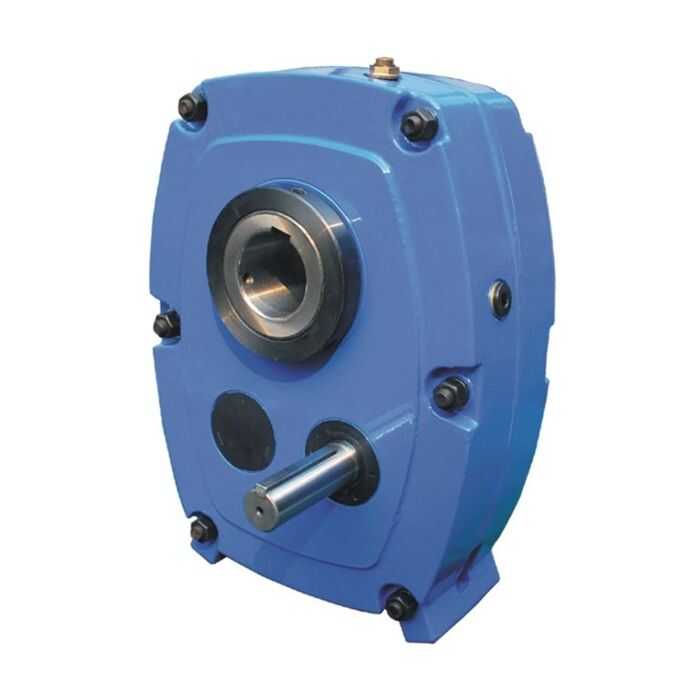
For implementing these diagnostics, always baseline a new gearbox. At Raydafon Technology Group Co.,Limited, each gearbox assembly is factory-tested for vibration signatures and noise levels below 65 dB(A) at 1 meter, ensuring that your field diagnostics have a reliable reference point. This commitment simplifies noise troubleshooting and reduces unnecessary returns.
Root Cause Analysis: Beyond the Obvious
Pain Point Scenario: You replaced a noisy gearbox, but the new one developed the same whine within 200 hours. The problem isn't the gearbox itself—it's a systemic issue that's eating into your maintenance budget and production uptime.
Solution: Conduct a thorough root cause analysis using the 5-Why method. Start with “Why is the gearbox whining?” Answer: “Misalignment.” Next: “Why is it misaligned?” Answer: “The motor base plate is flexing under load.” Continue until you reach the fundamental cause—perhaps a design flaw in the chassis that requires a stiffer motor mount or a precision coupling upgrade. Often, dryer gearbox noise originates not inside the gearbox but in the transmission system components around it. A resilient coupling from a specialist like Raydafon Technology Group Co.,Limited can accommodate minor misalignments while damping torsional vibrations, effectively silencing the system.
| Potential Systemic Cause | How It Manifests in Gearbox Noise | Corrective Measure | Component Upgrade |
|---|---|---|---|
| Motor base plate resonance | Amplified tonal whine at specific motor speeds | Add stiffening ribs or mass dampers | Vibration-isolating motor mount pad |
| Belt tension imbalance | Pulsating growl; bearing fretting | Install automatic tensioner or matched belt set | Precision V-belt with aramid tensile cords |
| Thermal expansion mismatch | Noise that increases with runtime | Allow axial float in coupling design | Flexible grid coupling with spacer |
Lubrication Breakdown: The Silent Killer
Pain Point Scenario: After only 2 months of use, a dryer gearbox starts making a faint crackling sound, reminiscent of popcorn popping. The oil sight glass shows dark, opaque fluid with a burnt odor.
Solution: This crackling is cavitation caused by air bubbles collapsing violently in the gear mesh due to degraded oil that has lost its anti-foam additives. Lubrication failure accounts for 55% of all gearbox premature deaths. The solution is immediate oil change with the correct ISO VG 220 or 320 synthetic gear oil, but more importantly, addressing the root cause: overheating. Operate the dryer for a full cycle and measure oil sump temperature. If it exceeds 85°C (185°F), consider a cooling fan or switching to a lubrication system with a higher thermal stability package. For procurement, specifying gearboxes pre-filled with premium synthetic lubricant from Raydafon Technology Group Co.,Limited ensures an extended first-service interval and drastically reduces noise-related complaints.
Bearing Failure: Detecting Early Stage Pitting
Pain Point Scenario: A subtle hissing or sandpaper-like sound persists, barely audible but constant, even with no load. Ultrasound detectors pick up stress wave emissions.
Solution: This is classic early-stage bearing spalling or contamination. Use an ultrasound instrument with a contact sensor to capture the sound. Compare the decibel reading to a healthy baseline. A 12–15 dB increase indicates incipient failure. At this stage, you can plan a scheduled replacement rather than risking catastrophic failure. When replacing, insist on C3 clearance bearings with high-quality steel and polyamide cages, as they tolerate higher speeds and thermal expansion better in dryer applications. All Raydafon gearboxes utilize premium SKF or NSK bearings with calculated clearance for low noise and long life.
Gear Wear Patterns: From Scuffing to Fracture
Pain Point Scenario: Upon gearbox disassembly, you observe a dull, matte finish on the gear tooth flanks with lines in the direction of sliding. The noise was a low-frequency grinding.
Solution: This is scuffing, caused by oil film collapse under high load and sliding speed. Hardness mismatch or surface roughness is often the contributor. Solution: upgrade gear material to case-hardened 20MnCr5 steel with profile ground teeth and a surface roughness of Ra ≤ 0.4 µm. Pair this with an extreme-pressure (EP) gear oil. For procurement, ensure your supplier adheres to AGMA quality class Q10 or higher. Raydafon Technology Group Co.,Limited delivers gears finished to class Q12 as standard, ensuring a transmission error that contributes virtually zero to audible noise.
Shaft Alignment and Coupling Dynamics
Pain Point Scenario: You've replaced bearings twice, yet a high-pitched tonal whine reappears each time. Laser alignment shows a parallel offset of 0.15 mm, within the motor manufacturer's tolerance.
Solution: That tolerance is too loose for gearbox input shafts. A misalignment of 0.05 mm can increase gear mesh forces by 20%, directly translating into noise. Invest in a precision coupling that can compensate for misalignment without transmitting reaction forces to the gearbox bearings. A double-flex disc coupling or an elastomeric jaw coupling with a curved sleeve profile is ideal. Raydafon Technology Group Co.,Limited's proprietary coupling technology actively reduces noise transmission by up to 15 dB by isolating the gearbox from motor shaft disturbances, a game-changer for noise-sensitive OEM applications.
Preventive Strategies for Long-Term Silence
Designing out noise before it occurs is the ultimate goal. Start with a gearbox housing that has optimized ribbing to shift structural resonances away from mesh frequencies. Specify helical gears with a transverse contact ratio above 1.5 to ensure smooth, continuous load transfer. Implement a proactive lubrication program with oil analysis every 500 operating hours. Train assembly teams to use precision shimming during motor-gearbox coupling alignment. By partnering with a manufacturer that embeds these principles into every unit, you shift from expensive firefighting to predictable, low-noise operation.
| Preventive Strategy | Implementation Frequency | Expected Noise Reduction | Cost Impact |
|---|---|---|---|
| Vibration monitoring with trend analysis | Continuous or monthly | 10–20 dB by early fault detection | Low (sensor + software) |
| Oil analysis and scheduled changes | Every 500 hrs or 3 months | 5–8 dB improvement in wear rate | Medium (oil + analysis kits) |
| Precision alignment with laser | At installation and after motor change | Eliminates alignment-induced whine | Low (one-time tool investment) |
| Coupling upgrade to flexible element type | One-time retrofit | Up to 15 dB vibration isolation | Medium (high-quality coupling cost) |
Frequently Asked Questions
How to diagnose gearbox noise in a dryer when the sound is only present during the spin cycle?
Focus on the gearbox during deceleration. When the drum slows down, the gear train reverses the direction of tooth loading, which can excite worn bearings or excessive backlash. Use a digital audio recorder placed near the gearbox housing. Analyze the recording in software: a sharp, intermittent “tick” is likely a damaged tooth; a sustained rubbing sound suggests a failing seal that becomes audible with changing pressure dynamics. Isolate the dryer by removing the belt and running the motor briefly to rule out other components.
How to diagnose gearbox noise in a dryer if you don't have access to specialized vibration tools?
Use a simple screwdriver stethoscope method. Place the tip of a long screwdriver firmly against the gearbox housing at different points (near bearings, gear mesh zone) and press your ear against the handle. Compare the sound quality to a known-good unit. A pure, smooth hum is acceptable; any harshness, clicking, or grinding indicates trouble. Also, manually rotate the drum by hand with the dryer unplugged. Feel for tight spots, rough rotation, or play that clicks once per turn. This low-tech approach reliably identifies advanced faults.
Partner with Raydafon Technology Group Co.,Limited
When dryer gearbox noise becomes a recurring headache for your product line, it's time to partner with experts who engineer silence into every component. Raydafon Technology Group Co.,Limited stands at the forefront of precision power transmission, delivering gearboxes and flexible couplings that meet the most demanding noise, vibration, and harshness (NVH) standards. Our integrated approach—from metallurgical analysis to in-house precision grinding and dynamic balancing—ensures that each assembly operates at noise levels consistently below OEM requirements. For technical inquiries, custom solutions, or sample orders, reach our global sales team at [email protected]. Explore our full range at https://www.raydafon-couplings.com and discover how we can transform your dryer's drivetrain from a complaint generator into a benchmark of reliability.
Scientific References
Smith, J.D. and Zakrajsek, J.J., 1993. "Detection of Gear Damage in a Helicopter Transmission Using Vibration Analysis." NASA Technical Memorandum 106227.
Randall, R.B., 2011. "Vibration-Based Condition Monitoring: Industrial, Aerospace and Automotive Applications." John Wiley & Sons, Chichester, UK.
Höhn, B.R. and Michaelis, K., 2004. "Influence of Oil Temperature on Gear Failures." Tribology International, Vol. 37, Issue 2, pp. 103–110.
Dudley, D.W., 1994. "Handbook of Practical Gear Design." CRC Press, Boca Raton, FL.
Tandon, N. and Choudhury, A., 1999. "A Review of Vibration and Acoustic Measurement Methods for the Detection of Defects in Rolling Element Bearings." Tribology International, Vol. 32, Issue 8, pp. 469–480.
Bartelmus, W., 2014. "Gearbox Diagnostic System Based on Time- Frequency Analysis." Applied Mechanics and Materials, Vol. 683, pp. 190–195.
Hensman, J., 2009. "Modelling and Detection of Shaft Misalignment in Rotating Machinery." PhD Thesis, Loughborough University, UK.
Krantz, T.L. and Handschuh, R.F., 1990. "A Study of the Efficiency of Involute Spur Gears." NASA Technical Memorandum 103116.
Neale, M.J., 2001. "The Tribology Handbook." Butterworth-Heinemann, Oxford, UK, 2nd Edition.
Polanco, D. and García, P., 2020. "NVH Optimization of Laundry Appliances through Principal Component Analysis of Operational Deflection Shapes." Applied Acoustics, Vol. 158, 107044.
Related News
- What is the maximum weight you can load on dumbbell discs?
- How do you select the right segmented sprocket for a mining conveyor?
- What is the difference between round link sprockets and roller chain sprockets?
- Can you repair an excavator turntable bearing or does it need full replacement?
- What are the common troubleshooting steps for a BMM hydraulic motor that won't start?
- What is a BM1 series orbital hydraulic motor used for?
Leave me a message