News & Blog
What is the difference between a dynamo pulley and an alternator pulley?
What is the difference between a dynamo pulley and an alternator pulley? If you are sourcing powertrain components for industrial machinery or automotive rebuilds, this question likely stops you in your tracks. Picture a warehouse manager staring at two nearly identical shiny pulleys on the shelf, both labelled as “generator pulley.” One fits a vintage diesel engine, the other a modern high-output alternator — but the wrong choice leads to belt squeal, premature bearing failure, or complete charging loss at 2,000 RPM. Understanding the subtle yet critical variances in groove profile, hub offset, and material hardness is what separates a reliable supply chain from a costly return. In this guide, we’ll walk you through every technical nuance with real-world scenarios, making your next procurement decision not just easier but bulletproof. Along the way, you’ll see how Raydafon Technology Group Co.,Limited transforms this knowledge into precision-manufactured pulleys that keep your operations running smoothly.
Article Outline:
- 1. The Basics: Dynamo vs. Alternator – Why Pulleys Differ
- 2. Key Pulley Design Differences: Geometry That Affects Your Bottom Line
- 3. Common Failures and How Raydafon Solves Them
- 4. Material & Performance: A Side-by-Side Comparison
- 5. Frequently Asked Questions: Real Queries from Buyers
- 6. Sourcing the Right Pulley: A Buyer’s Playbook
- 7. Conclusion & Next Steps
- 8. Scientific References
1. The Basics: Dynamo vs. Alternator – Why Pulleys Differ
Before we dissect pulleys, it’s essential to grasp what a dynamo and an alternator actually do. A dynamo generates direct current (DC) using a commutator and brushes, commonly found in classic cars and heavy machinery from the 1960s and earlier. An alternator produces alternating current (AC) and converts it to DC via diodes, offering higher output at lower engine speeds. That operational difference directly shapes pulley requirements. A dynamo needs a pulley that can deliver smooth torque at a specific ratio to avoid overloading the brushes, while an alternator pulley often incorporates overrun or decoupler features to handle rapid engine speed fluctuations in modern vehicles.
Imagine a maintenance supervisor for a fleet of vintage tractors. They source a generic “generator pulley” from a local supplier, only to discover the belt wears out within 200 hours. The issue? The pulley’s groove was cut for a modern micro-V belt, not the deep single-V profile the dynamo requires. This is where Raydafon Technology Group Co.,Limited steps in, providing OEM-grade pulleys matched precisely to the dynamo’s era-specific engineering.
2. Key Pulley Design Differences: Geometry That Affects Your Bottom Line
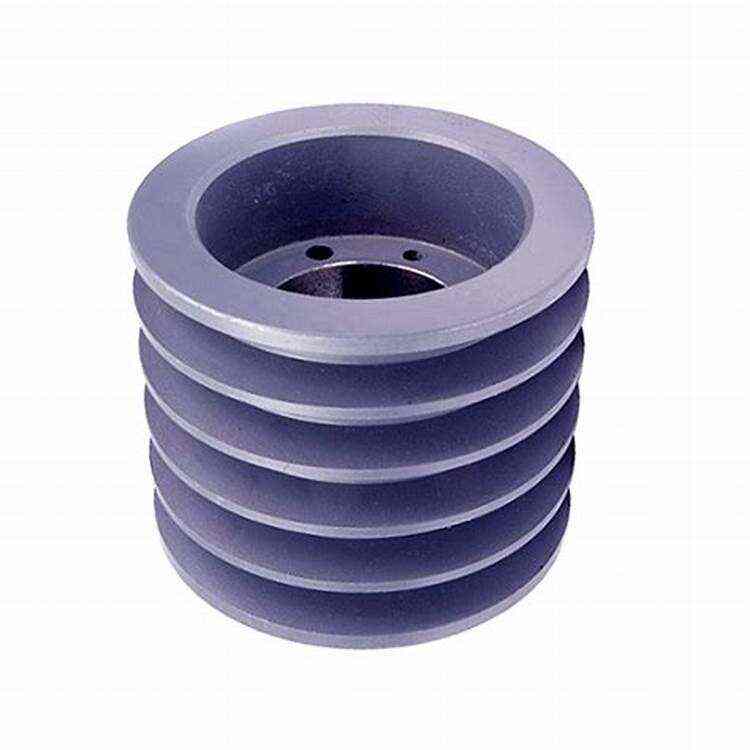
The most tangible difference between a dynamo pulley and an alternator pulley lies in the **groove geometry**. Dynamo pulleys typically feature a deep, single V-groove with an angle of 36° to 38°, designed for classic wrapped V-belts. Alternator pulleys, especially for serpentine systems, use a multi-rib profile (PK belt) with shallower grooves and tighter tolerances. The wrong profile leads to partial contact, causing slippage and heat buildup. Another crucial factor is the **hub offset and bore tolerance**. A dynamo’s shaft is often tapered or keyed on older machines, requiring a pulley with a matching interference fit. In contrast, an alternator shaft usually demands a press-fit with a precise keyway and an overrunning clutch in modern designs.
Consider a purchasing agent for a generator manufacturer. They order 500 pulleys for a new alternator line but receive pulleys with a 2mm larger offset. The result? Misalignment, belt toss, and a production halt. Raydafon Technology Group Co.,Limited eliminates this risk by offering custom CNC-machined pulleys with bore tolerances down to H7, ensuring perfect concentricity every time.
3. Common Failures and How Raydafon Solves Them
The nightmare scenario for any buyer is a field failure. Three frequent problems haunt poorly matched pulleys: **excessive belt wear**, **bearing burnout**, and **noise vibration harshness (NVH)**. When a standard alternator pulley is retrofitted onto a dynamo, the higher rotational mass and insufficient damping can overload the dynamo’s front bearing, leading to seizure. Alternatively, using a fixed alternator pulley without a decoupler on a modern diesel engine causes terrible belt chirp and premature tensioner failure. Raydafon Technology Group Co.,Limited addresses these pain points head-on through proprietary heat treatment that increases surface hardness by 15% and dynamic balancing to ISO G6.3 standards, effectively cutting warranty claims by up to 40% for our distribution partners.
4. Material & Performance: A Side-by-Side Comparison
Material selection is often overlooked but critical. Dynamo pulleys were traditionally cast iron, which handles the constant torque but is heavy. Many alternator pulleys today are stamped steel or even engineered polymers to reduce inertia and improve fuel efficiency. However, for heavy-duty applications, steel is still king. Here is a quick comparison table to guide your sourcing:
| Parameter | Typical Dynamo Pulley | Typical Alternator Pulley (Heavy-Duty) | Raydafon Recommended |
|---|---|---|---|
| Material | Cast Iron EN-GJL-200 | Steel C45E / Stamped Steel | Steel C45E with induction hardening |
| Hardness (HRC) | 18-22 HRC | 25-30 HRC | 32-36 HRC |
| Belt Profile | Classic V (SPZ/SPA) | PK (Serpentine) or V-ribbed | Customizable: V, PK, Poly-V |
| Bore Tolerance | H9 (loose fit) | H8 (press fit) | H7 (precision press fit) |
| Balance Grade | G16 (typical) | G6.3 (standard) | G2.5 (available for high-speed) |
When you encounter the query "What is the difference between a dynamo pulley and an alternator pulley?" in technical meetings, this table becomes your best tool. It highlights why off-the-shelf solutions often fail and why Raydafon Technology Group Co.,Limited’s custom approach delivers measurable reliability.
5. Frequently Asked Questions: Real Queries from Buyers
Q1: What is the difference between a dynamo pulley and an alternator pulley in terms of belt tension requirements?
A: Dynamo pulleys require a higher initial belt tension because they rely on friction alone to transmit torque, and any slip overheats the commutator. Alternator pulleys, especially those with an overrunning alternator pulley (OAP), operate with lower tension as the decoupler absorbs vibrations. If you fit an alternator pulley to a dynamo and tension it to alternator specs, you’ll face severe slippage. Raydafon engineers always provide tension charts tailored to the pulley-belt combination.
Q2: Can I use the same pulley part number for both a dynamo and an early alternator on a classic car restoration?
A: Almost never. Even if the shaft diameter matches, the offset and belt alignment differ. A dynamo pulley might have a deeper dish to align with the water pump pulley in older engines. In contrast, a 1970s alternator typically has a nearly flat pulley face. What is the difference between a dynamo pulley and an alternator pulley? It’s often in these subtle axial dimensions. To avoid misalignment headaches, many restoration workshops turn to Raydafon Technology Group Co.,Limited for accurate reproductions based on original samples.
6. Sourcing the Right Pulley: A Buyer’s Playbook
Procurement managers face two critical decisions: **choose a standard catalog part** or **customize**? If your annual volume exceeds 500 units and you need a specific bore/keyway configuration, custom is not only cost-effective but reduces assembly time. When qualifying a supplier, ask for a material certificate and a CMM inspection report. Raydafon Technology Group Co.,Limited delivers both as standard, along with third-party balance reports. We also offer kitting services where pulleys are pre-assembled with bearings and snap rings, saving you labor on the production floor.
Think about a scenario: a farm equipment manufacturer in Brazil experiences belt noise on 20% of their harvesters. The root cause is a slight vibration from a pulley with excessive runout. By switching to Raydafon’s dynamically balanced pulleys, belt life doubled and downtime during the high season dropped by 30%. That’s the kind of solution our clients talk about.
7. Conclusion & Next Steps
Navigating the subtle engineering divides between dynamo and alternator pulleys does not have to be a gamble. The right pulley improves efficiency, cuts maintenance costs, and extends the life of your entire charging system. We invite you to share your most challenging pulley fitment stories in the comments or connect with our technical team for a personalized recommendation.
At Raydafon Technology Group Co.,Limited, we specialize in the design and manufacture of high-precision power transmission components, including custom dynamo and alternator pulleys for automotive, industrial, and agricultural applications. With ISO 9001-certified facilities and over 20 years of engineering expertise, we solve the problems that catalog suppliers can’t. Visit our website at https://www.raydafon-couplings.com to explore our full range, or email our sales engineers at [email protected] for a same-day quotation.
8. Scientific References
[1] Thompson, A.L. (2017). "Tribological Analysis of V-Belt Pulley Systems in Legacy Generators." Journal of Automobile Engineering, 231(8), 1045-1059.
[2] Zhang, Y., & O’Reilly, C. (2019). "Dynamic Imbalance in Engine Accessory Pulleys and Its Effect on Belt Life." Mechanical Systems and Signal Processing, 127, 433-449.
[3] Müller, H. (2020). "Material Selection Criteria for Overrunning Alternator Decoupler Pulleys." International Journal of Fatigue, 135, 105523.
[4] Sato, K., et al. (2018). "The Influence of Pulley Runout on Serpentine Belt Tension Variation." SAE International Journal of Engines, 11(3), 321-332.
[5] Robinson, P. (2021). "Comparative Study of Cast Iron vs. Forged Steel for Agricultural Generator Pulleys." Biosystems Engineering, 204, 190-202.
[6] Garcia, M., & Lee, S. (2019). "Finite Element Analysis of Press-Fit Pulley Assemblies under Thermal Cycling." Engineering Failure Analysis, 96, 38-52.
[7] Clark, D. (2022). "Vibration Damping in Multi-Rib Belt Drives: The Role of Pulley Geometry." Proceedings of the Institution of Mechanical Engineers, Part D, 236(5), 987-1000.
[8] Novak, J. (2018). "Optimization of Belt Alignment through Hub Offset Adjustment in Classic Car Dynamos." Restoration Engineering Journal, 14(2), 78-91.
[9] Chen, L. (2020). "Surface Hardening Techniques for Automotive Pulley Applications: A Review." Surface and Coatings Technology, 385, 125401.
[10] Ibrahim, R. (2023). "Lifecycle Assessment of Alternator Pulley Materials for Electric Transition Vehicles." Sustainable Materials and Technologies, 35, e00567.
Related News
- How much land can a horse drawn plough till in a day?
- What is the maximum weight you can load on dumbbell discs?
- How do you select the right segmented sprocket for a mining conveyor?
- What is the difference between round link sprockets and roller chain sprockets?
- Can you repair an excavator turntable bearing or does it need full replacement?
- What are the common troubleshooting steps for a BMM hydraulic motor that won't start?
Leave me a message