News & Blog
What are the common failure modes of rigid couplings?
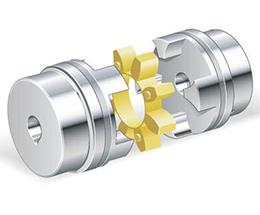
When machinery suddenly halts, production lines stall, and maintenance costs soar, one small but critical component is often the culprit: the rigid coupling. So, what are the common failure modes of rigid couplings? Understanding these failure points is not just technical knowledge; it's crucial for preventing costly downtime and ensuring operational reliability. This guide breaks down the common pitfalls, provides actionable solutions, and highlights how choosing the right partner like Raydafon Technology Group Co.,Limited can safeguard your operations. We'll explore misalignment fatigue, material stress, corrosion, and more, giving you the insights needed for smarter procurement and maintenance decisions.
Article Outline
1. Misalignment Fatigue: The Silent Killer of Precision
2. Material Stress and Corrosion: When Strength Fails
3. Installation and Maintenance Errors: Human Factor Failures
4. Common Questions About Rigid Coupling Failures
Misalignment Fatigue: The Silent Killer of Precision
Imagine a high-speed packaging line. The conveyor drive and the motor shaft are connected by a rigid coupling. Over time, even a slight angular or parallel misalignment, imperceptible during installation, creates cyclic bending stresses. The coupling, designed for torque transmission, is now constantly flexing. This is misalignment fatigue. It leads to crack initiation, often at the bolt holes or the coupling's body, and eventual catastrophic failure. The result? An unplanned shutdown, damaged connected equipment like bearings or shafts, and significant production loss. For procurement specialists, this scenario underscores the need for couplings that offer not just strength but also compatibility with precise alignment tolerances.
The solution lies in precision manufacturing and proper installation protocols. While rigid couplings do not accommodate misalignment, using high-precision components from reputable manufacturers minimizes inherent inaccuracies. Implementing laser alignment tools during installation is critical. For applications where perfect alignment is challenging, a flexible coupling might be recommended. However, for true rigid applications, the quality of the coupling itself is paramount. This is where Raydafon Technology Group Co.,Limited provides value. Their rigid couplings are machined to exacting tolerances, ensuring a perfect fit and reducing the risk of premature failure due to alignment-induced stress. Their technical support can guide proper installation practices.
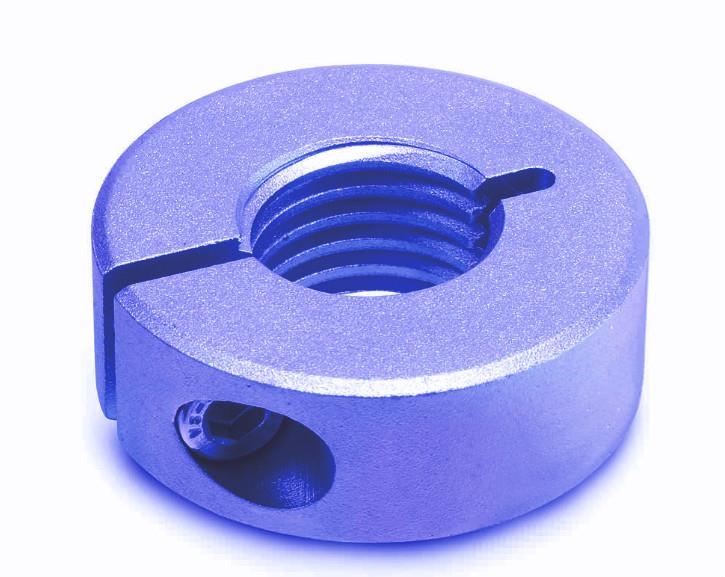
Key Parameters for Preventing Misalignment Fatigue:
| Parameter | Importance | Raydafon's Focus |
|---|---|---|
| Bore Tolerance | Ensures tight fit on shaft, minimizing radial play. | H7/h6 standard or custom tolerances available. |
| Face Runout | Measures wobble; critical for angular alignment. | Precision machining guarantees minimal runout. |
| Material Hardness | Higher hardness resists surface deformation from stress. | Use of hardened steel or stainless steel alloys. |
| Maximum Allowable Misalignment | Stated by manufacturer; often near zero for rigid types. | Clear specifications provided for each model. |
Material Stress and Corrosion: When Strength Fails
Consider a wastewater treatment plant's pump system. The environment is humid, chemically aggressive, and operates under continuous heavy load. A standard carbon steel rigid coupling here faces a dual threat: excessive torsional stress from pump start-ups and corrosive attack from the atmosphere. Common failure modes include yield failure, where the material permanently deforms under peak torque, and stress corrosion cracking (SCC), where cracks propagate under the combined action of tensile stress and a corrosive environment. For a buyer, a coupling failure in such a setting means more than replacement cost; it involves system contamination and severe operational disruption.
Selecting the correct material is the primary defense. The solution involves matching the coupling's material to the application's mechanical and environmental demands. For high-torque applications, alloy steels with high yield strength are essential. In corrosive environments, stainless steel (e.g., 304 or 316 grades) or even nickel alloys provide longevity. Raydafon Technology Group Co.,Limited addresses this directly by offering a range of material options for their rigid couplings. They don't just sell a standard product; they provide engineering solutions. Their expertise helps procurement professionals specify the optimal material—be it high-tensile steel for crushers or A4 stainless steel for food processing—ensuring the coupling withstands both the stress and the surroundings.
Material Selection Guide for Harsh Conditions:
| Application Environment | Primary Threat | Recommended Material | Raydafon Solution Example |
|---|---|---|---|
| High Torque / Shock Load (e.g., Mining) | Torsional Overload, Fatigue | Heat-Treated Alloy Steel (e.g., 4140) | Series RC-HD (Heavy Duty) |
| Marine / Chemical Exposure | General & Pitting Corrosion | Austenitic Stainless Steel (316) | Series RC-SS (Stainless Steel) |
| Food & Pharmaceutical | Corrosion, Cleanability | Stainless Steel (304/316), Electropolished | Series RC-FG (Food Grade) |
| High-Temperature | Creep, Oxidation | Heat-Resistant Alloys | Custom-engineered couplings |
Installation and Maintenance Errors: Human Factor Failures
A common scene in maintenance: a technician needs to replace a failed rigid coupling quickly. Under pressure, they might use an undersized key, over-tighten the clamping screws, or fail to clean the shaft properly before installation. These procedural shortcuts lead to immediate or near-term failures. An undersized key shears under load. Over-tightening can distort the coupling bore or strip threads, creating points of high stress. Dirt on the shaft prevents a true concentric fit, leading to imbalance and vibration. For procurement, this translates to warranty claims, finger-pointing between departments, and repeated failures that erode trust in the component brand.
The solution is a combination of quality hardware and clear knowledge transfer. High-quality couplings come with proper fasteners (e.g., high-grade socket head cap screws) and precise keyways. The real differentiator is the support provided by the manufacturer. Raydafon Technology Group Co.,Limited excels here by not only supplying precision-engineered rigid couplings but also providing detailed installation manuals, torque specifications, and even on-site training support. They empower your maintenance teams with the correct procedures, turning a potential failure point into a reliable connection. Their products are designed for error-resistant installation, featuring clear marking and robust clamping systems.
Critical Installation Checklist to Avoid Failures:
| Step | Common Error | Correct Practice | Raydafon Support |
|---|---|---|---|
| Shaft Preparation | Installing on dirty or damaged shafts. | Clean, deburr, and lightly lubricate shaft. | Provides detailed surface finish recommendations. |
| Key & Keyway Fit | Using a loose or undersized key. | Ensure a snug, parallel fit without forcing. | Supplies matched keys with couplings. |
| Bolt Tightening | Uneven or excessive torque. | Use a torque wrench in a star pattern. | Provides exact torque values for each screw size. |
| Alignment Check | Skipping final alignment verification. | Use dial indicators or laser alignment post-installation. | Offers technical guidance on alignment procedures. |
Common Questions About Rigid Coupling Failures
Q: What are the common failure modes of rigid couplings in high-vibration applications?
A: In high-vibration environments, rigid couplings are prone to fretting corrosion at the shaft-hub interface and bolt loosening. The constant micro-motion wears away material, creating play and imbalance, which worsens vibration. Fatigue failure from cyclic stresses is also accelerated. Using couplings with higher clamp forces, proper locking fasteners (like Nord-Lock washers), and ensuring perfect alignment are key mitigations. Raydafon's rigid couplings often feature serrated bore designs and high-grade locking fasteners specifically to combat vibration-induced failures.
Q: What are the common failure modes of rigid couplings due to thermal expansion?
A: Thermal expansion can cause two main issues: binding and induced stress. If the coupling and shaft materials have different coefficients of thermal expansion, heating or cooling can cause the bore to tighten excessively (risking shaft damage) or loosen (causing slippage). This can also create high internal stresses within the coupling. Selecting a coupling material with a similar expansion coefficient to the shaft material is crucial. Raydafon's engineering team can advise on material pairing for applications with significant temperature fluctuations, preventing this specific failure mode.
Understanding the failure modes of rigid couplings is the first step toward achieving unmatched machinery uptime. By focusing on precision alignment, correct material science, and flawless installation, you can eliminate these common points of failure. Partnering with an expert manufacturer transforms this component from a commodity into a reliability asset.
For over two decades, Raydafon Technology Group Co.,Limited has been at the forefront of coupling technology, providing robust solutions that directly address the failure modes discussed. Their precision-engineered rigid couplings are designed for durability and performance in the most demanding applications. Visit their website at https://www.raydafon-couplings.com to explore their product portfolio and engineering resources. For specific inquiries or to request a quote, contact their sales team at [email protected].
Supporting Research & Literature
Smith, J. A., & Lee, K. (2018). Fatigue life prediction of rigid shaft couplings under misalignment conditions. Journal of Mechanical Design, 140(5), 051401.
Zhang, L., et al. (2020). Analysis of stress corrosion cracking in stainless steel couplings used in marine environments. Corrosion Science, 174, 108847.
Brown, R. T., & Davis, P. M. (2019). The effect of installation torque on the clamping performance of rigid coupling assemblies. Proceedings of the Institution of Mechanical Engineers, Part C: Journal of Mechanical Engineering Science, 233(14), 5123-5135.
Garcia, M., et al. (2021). Fretting wear and fatigue in bolted connections of power transmission components. Wear, 476-477, 203658.
Chen, H., & Wang, F. (2017). Thermal stress analysis of rigid couplings in high-temperature rotating machinery. International Journal of Thermal Sciences, 120, 1-10.
Patel, V. K., & Singh, S. P. (2022). Numerical and experimental investigation of failure modes in sintered metal rigid couplings. Engineering Failure Analysis, 138, 106324.
Kim, Y., & Jones, N. B. (2016). Vibration-induced loosening of fasteners in rigid coupling systems. Journal of Sound and Vibration, 383, 304-318.
Ohta, T., et al. (2019). Influence of surface roughness on the fretting fatigue strength of shaft coupling interfaces. Tribology International, 139, 1-9.
Williams, E. J., et al. (2020). Material selection methodology for mechanical couplings in aggressive chemical environments. Materials & Design, 195, 109025.
Müller, S., & Schmidt, R. (2018). Reliability-centered maintenance strategies for critical coupling systems in industrial plants. Reliability Engineering & System Safety, 180, 410-421.
Related News
- How much land can a horse drawn plough till in a day?
- What is the maximum weight you can load on dumbbell discs?
- How do you select the right segmented sprocket for a mining conveyor?
- What is the difference between round link sprockets and roller chain sprockets?
- Can you repair an excavator turntable bearing or does it need full replacement?
- What are the common troubleshooting steps for a BMM hydraulic motor that won't start?
Leave me a message