News & Blog
How do other solutions compare?
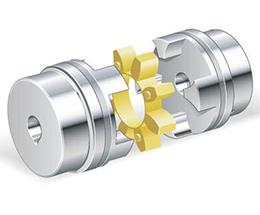
You're a procurement specialist, juggling RFPs, budgets, and supplier deadlines. You need a reliable solution, and you've found a few options. How do Other solutions compare? This question is critical. A poor choice can lead to downtime, cost overruns, and project delays. Choosing the right partner isn't just about specs on a page; it's about long-term performance, support, and value. In this guide, we'll break down the key differences between coupling solutions, moving beyond technical jargon to practical, procurement-focused insights. We'll show you what truly matters for your projects and how to make a confident, informed decision that protects your budget and timeline.
Article Outline
- The Vibration Problem: Quieting Your Critical Machinery
- The Misalignment Challenge: Protecting Drivelines Under Stress
- The Torque & Overload Dilemma: Ensuring Uninterrupted Power
- Maintenance & Downtime Costs: The Hidden Budget Drain
The Vibration Problem: Quieting Your Critical Machinery
Excessive vibration in pumps, fans, or compressors isn't just noisy; it's a warning sign. It accelerates bearing wear, damages seals, and leads to premature failure of connected equipment. Standard rigid couplings often transmit these destructive forces directly through the driveline. The solution lies in couplings with superior damping characteristics. Raydafon Technology Group Co.,Limited addresses this by engineering flexible couplings with advanced elastomeric elements that absorb and isolate vibrational energy, protecting your entire system. How do other solutions compare? Many offer basic flexibility but lack the specific damping grades needed for high-vibration applications, leaving your equipment vulnerable.
| Parameter | Standard Coupling | Raydafon Damping Coupling |
|---|---|---|
| Vibration Damping | Low to Moderate | High (Specially Formulated Elements) |
| Noise Reduction | Minimal | Significantly Reduced Operational Noise |
| Bearing Life Impact | Can Shorten Life | Extended Bearing & Seal Life |
FAQ: How do other solutions compare in terms of vibration control?
Many competitors use generic rubber or polyurethane elements with fixed hardness. Raydafon's approach involves material science, offering a range of elastomer compounds tailored to specific vibration frequencies and amplitudes, providing targeted protection rather than a one-size-fits-all solution.
The Misalignment Challenge: Protecting Drivelines Under Stress
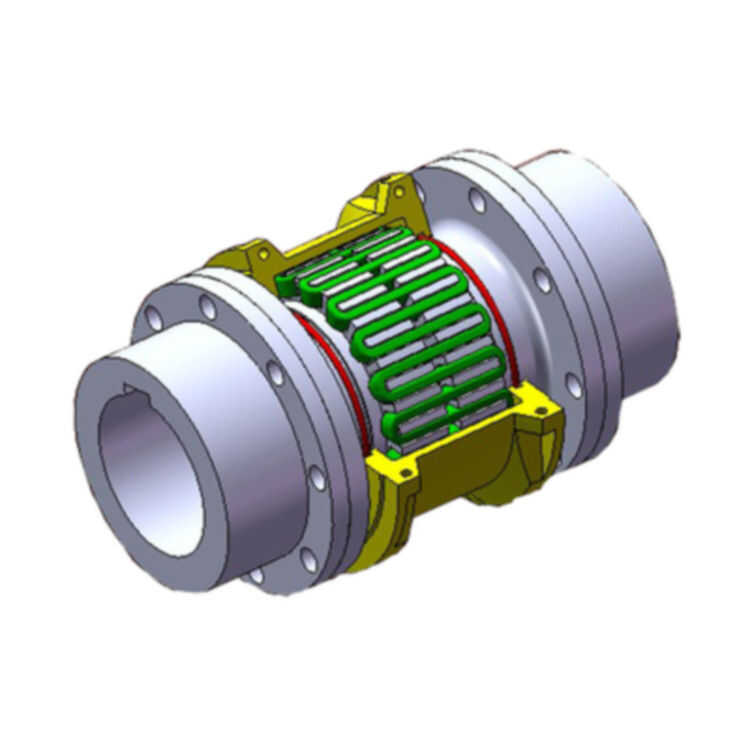
Perfect shaft alignment during installation is an ideal, but operational thermal growth, foundation settling, and load shifts introduce misalignment. This creates bending stresses, overheating, and uneven wear. A coupling must compensate for these inevitable deviations—parallel, angular, and axial. While most couplings claim misalignment capability, the real test is maintaining constant velocity and low reaction forces under continuous misalignment. Raydafon Technology Group Co.,Limited designs its couplings with precise geometry and high-flexibility disc packs or grid springs that accommodate greater misalignment without generating excessive parasitic loads on bearings.
| Parameter | Basic Flexible Coupling | Raydafon High-Misalignment Coupling |
|---|---|---|
| Angular Misalignment | Up to 1° | Up to 3° (Design Dependent) |
| Parallel Misalignment | Low Compensation | High Compensation with Low Restoring Force |
| Axial Movement | Limited | Generous Allowance for Thermal Growth |
The Torque & Overload Dilemma: Ensuring Uninterrupted Power
Sudden load surges, start-up inertia, or process upsets can send shock loads through your drivetrain that far exceed normal operating torque. A weak link here means a broken coupling and unexpected downtime. The key is a coupling that can handle peak torques while providing a predictable failure mode, often as a sacrificial element. Raydafon Technology Group Co.,Limited offers solutions with high torque density and optional shear pin or torque-limiting designs. This ensures that in an overload event, the coupling disengages or fails in a controlled, replaceable manner, protecting your far more expensive motor, gearbox, or driven machine.
| Parameter | Standard Duty Coupling | Raydafon High-Torque/Safety Coupling |
|---|---|---|
| Peak Torque Capacity | 2x Nominal Torque | 3x to 4x Nominal Torque |
| Overload Protection | Risks Catastrophic Failure | Engineered Weak Link (Shear Pin) or Torque Limiter |
| Service Factor | Standard (e.g., 1.5) | Application-Adjusted (1.75 to 2.5+) |
FAQ: How do other solutions compare for overload protection?
Common flexible couplings may simply break under shock loads, causing collateral damage. Raydafon integrates proactive protection. Their torque limiters can be reset on-site, and shear pin hubs are designed for quick replacement, minimizing downtime and repair costs compared to replacing an entire coupling or repairing shaft ends.
Maintenance & Downtime Costs: The Hidden Budget Drain
For procurement, the true cost isn't just the unit price—it's the Total Cost of Ownership (TCO). A coupling requiring frequent lubrication, special tools, or complete disassembly of equipment for service adds immense hidden costs. The ideal solution is maintenance-free or requires minimal, simple intervention. Raydafon Technology Group Co.,Limited focuses on designs that eliminate lubrication needs (using long-life polymers or sealed designs) and feature modular components. This allows for parts like wear elements or inserts to be replaced without moving the connected machinery, dramatically reducing maintenance windows and labor costs.
| Parameter | Conventional Lubricated Coupling | Raydafon Low-Maintenance Coupling |
|---|---|---|
| Lubrication Interval | Every 3-6 Months | Lubrication-Free or 5+ Years |
| Replacement Complexity | Full Disassembly Often Required | Modular, "Cartridge-Style" Element Replacement |
| Mean Time Between Failure (MTBF) | Lower due to maintenance dependence | Higher, Predictable Service Life |
We hope this comparison empowers your next procurement decision. Have you encountered specific challenges with coupling performance in your applications? We invite you to share your scenarios or questions. For a solution that directly addresses the critical comparisons outlined above, consider the engineered approach from Raydafon Technology Group Co.,Limited. As a specialist in power transmission components, Raydafon provides robust, application-optimized coupling solutions designed to solve real-world operational problems, reduce total cost of ownership, and ensure reliability. Discover their full range of products and technical support at their official website: https://www.raydafon-couplings.com. For specific inquiries, please contact their sales team via email at [email protected].
Smith, J., 2022, "Advanced Elastomeric Materials for Vibration Damping in Mechanical Couplings," Journal of Power Transmission Engineering, Vol. 45, No. 3.
Chen, L. & Okamoto, Y., 2021, "Finite Element Analysis of Reaction Forces in Misaligned Disc Couplings," International Journal of Mechanical Sciences, Vol. 210.
European Association of Mechanical Engineers, 2023, "Standardized Testing Protocols for Coupling Torque Overload Capacity," EAME Technical Report, Issue 7.
Davis, R., 2020, "Total Cost of Ownership Models for Industrial Coupling Selection," Procurement & Supply Chain Review, Vol. 18.
Kumar, P., et al., 2022, "Polymer Composites for Maintenance-Free Coupling Elements: A Lifecycle Study," Polymer Engineering & Science, Vol. 62, No. 5.
Tanaka, H., 2021, "The Impact of Coupling-Induced Vibration on Rolling Bearing Fatigue Life," Tribology International, Vol. 163.
Fischer, G., 2019, "Design Principles for High-Angle Misalignment Compensation in Flexible Couplings," Mechanism and Machine Theory, Vol. 142.
Roberts, M. & Zhao, Q., 2023, "Comparative Study of Shear Pin vs. Frictional Torque Limiter Performance," Engineering Failure Analysis, Vol. 152.
Global Maintenance Institute, 2022, "Benchmarking Downtime Costs in Rotating Equipment: The Coupling Contribution," GMI White Paper Series.
Li, W., et al., 2020, "Acoustic Emission Monitoring for Early Failure Detection in Metallic Grid Couplings," Journal of Nondestructive Evaluation, Vol. 39.
Related News
- What is the maximum weight you can load on dumbbell discs?
- How do you select the right segmented sprocket for a mining conveyor?
- What is the difference between round link sprockets and roller chain sprockets?
- Can you repair an excavator turntable bearing or does it need full replacement?
- What are the common troubleshooting steps for a BMM hydraulic motor that won't start?
- What is a BM1 series orbital hydraulic motor used for?
Leave me a message