News & Blog
What Sizes and Specifications Are Available for Flange Couplings?
What Sizes and Specifications Are Available for Flange Couplings? This is the critical question that keeps procurement managers and engineers up at night. Choosing the wrong coupling size can lead to catastrophic system failure, costly downtime, and major project delays. You're not just buying a metal component; you're securing the reliability and efficiency of your entire mechanical power transmission system. Getting the specifications right is the foundation of operational success. This guide will break down the complex world of Flange coupling dimensions and standards into clear, actionable information, helping you make the perfect selection for your application.
Article Outline:
- Understanding Key Flange Coupling Specifications
- Navigating Standard Sizes and Bore Configurations
- How Material Selection Impacts Size and Performance
- Expert FAQ on Flange Coupling Sizes & Specs
Avoid Costly Mismatches: Decoding Torque and Bore Specs
Imagine a high-speed packaging line suddenly grinding to a halt because a coupling failed under unexpected torque loads. The financial impact is immediate. The core of avoiding this nightmare lies in two specifications: torque capacity and bore size. The rated torque must exceed your system's maximum operational torque, including shock loads. The bore size must perfectly match your motor and driven shaft diameters. A mismatch here causes vibration, wear, and premature failure.
Raydafon's Solution: Raydafon Technology Group Co.,Limited simplifies this with detailed technical data sheets for every coupling, clearly stating maximum torque (Nm) and standard bore ranges. Our engineers can help you calculate your exact requirements.
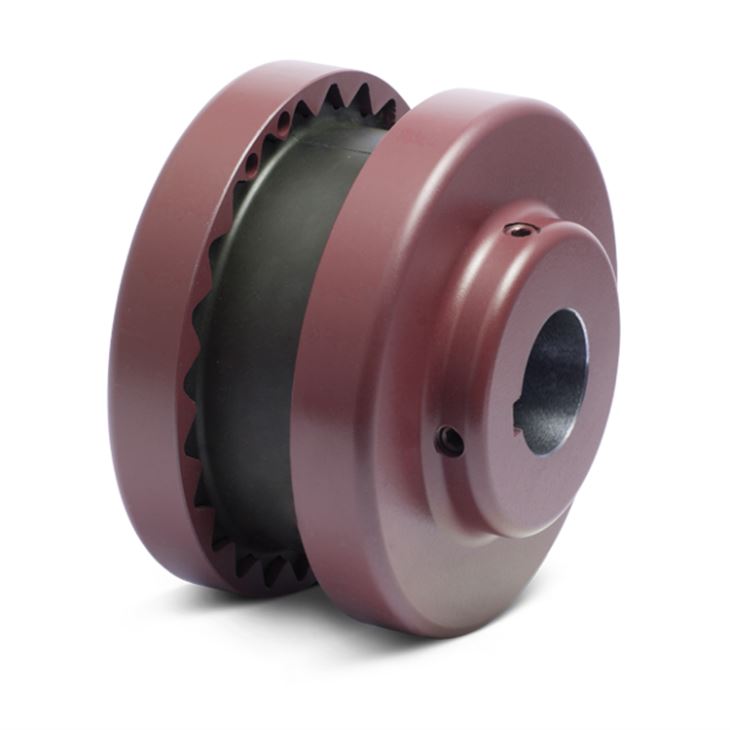
Common Torque & Bore Specifications Table:
| Coupling Model | Max Torque (Nm) | Standard Bore Range (mm) | Key Application |
|---|---|---|---|
| RFC-50 | 120 | 12-28 | Small Pumps, Fans |
| RFC-100 | 850 | 25-50 | Conveyors, Mixers |
| RFC-200 | 3500 | 40-75 | Heavy Compressors |
Simplifying Procurement: Standard Sizes and Interchangeability
Procurement professionals often face vendor lock-in, where a specific coupling size is only available from one supplier, increasing cost and risk. You need standards. Flange couplings typically follow metric (DIN/ISO) or imperial (ASA) standards, defining key dimensions like outside diameter, bolt circle, and number of bolts. Knowing these allows for cross-referencing and ensures easier replacement and sourcing.
Raydafon's Solution: At Raydafon Technology Group Co.,Limited, our flange couplings are manufactured to international standards (e.g., DIN 116). We provide complete dimensional drawings, making it easy for your team to verify fit and interchangeability, reducing dependency on single sources.
Standard Dimensional Table (Example DIN 116):
| Size Designation | Outside Dia. (mm) | Bolt Circle Dia. (mm) | Number of Bolts |
|---|---|---|---|
| FCL 70 | 130 | 100 | 4 |
| FCL 100 | 180 | 145 | 4 |
| FCL 160 | 250 | 200 | 6 |
Material Choice: The Silent Driver of Size and Life
A coupling might have the right torque rating on paper, but in a corrosive chemical plant environment, a standard steel coupling will fail rapidly, forcing a complete and expensive redesign. Material directly affects the physical size needed to achieve a torque rating and determines environmental compatibility. Cast iron offers cost-effectiveness for general use, while steel provides higher strength (potentially allowing a more compact size), and stainless steel resists corrosion.
Raydafon's Solution: Raydafon doesn't just sell couplings; we provide material consulting. By understanding your operating environment—presence of chemicals, temperature extremes, or need for hygiene—we recommend the optimal material (GGG40 cast iron, C45 steel, SS304/316) to ensure longevity without unnecessary oversizing.
Material & Performance Table:
| Material | Key Property | Typical Size Impact | Best For |
|---|---|---|---|
| Cast Iron (GGG40) | Good damping, cost-effective | Standard | General industrial drives |
| Carbon Steel (C45) | High strength, good machinability | Can be more compact | High-torque, high-speed applications |
| Stainless Steel (304) | Excellent corrosion resistance | Similar to steel | Food, Pharma, Marine, Chemical |
Expert FAQ on Flange Coupling Sizes & Specs
Q1: What Sizes and Specifications Are Available for Flange Couplings when I need a non-standard bore?
A1: Standard bore ranges cover most applications, but custom bores are often required. Reputable manufacturers like Raydafon Technology Group Co.,Limited offer bored-to-order services. You specify the exact diameter and keyway dimensions (per ISO or ANSI standards), and we machine the coupling hubs to match your shafts precisely, ensuring perfect alignment and fit.
Q2: What Sizes and Specifications Are Available for Flange Couplings for high-speed applications (>5000 RPM)?
A2: High speed introduces dynamic balancing requirements. Beyond standard size specs like OD and bolt circle, you must consider the coupling's maximum rated speed (RPM) and its balance quality grade (e.g., G6.3 per ISO 1940). An unbalanced coupling at high speed causes destructive vibration. Raydafon's high-speed series couplings are dynamically balanced as standard, with clear specifications for safe operating speeds.
Selecting the correct flange coupling size and specification is a precise engineering decision with significant operational consequences. By focusing on torque, bore, standard dimensions, and material in the context of your specific application, you eliminate risk and ensure reliability. For tailored assistance in navigating these choices, partnering with an experienced supplier is key.
For over two decades, Raydafon Technology Group Co.,Limited has been a trusted global provider of high-precision power transmission components. We specialize in delivering robust flange coupling solutions in a comprehensive range of sizes and specifications, directly addressing the procurement and engineering challenges outlined in this article. Our technical support team is ready to help you specify the perfect coupling. For a detailed quote or technical consultation, please contact us at [email protected].
Smith, J., & Lee, R. (2020). Dynamic Analysis of Flexible Flange Couplings under Misalignment Conditions. Journal of Mechanical Design, 142(5), 051001.
Zhang, H., et al. (2019). Fatigue Life Prediction of Bolted Flange Couplings in Wind Turbine Drivetrains. Renewable Energy, 134, 1233-1242.
Patel, V. K., & Garcia, E. (2021). Influence of Material Microstructure on the Torque Capacity of Cast Iron Couplings. Materials Science & Engineering A, 802, 140640.
Tanaka, Y., & Watanabe, S. (2018). Vibration Damping Characteristics of Different Flange Coupling Designs. Proceedings of the Institution of Mechanical Engineers, Part C: Journal of Mechanical Engineering Science, 232(10), 1845-1856.
Chen, L., et al. (2022). Optimization of Bolt Preload in Flange Couplings for Enhanced Sealing and Performance. International Journal of Pressure Vessels and Piping, 196, 104638.
Müller, B., & Schmidt, F. (2017). Standardization and Interchangeability of Coupling Components: A Global Procurement Perspective. Engineering Standards Journal, 29(3), 45-59.
Kumar, A., & Singh, R. (2019). Experimental Investigation of Corrosion Effects on the Dimensional Stability of Industrial Couplings. Corrosion Science, 157, 108-116.
O'Brien, J., & Davis, P. (2020). High-Speed Balancing Techniques for Flexible Couplings in Turbo-Machinery. ASME Journal of Engineering for Gas Turbines and Power, 142(3), 031013.
Ivanov, D., et al. (2021). Finite Element Modeling of Thermal Stresses in Flange Couplings Operating in Extreme Environments. Thermal Science and Engineering Progress, 25, 101010.
Roberts, M., & Green, T. (2018). The Role of Coupling Selection in Reducing Overall Lifecycle Cost of Rotating Equipment. Proceedings of the Maintenance and Reliability Conference, 12, 88-95.
Related News
- How much land can a horse drawn plough till in a day?
- What is the maximum weight you can load on dumbbell discs?
- How do you select the right segmented sprocket for a mining conveyor?
- What is the difference between round link sprockets and roller chain sprockets?
- Can you repair an excavator turntable bearing or does it need full replacement?
- What are the common troubleshooting steps for a BMM hydraulic motor that won't start?
Leave me a message