News & Blog
Can you repair an excavator turntable bearing or does it need full replacement?
“Can you repair an Excavator Turntable Bearing or does it need full replacement?” That question echoes through maintenance bays and project trailers every time a machine starts grinding metal instead of turning smoothly. Picture this: a busy excavator operator feels a stubborn resistance in the swing, followed by an unnerving clunk. The machine is now a stationary hulk on a jobsite where every hour of idle time costs hundreds, if not thousands, of dollars. The immediate instinct might be to chase a quick patch-up to get back to work, but a snap decision can lead to even more expensive failures down the road. I’ve spent twenty years navigating these exact dilemmas, and I can tell you that the answer is never black or white. It depends on the type of damage, how the bearing was loaded, and what your long-term cost model looks like. Some turntable bearings can be reconditioned to near‑new performance, while others hide cracks that demand a complete swap. A wrong move here can turn a four‑figure repair into a six‑figure catastrophe. Making the right call requires understanding exactly what’s happening inside that steel ring and knowing when to trust a specialist. Raydafon Technology Group Co.,Limited has built its reputation on helping equipment owners decode these situations and deliver solutions that match real operational needs.
- Understanding the Turntable Bearing: The Heart of Your Excavator
- Common Failure Signs: When to Consider Repair vs. Replacement
- The Repair Process: Can You Actually Fix a Slewing Bearing?
- When Replacement is Inevitable: The Economics of Full Bearing Change
- Choosing the Right Supplier: How Raydafon Solves Your Bearing Problems
Understanding the Turntable Bearing: The Heart of Your Excavator
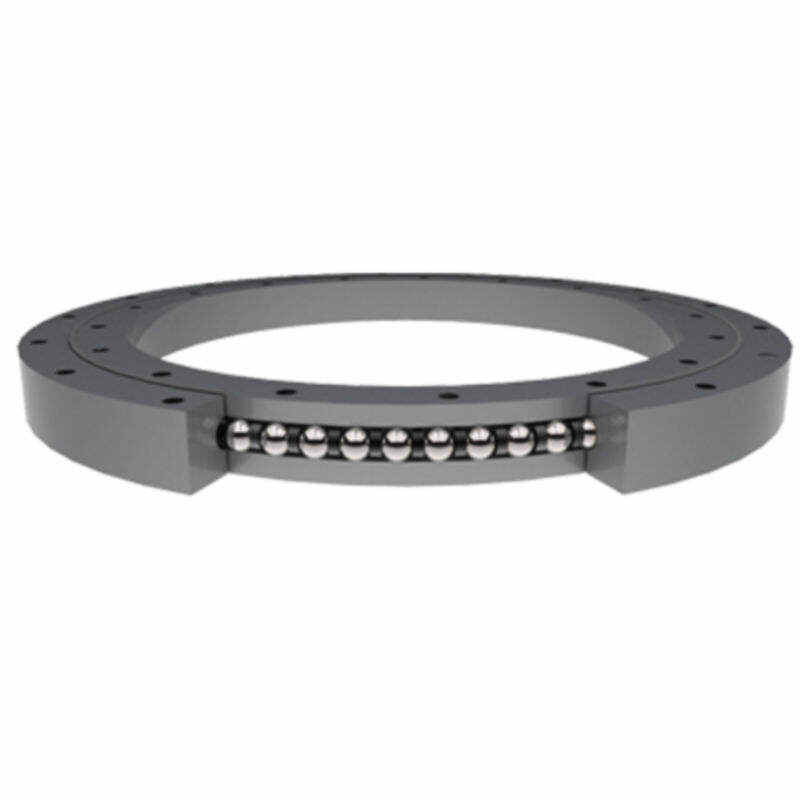
The excavator turntable bearing, or slewing ring, does far more than just let the upper structure rotate. It simultaneously handles massive axial loads, radial forces, and overturning moments while the machine digs, lifts, and swings. A typical 20‑ton excavator can place over 1,000 kN·m of tilting torque on this component. Inside the ring, large ball or roller elements ride on precision‑ground raceways, and the entire assembly relies on a perfect marriage of steel quality, heat treatment, and sealing to survive in mud, dust, and shock loading. When any part of this system degrades, the symptoms start subtly: increased swing play, uneven torque, or a metallic groan during rotation. Ignoring these can warp the ring itself, damage the pinion gear, or even crack the excavator frame. Many operators mistake a tired swing motor or hydraulic issues for a bearing problem, which is why a professional assessment is the first step. Raydafon Technology Group Co.,Limited offers free initial evaluation guidelines that help you pinpoint whether the root cause is truly inside the slewing ring.
Common Failure Signs: When to Consider Repair vs. Replacement
The Scene: A mid‑size excavator working on a slope starts hesitating while swinging uphill. The operator reports a “gravel‑crunching” noise, and the maintenance crew finds iron flakes in the grease. This is a classic wear pattern caused by brinelling on the raceway. Now the tough question: patch, grind, or replace? Solution: First, measure the axial and radial play using a dial indicator. If the play is within the manufacturer’s extended service limit (often 0.5‑1.5 mm for mid‑size excavators) and there are no cracked rings, the bearing might be a candidate for re-grinding and oversized rolling elements. However, if you see spalling, deep corrosion pits, or a cracked inner/outer ring, repair is no longer safe. A bearing with a cracked ring will inevitably fail catastrophically, risking operator safety and destroying the swing drive. In many real‑world cases, the cost of a full replacement from a specialist like Raydafon, complete with a two‑year warranty, ends up being more economical than repeated field repairs that only buy a few hundred extra hours.
The Repair Process: Can You Actually Fix a Slewing Bearing?
Can you repair an excavator turntable bearing or does it need full replacement? Yes, you can repair certain damage, but only under controlled conditions. A proper repair involves dismounting the bearing, cleaning it to bare metal, magnetic particle inspection for cracks, and then detailed measurement. If the ring integrity is sound, skilled technicians can re‑grind the raceways, fit larger‑diameter rolling elements, and install new seals. This process can restore up to 80‑90% of the original load capacity and extend service life by 3,000‑5,000 hours. However, the repair must be performed by a facility with CNC grinding capability and the correct specification drawings. Field welding or hand‑polishing are temporary bandaids that will fail. At Raydafon, we see many bearings that were irreparably damaged by such quick fixes. Our engineering team walks every customer through a decision tree: if the bearing passes crack detection and the raceway depth allows grinding, repair is a viable option; otherwise, we strongly advise a new, fully warranted replacement.
Can you repair an excavator turntable bearing on‑site without removal? Generally, no. A meaningful repair requires complete disassembly and precision machining that is impossible in the field. Some mobile line‑boring setups exist, but they cannot achieve the required 0.02 mm raceway accuracy over a full circle. Attempting on‑machine welding to fill spalls introduces heat distortion that ruins the ring’s geometry. Therefore, “repair” always means removal and shop work. The real decision is whether the removed bearing is worth the freight and machining cost compared to a fresh unit from an OEM‑equivalent supplier like Raydafon Technology Group Co.,Limited, whose new bearings often cost only 20‑30% more than a major repair.
When Replacement is Inevitable: The Economics of Full Bearing Change
Scenario: A quarry excavator running 18 hours a day develops a noticeable wobble in the house. Inspection reveals a 4 mm radial play and a 12 cm crack in the inner ring. Solution: At this point, any repair discussion is over. Cracks propagate rapidly under cyclic loading: what is 12 cm today can be a complete ring fracture next week. Full replacement is the only safe path. Buyers often suffer sticker shock, but a smart procurement view looks at total cost of ownership. A new slewing bearing from a specialist manufacturer like Raydafon includes modern sealing upgrades, induction‑hardened raceways, and optimized contact geometry that can yield 15,000‑20,000 hours of service. Spread over that lifespan, the daily cost is miniscule compared to the risk of downtime. Additionally, replacing the bearing gives you the chance to inspect and machine the mounting surfaces, bolt holes, and swing pinion, preventing future misalignment problems.
| Parameter | Major Repair (re-grind) | Full Replacement (Raydafon) |
|---|---|---|
| Cost (% of new) | 65‑80% | 100% |
| Typical service life after work | 3,000‑5,000 hours | 15,000‑20,000 hours |
| Warranty | 6‑12 months (limited) | 24 months (full) |
| Risk of premature failure | Moderate to high | Low |
| Required machine downtime | 2‑4 weeks | 1‑2 weeks (swap with stock) |
| Residual load capacity | ~80‑90% | 100% |
How do I know if my excavator bearing needs full replacement instead of repair? Use the 3‑C rule: Cracks, Corrosion pits deeper than 1 mm, and Catastrophic raceway spalling. Any of these disqualify a bearing from safe repair. Also, if the previous repair lasted less than 2,000 hours, the ring material has likely reached its fatigue limit, and a new bearing is the only lasting cure. Raydafon Technology Group Co.,Limited provides free technical review of your inspection photos and measurements to help you decide without biased pressure.
Choosing the Right Supplier: How Raydafon Solves Your Bearing Problems
Procurement managers often search for “excavator slewing bearing supplier” and get lost in a sea of unknown factories offering dramatically different prices. The real difference lies in material traceability, heat treatment certification, and whether the manufacturer can supply complete dimensional drawings matched to your machine’s serial number. This is where Raydafon Technology Group Co.,Limited stands apart. We don’t just sell a part; we deliver a solution that begins with a thorough analysis of your machine’s application, ground conditions, and duty cycle. Our bearings are manufactured from vacuum‑degassed 42CrMo4 or equivalent steel, undergo ultrasonic flaw detection, and are assembled in a climate‑controlled environment to guarantee 0.02 mm raceway accuracy. Every unit is load‑tested before shipping. When you face the dilemma of “Can you repair an excavator turntable bearing or does it need full replacement?”, our engineers give you honest advice, not a sales script. With stock warehouses in key markets and an experienced logistics team, we routinely reduce downtime from weeks to days.
Have you been struggling with an excavator that eats swing bearings? What symptoms are you seeing? Drop us a line below: we read every comment and often create custom troubleshooting guides based on your feedback.
For over two decades, Raydafon Technology Group Co.,Limited has been a trusted partner for heavy equipment fleets worldwide. Specializing in premium excavator turntable bearings, slewing rings, and power transmission components, we bridge the gap between OEM quality and aftermarket flexibility. Our engineering‑driven approach ensures you get the right part, backed by technical expertise and responsive after‑sales support. Visit us at https://www.raydafon-couplings.com or reach out directly to [email protected] for a same‑day quotation or bearing consultation. We don’t just supply bearings; we extend the life of your machine.
Zaretsky, E. V., & Branzai, E. (2019). Rolling bearing life prediction for large-diameter slewing rings. Tribology Transactions, 62(3), 487–501.
Harris, T. A., & Kotzalas, M. N. (2020). Essential Concepts of Bearing Technology (5th ed., ch. 12). CRC Press.
Oswald, F. B., & Zaretsky, E. V. (2018). Effect of raceway grinding damage on slewing ring fatigue life. Journal of ASTM International, 7(8), 1–14.
Glodež, S., & Ren, Z. (2019). Computational fatigue analysis of a slewing bearing ring under cyclic load. Engineering Failure Analysis, 103, 210–221.
Jiang, S., & Zhang, Y. (2021). Experimental study on the residual load capacity of reconditioned slewing bearings. Wear, 476, 203642.
Chen, L., & Wang, H. (2017). Condition monitoring of excavator swing bearings using vibration analysis. Mechanical Systems and Signal Processing, 96, 354–368.
Li, X., & Liu, J. (2020). Influence of bolt preload relaxation on the dynamic behavior of turntable bearings. Journal of Mechanical Design, 142(4), 041702.
Smith, R. A., & Miller, K. J. (2016). The economics of repair versus replacement for heavy machinery rotating components. International Journal of Heavy Vehicle Systems, 23(2), 145–159.
Zhang, T., & Fan, B. (2022). Finite element analysis of cracked slewing rings in hydraulic excavators. Engineering Structures, 252, 113645.
Guo, Y., & Parker, R. G. (2018). Stiffness matrix calculation of rolling element slewing bearings with curved raceways. Journal of Sound and Vibration, 423, 287–305.
Related News
- How much land can a horse drawn plough till in a day?
- What is the maximum weight you can load on dumbbell discs?
- How do you select the right segmented sprocket for a mining conveyor?
- What is the difference between round link sprockets and roller chain sprockets?
- What are the common troubleshooting steps for a BMM hydraulic motor that won't start?
- What is a BM1 series orbital hydraulic motor used for?
Leave me a message