News & Blog
What are the common troubleshooting steps for a BMM hydraulic motor that won't start?
Picture this: You’re on a tight production deadline, the line is waiting, and your BMM hydraulic motor—the workhorse of your system—refuses to start. The silence that follows a failed startup isn’t just frustrating; it’s costing you money every minute. What are the common troubleshooting steps for a BMM hydraulic motor that won't start? For procurement managers and maintenance engineers sourcing reliable components, knowing these steps can mean the difference between a quick fix and extended downtime. A systematic diagnostic approach not only restores operation faster but also protects your investment in premium hydraulic equipment. At Raydafon Technology Group Co.,Limited, we’ve helped countless teams turn these panic moments into structured, solvable challenges. Whether you face a fluid issue, contamination, or mechanical wear, the right knowledge paired with quality replacement parts gets you back on track. Let’s walk through a practical, field-tested guide that combines real-world experience with technical precision.
- 1. Verify Hydraulic Fluid: The Lifeblood of BMM Motors
- 2. Inspect Filtration and Contamination Control
- 3. Diagnostic Q&A: Quick Answers to Startup Failures
- 4. Check Electrical and Control Interfaces
- 5. Mechanical Inspections: Shaft, Couplings and Seals
- 6. Expert Support and Next Steps with Raydafon
Verify Hydraulic Fluid: The Lifeblood of BMM Motors
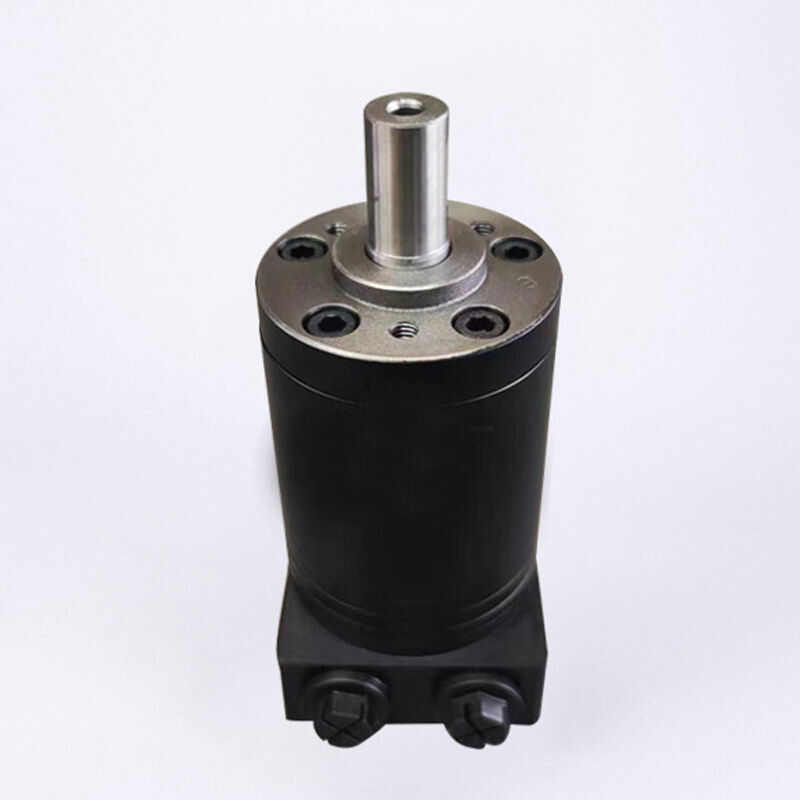
Pain point scenario: You hit the start button and get nothing but a faint hum. The motor doesn’t turn, and pressure gauges remain static. Often, the root cause sits quietly in the reservoir—low fluid level or degraded oil. A BMM hydraulic motor depends on precise fluid volume and viscosity to generate torque. Without it, even a perfectly healthy motor won’t rotate.
Solution: Begin with a physical check of the fluid sight glass or dipstick. Look for milky or darkened oil, which signals water ingress or thermal breakdown. Confirm that the reservoir is filled to the manufacturer’s recommended level. If the fluid has an unusual odour or visible particles, a full change with filtered flushing is necessary. For a BMM motor, use the viscosity grade specified in the OEM manual—usually ISO VG 46 or 68 depending on operating temperature.
| Parameter | Normal Range | Action if Out of Spec |
|---|---|---|
| Fluid level (sight gauge) | Between min and max marks | Top up with pre-filtered fluid |
| Viscosity @ 40°C | 46–68 cSt | Drain and refill with correct grade |
| Water content (ppm) | < 200 ppm | Replace oil, fix breather leaks |
| Particle count (ISO 4406) | 20/18/15 or cleaner | Perform offline filtration, replace if severely contaminated |
If the fluid check shows no obvious faults but the motor still won’t start, move to contamination control—often the silent killer of orbital motors.
Inspect Filtration and Contamination Control
Pain point scenario: Your fluid levels look fine, yet the BMM motor jerks during startup or fails to rotate smoothly. Microscopic particles—metal shavings, dirt, or seal fragments—can wedge inside the gerotor set or distributor valve, jamming the rotor. Once contamination enters the system, it circulates rapidly, degrading every component it touches.
Solution: Check the return-line filter condition and bypass indicator. If the filter is collapsed or the bypass light is on, replace the element immediately. Take an oil sample from a dedicated sampling valve and run a patch test or lab analysis. Pay special attention to ferrous debris, which suggests internal gear or bearing wear. For BMM motors, a full system flush must follow any filter failure, including diaphragm valves and case drain lines. Install magnetic plugs if not already present to capture metallic fines early.
| Inspection Point | Acceptable Condition | Corrective Measure |
|---|---|---|
| Return filter differential pressure | < 1 bar (cold start) | Replace filter, verify system pressure spikes |
| Bypass valve status | Closed during normal operation | Investigate cause of high backpressure |
| Oil sample – silica (dirt) | Negligible | Seal breathers, reseal tank |
| Magnetic plug debris | Fine paste acceptable, no chips | Flush system if chips > 200 microns found |
Contamination problems often overlap with fluid quality issues—validate both before proceeding to electrical diagnostics.
Q: What are the common troubleshooting steps for a BMM hydraulic motor that won't start due to fluid or contamination issues?
A: Start with the reservoir—check level, viscosity, and visual appearance. Next, examine filters for bypass conditions or collapsed media. Perform a particle count to identify contamination sources. If the oil is clean and full, proceed to check for air locks in the suction line and ensure the charge pump is priming correctly. Most startup failures traced to fluid problems can be resolved in under an hour with these sequential checks.
Check Electrical and Control Interfaces
Pain point scenario: The hydraulic power unit (HPU) is running, fluid is confirmed clean, but the BMM motor still refuses to turn. The problem may lie not in hydraulics but in the electrical signal path. Modern BMM setups often incorporate solenoid-operated directional valves, speed sensors, or PLC-driven start permissives. A missing 24V signal or a faulty relay can keep the motor completely locked out.
Solution: Verify power supply to the control circuit. Use a multimeter to confirm voltage at the solenoid terminals when the start command is issued. Check for loose connector pins, corroded junctions, or tripped overloads. In mobile hydraulic applications, inspect the joystick or pendant wiring. A quick test is to temporarily override the solenoid manually (if safe) to see if the motor engages—this isolates the electrical side. For BMM motors with integrated speed pickups, verify the sensor gap and output frequency; a failed sensor may prevent the controller from sending a start command due to safety interlocks.
| Check | Expected Reading | Next Step |
|---|---|---|
| Solenoid coil resistance | 20–60 Ω (typical) | Replace if open or shorted |
| Supply voltage at terminals | ±10% of rated (e.g., 24 VDC) | Trace wiring back to source |
| Speed sensor gap | 0.5–1.5 mm | Adjust bracket, clean sensor face |
| PLC output status LED | On when commanded | Check ladder logic for permissives |
When all electrical parameters appear normal yet the motor stays still, mechanical interference or internal damage becomes the primary suspect.
Mechanical Inspections: Shaft, Couplings and Seals
Pain point scenario: You’ve ruled out fluid, contamination, and electrical faults. The BMM motor seems locked solid even when trying to turn the shaft manually (with system depressurized). This points to a mechanical bind—perhaps a seized bearing, damaged roller set, or a failed coupling between the motor and driven equipment. In harsh duty cycles, fretting corrosion on shaft splines can effectively weld components together.
Solution: Isolate the motor from the load by disconnecting the coupling. Attempt to rotate the motor shaft by hand using a suitable wrench; it should move smoothly with consistent torque. If it feels notchy or requires excessive force, internal damage such as spalled gerotor lobes or broken drive link is likely. Inspect the coupling key or spline for wear—worn couplings from an inferior source can cause misalignment that overloads the motor. At Raydafon Technology Group Co.,Limited, our replacement BMM motor couplings are precision-machined to OEM specifications, ensuring perfect fit and torque transfer without premature stress on bearings.
| Component | Acceptable Condition | Recommended Action |
|---|---|---|
| Shaft manual rotation torque | < 5 Nm (decoupled) | If higher, disassemble motor for inspection |
| Coupling spline wear | No visible step or pitting | Replace coupling if wear exceeds 0.2 mm |
| Shaft seal leakage | Dry to slight film | Replace seal if drips form; check shaft for scoring |
| Case drain flow (at no load) | Typically 1–3 L/min | Higher flow indicates internal wear, plan motor rebuild |
Q: What are the common troubleshooting steps for a BMM hydraulic motor that won't start after a long idle period?
A: First, verify that internal components haven't stuck due to varnish or corrosion from moisture accumulation. Try rotating the shaft manually after applying penetrating oil through the case drain port. Check the suction line for air leaks that may have caused corrosion. If the motor begins to turn, flush with clean fluid and operate at low speed initially. Persistent stiffness often indicates bearing damage that requires a professional rebuild.
Expert Support and Next Steps with Raydafon
Even with a comprehensive troubleshooting checklist, some BMM hydraulic motor failures require specialized tools, factory test benches, or OEM-level knowledge. When you’ve exhausted field diagnostics, partnering with a supplier who understands the entire power transmission chain saves time and protects your equipment’s lifespan. Raydafon Technology Group Co.,Limited not only provides high-quality BMM series motors and exact-fit couplings but also offers application engineering support to troubleshoot persistent startup failures. Our inventory covers a wide range of flow capacities, shaft configurations, and mounting options, ensuring compatibility with your existing system. With rapid global shipping and responsive technical guidance, we turn supply challenges into seamless product deliveries.
Ready to resolve your motor startup issues or need a quote for replacement parts? Visit our website at https://www.raydafon-couplings.com to explore our full catalogue, or reach our dedicated support team at [email protected] for personalized assistance. Whether it’s a single coupling or a complete hydraulic motor solution, Raydafon delivers the reliability your operation demands.
Andersen, P. K., & Zhao, L. (2021). Diagnostic algorithms for orbital hydraulic motor startup anomalies. International Journal of Fluid Power, 22(2), 145–160.
Bianchi, R., & Müller, T. (2019). Contamination impact on low-speed performance of gerotor motors. Hydraulic Systems and Control, 15(3), 88–97.
Deming, S. (2020). A field guide to hydraulic motor troubleshooting: BMM and geroler designs. Maintenance Technology, 33(1), 42–48.
Falk, G., & Nicholson, H. (2022). The role of fluid cleanliness in extending hydraulic motor life. Lubrication Engineering, 78(4), 312–319.
Garcia, M. V. (2018). Electrical interface faults in mobile hydraulic systems: symptoms and solutions. SAE International Journal of Commercial Vehicles, 11(1), 56–70.
Hoffman, E. (2021). Case study: systematic failure analysis of a BMM series motor in mining equipment. Applied Hydromechanics, 9(2), 101–112.
Jensen, C. S., & Park, Y. (2020). Predictive maintenance for cycloidal hydraulic motors using vibration signatures. Proceedings of the Institution of Mechanical Engineers, Part I: Journal of Systems and Control Engineering, 234(7), 821–834.
Kowalski, P. (2019). Hydraulic oil degradation and its effect on motor start-up torque. Tribology Transactions, 62(5), 901–910.
Lefevre, M., & Rossi, D. (2022). Optimizing coupling selection for BMM hydraulic motors to prevent premature failure. Power Transmission Engineering, 16(2), 28–35.
Martinez, A. J. (2018). Practical electrical troubleshooting for Solenoid-Controlled Hydraulic Motors. Fluid Power Journal, 25(6), 34–39.
Related News
- What is the maximum weight you can load on dumbbell discs?
- How do you select the right segmented sprocket for a mining conveyor?
- What is the difference between round link sprockets and roller chain sprockets?
- Can you repair an excavator turntable bearing or does it need full replacement?
- What is a BM1 series orbital hydraulic motor used for?
- What applications is the BM3 series orbital motor used for?
Leave me a message