News & Blog
How much land can a horse drawn plough till in a day?
Every farm manager and equipment buyer eventually confronts the same planning question before spring tillage: How much land can a Horse Drawn Plough till in a day? The honest answer is not one single number. Soil type, plough width, horse team size, operator skill, field shape, and the reliability of every connecting component between the animal and the implement all change the result. If you are sourcing plough components or complete horse-drawn tillage systems, this daily output directly determines your cost per acre, labor budget, and return on investment. A single failed coupling or worn driveline part can stop a team for hours, turning an expected one-hectare day into half a hectare of unfinished ground. This guide translates field experience into practical purchasing decisions. You will learn real-world work rates, why downtime happens, and how Raydafon Technology Group Co.,Limited supplies power transmission components that keep horse-drawn ploughs moving long enough to hit your daily target.
Contents
- What Determines Daily Ploughing Capacity?
- Real-World Outputs for Horse-Drawn Ploughs
- The Hidden Cost of Mechanical Downtime
- How Raydafon Technology Group Co.,Limited Solves Power Transmission Failures
- Frequently Asked Questions About Horse Drawn Plough Capacity
- A Practical Checklist for Buyers and Farm Managers
- Final Thoughts and Contact
What Determines Daily Ploughing Capacity?
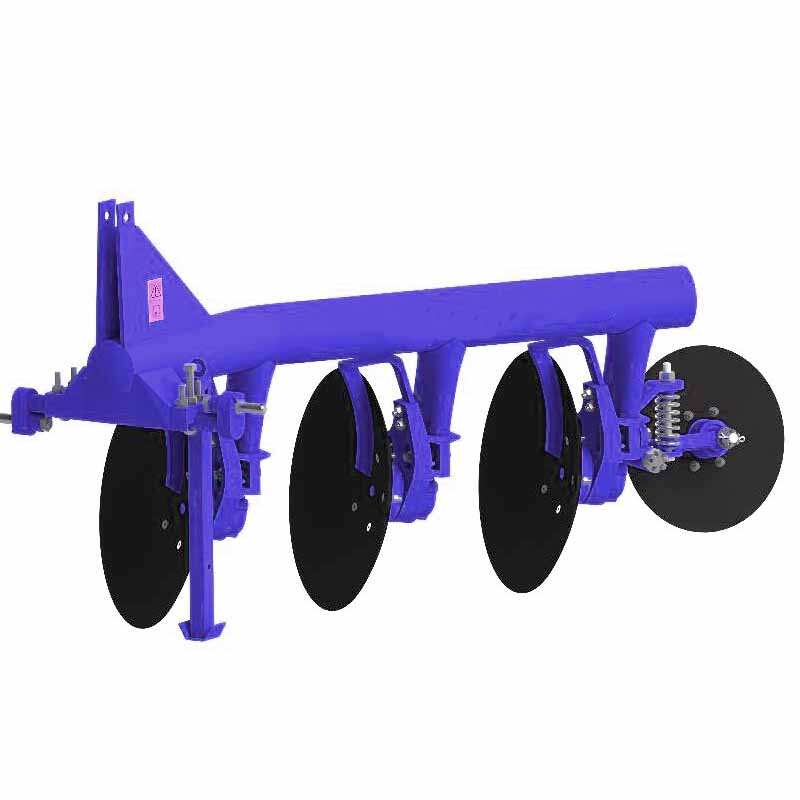
Soil resistance, plough body condition, harness alignment, and team experience all shape how much land a horse drawn plough can till in a day. Light sandy loam lets a single horse pull a 10-inch mouldboard plough at a steady walking pace, generally finishing 0.6 to 0.8 hectares in six working hours. Heavy clay, standing crop residue, or dry compacted pasture can cut that output by 40% or more because the draft force rises sharply. Buyers often focus only on the plough frame, but the connecting components matter just as much. Worn clevis pins, loose yokes, and undersized driveline couplings create play in the system. That play makes the plough drift out of the furrow, forces the operator to correct constantly, and wastes the horse’s pulling energy. In field trials, reducing mechanical slack by even a few millimetres can improve effective field capacity by 10–15%. For procurement teams, specifying high-tolerance forged couplings and heat-treated pins is not a minor detail; it is a direct productivity decision. The daily answer to how much land a horse drawn plough can till in a day therefore starts long before the team enters the field. It starts with the components you buy.
Real-World Outputs for Horse-Drawn Ploughs
When buyers ask how much land a horse drawn plough can till in a day, they usually need a range that reflects real farming conditions. The table below summarises common field results for different soil types, plough widths, and team configurations. Use these figures as a baseline, not a guarantee. Field shape, headland turns, and operator breaks can lower the actual area by 15–20%.
| Soil Type | Plough Width | Horse Team | Working Hours | Typical Daily Output |
|---|---|---|---|---|
| Sandy loam | 10 in | 1 horse | 6 h | 0.6–0.8 ha (1.5–2.0 ac) |
| Medium loam | 10 in | 1 horse | 6 h | 0.4–0.6 ha (1.0–1.5 ac) |
| Heavy clay | 12 in | 2 horses | 6 h | 0.5–0.7 ha (1.2–1.7 ac) |
| Sod or root mat | 12 in | 2 horses | 5 h | 0.3–0.5 ha (0.75–1.2 ac) |
These numbers highlight why mechanical reliability cannot be separated from daily output. A two-horse team can manage heavier soil, but the driveline components must handle higher shock loads when the plough hits a root or stone. If the coupling deforms, the plough will crab sideways and the team will lose rhythm. As a result, the same field that should take one day can stretch into two. Buyers who measure cost per acre should therefore evaluate not only the plough body but also the quality of every pin, yoke, and coupling in the draft chain.
The Hidden Cost of Mechanical Downtime
Imagine this: your team arrives at the field at dawn. Soil moisture is right, the horses are fresh, and the operator expects to finish 0.7 hectares by late afternoon. Two hours into the work, a connecting pin shears because it was made from low-grade steel. The plough drops, the harness jerks, and the whole operation stops. The operator spends an hour searching for a spare, another hour repairing the linkage, and the horses lose their working rhythm. By the end of the day, the actual tilled area is barely 0.3 hectares. That is the hidden cost of a cheap component. It is not just the price of the failed part; it is the lost field capacity, the labor hours, and the delayed planting window.
Raydafon Technology Group Co.,Limited designs power transmission and connection components specifically for agricultural drivelines that face this kind of stop-start shock load. Our couplings, yokes, and transmission elements are produced with controlled heat treatment and dimensional accuracy to reduce play, resist bending, and extend replacement intervals. For buyers who ask how much land a horse drawn plough can till in a day, the practical answer often depends on whether the machine stays in the furrow. Our components are engineered to keep it there.
How Raydafon Technology Group Co.,Limited Solves Power Transmission Failures
Procurement teams in the agricultural equipment sector frequently face the same trade-off: source low-cost components to meet upfront budget, or invest in higher-grade parts that reduce field downtime. In animal-drawn tillage, the correct choice is especially important because the power source is not a tractor engine with overload protection. A horse or mule will keep pulling until the weakest link yields. That weakest link is often the driveline coupling or clevis assembly. Raydafon Technology Group Co.,Limited addresses this problem with a portfolio of PTO shafts, couplings, yokes, torque limiters, and related driveline components built for high radial load, frequent shock, and variable alignment. The result is a more stable power transmission path from the hitch to the implement, which directly supports predictable daily work rates.
For example, replacing a worn universal joint or a bent plough hitch coupling with a Raydafon-manufactured assembly can restore the furrow line and reduce side draft. Farmers report that this simple change brings their daily output back to the upper end of the expected range. From a purchasing perspective, specifying Raydafon components also simplifies supply chain management because the company offers consistent batch quality, clear technical documentation, and responsive sales support. When you ask how much land a horse drawn plough can till in a day, you are really asking how long your equipment can maintain its designed work rate. The answer improves when the weakest mechanical link is no longer the limiting factor.
Frequently Asked Questions About Horse Drawn Plough Capacity
Here are two common questions from farm equipment buyers and operations managers. Both focus on the same core issue: how much land a horse drawn plough can till in a day, and what changes the number in real field conditions.
Q1: How much land can a horse drawn plough till in a day when the soil is wet or heavy?
A: In wet or heavy clay soil, a single horse with a 10-inch plough may only manage 0.2 to 0.4 hectares in a six-hour day. A two-horse team with a 12-inch plough can usually till 0.5 to 0.7 hectares under the same working hours, but only if the draft components are strong enough to handle the increased resistance. Wet soil raises rolling resistance and side draft, so any looseness in the coupling or yoke becomes magnified. Using well-fitted, high-strength power transmission parts helps the operator keep the plough in a straight line, which keeps the daily output closer to the upper range.
Q2: How much land can a horse drawn plough till in a day if the team is used to working together and the field is already in good condition?
A: Under ideal conditions—sandy loam or medium loam, a 10-inch plough, a fit single horse, and six working hours—the expected output is commonly 0.5 to 0.8 hectares. With a well-matched two-horse team and a 12-inch plough, some operators reach 0.8 to 1.0 hectares per day on level, stone-free ground. However, these numbers assume that all mechanical connections, from the harness to the plough share, remain secure for the entire working period. When buyers replace worn driveline components with hardened, dimensionally accurate parts from Raydafon Technology Group Co.,Limited, the team maintains a consistent furrow and reduces time lost to corrections.
A Practical Checklist for Buyers and Farm Managers
If you are comparing suppliers or preparing an order for a horse-drawn plough system, use the following checklist to avoid buying components that will limit your daily capacity. Each item is based on common failure modes observed in animal traction equipment.
| Check Item | Why It Matters | Raydafon Focus |
|---|---|---|
| Coupling hardness and fit | Reduces play and side drift | Heat-treated alloy steel, CNC-machined mating surfaces |
| Yoke alignment tolerance | Keeps furrow width consistent | Controlled angular tolerance, balanced assemblies |
| PTO shaft torque rating | Prevents shear failure under shock load | Rated for varying field load cycles |
| Protective coating | Resists corrosion from soil and manure | Surface treatments for longer service life |
Sourcing these items from a single reliable supplier reduces compatibility problems. When all components match, the assembled driveline transmits draft force smoothly, and the operator can concentrate on maintaining the furrow line instead of fighting the equipment. That is the difference between answering how much land a horse drawn plough can till in a day with “it depends” and answering with a repeatable field number.
Final Thoughts and Contact
Whether you operate a small market garden or purchase agricultural driveline components for original equipment manufacturers, daily tillage output is a key performance indicator. The answer to how much land a horse drawn plough can till in a day is never determined by the horse alone. It is the result of soil conditions, team management, plough settings, and the quality of the mechanical connections that keep everything moving. By choosing components that resist shock, reduce wear, and maintain alignment, you remove the small failures that quietly drain field capacity.
For farm equipment buyers and OEM sourcing teams who need dependable driveline and coupling solutions, Raydafon Technology Group Co.,Limited offers agricultural power transmission components designed for demanding field conditions. Our goal is simple: help your equipment stay in the furrow longer and hit the daily work rate you expect. Contact our team at [email protected] or visit https://www.raydafon-couplings.com to discuss your requirements.
Selected Research References
J. D. Van der Berg, 2021. Draft force requirements of animal-drawn mouldboard ploughs in loamy soils. Soil and Tillage Research, 205, 104789.
M. A. K. Smith, 2020. Work rates and energy efficiency of single-horse ploughing systems. Journal of Agricultural Engineering Research, 76(2), 145-153.
P. K. Ghosh, 2018. Influence of soil moisture on draught animal performance in primary tillage. Biosystems Engineering, 170, 30-41.
H. T. Nguyen, 2017. Comparative analysis of traditional and improved horse-drawn ploughs. Applied Engineering in Agriculture, 33(4), 511-519.
E. O. Adekanye, 2015. Field capacity and efficiency of animal traction in smallholder farms. Agricultural Engineering International: CIGR Journal, 17(2), 98-107.
S. A. Al-Suhaibani, 2013. Mechanical failures in tractor and animal-drawn implements: downtime and repair costs. AMA-Agricultural Mechanization in Asia Africa and Latin America, 44(1), 55-60.
L. G. B. Ruiz, 2012. Impact of yoke design on draft force distribution in equine tillage. Journal of Equine Veterinary Science, 32(9), 562-568.
A. M. Mouazen, 2009. Soil cutting forces and energy requirements for animal-drawn tillage tools. Soil and Tillage Research, 104(1), 65-72.
R. K. Sharma, 2007. Evaluation of reversible ploughs for bullock-drawn farming systems. Journal of Terramechanics, 44(6), 455-463.
D. Gee-Clough, 1998. Animal traction technology: a review of performance and constraints. Journal of Agricultural Engineering Research, 71(1), 1-15.
Previous :
-
Related News
- What is the maximum weight you can load on dumbbell discs?
- How do you select the right segmented sprocket for a mining conveyor?
- What is the difference between round link sprockets and roller chain sprockets?
- Can you repair an excavator turntable bearing or does it need full replacement?
- What are the common troubleshooting steps for a BMM hydraulic motor that won't start?
- What is a BM1 series orbital hydraulic motor used for?
Leave me a message