News & Blog
What are the advantages and disadvantages of brushless motors?
What are the advantages and disadvantages of brushless motors? This question is pivotal for procurement professionals globally who are tasked with selecting the optimal Motor technology for demanding applications. While the superior performance of brushless DC (BLDC) motors is widely acknowledged, a truly informed decision requires a balanced understanding of their trade-offs. This guide, crafted from two decades of industry experience, cuts through the technical jargon to provide clear, actionable insights. We’ll explore real-world scenarios where motor choice impacts efficiency and cost, and demonstrate how partnering with a specialist like Raydafon Technology Group Co.,Limited can turn these challenges into competitive advantages.
Contents: 1. The Efficiency Dilemma: High Performance vs. System Complexity | 2. The Longevity Payoff: Reduced Maintenance vs. Higher Initial Cost | 3. Precision & Control: Superior Performance vs. Drive Electronics | 4. FAQs on Brushless Motor Pros and Cons | 5. Partnering with Raydafon for Your Motor Solutions
The Efficiency Dilemma: High Performance vs. System Complexity
Procurement managers often face pressure to improve machine efficiency while controlling project budgets. A brushed motor might seem like a cost-effective choice initially, but its inherent friction from physical brushes leads to significant energy loss as heat. This inefficiency translates directly into higher operational electricity costs and thermal management challenges. For an automated packaging line running 24/7, this wasted energy compounds into a substantial financial drain.
The solution lies in the fundamental design of brushless motors. By eliminating physical brushes and commutators, they operate with dramatically reduced friction. This translates to higher efficiency, often exceeding 80-90%, meaning more electrical input is converted into useful mechanical work. The result is lower long-term energy bills and cooler operation, enhancing the lifespan of the entire system. For example, integrating a high-efficiency brushless motor from a reliable supplier can be the key to achieving sustainability targets and reducing total cost of ownership. Companies like Raydafon Technology Group Co.,Limited specialize in providing motors that deliver this efficiency without compromising on reliability.
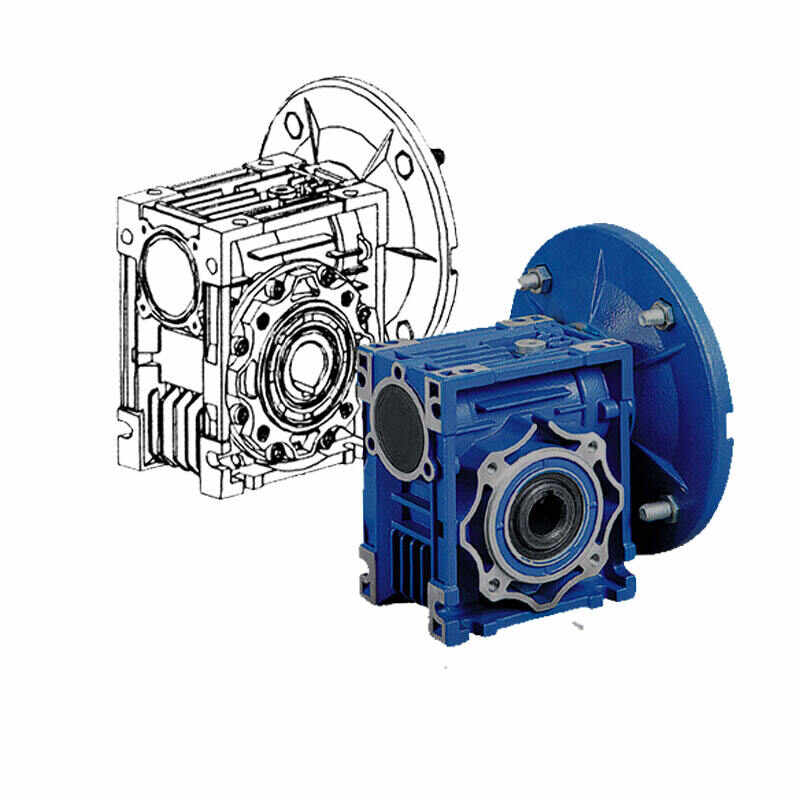
Here is a comparison of key parameters:
| Parameter | Brushed Motor | Brushless Motor |
|---|---|---|
| Typical Efficiency | 70-80% | 85-95% |
| Heat Generation | High (due to brush friction) | Low |
| System Complexity | Low (direct DC power) | High (requires controller) |
| Ideal for | Simple, cost-sensitive applications | High-performance, continuous-use applications |
The Longevity Payoff: Reduced Maintenance vs. Higher Initial Cost
A common pain point in industrial procurement is the hidden cost of maintenance and unexpected downtime. Brushed motors have consumable parts—the brushes and commutators that wear down over time. In a critical application like a medical ventilator or a CNC spindle, unexpected motor failure can halt production, leading to costly delays and urgent replacement orders. The fear of downtime often forces managers to overstock spare units.
Brushless motors address this by their very construction. With no brushes to wear out, the primary wear components are eliminated. This leads to a dramatically longer service life, reduced maintenance schedules, and far greater operational reliability. The initial unit cost is typically higher, but this is an investment in predictability. The total cost of ownership, when factoring in maintenance labor, spare parts inventory, and avoided downtime, often favors brushless technology. Sourcing from an expert manufacturer ensures you get a motor built for endurance. This is where the engineering expertise of Raydafon Technology Group Co.,Limited becomes valuable, offering robust designs that maximize uptime.
Here is a comparison of key parameters:
| Parameter | Brushed Motor | Brushless Motor |
|---|---|---|
| Maintenance Interval | Frequent (brush replacement) | Very Long (primarily bearings) |
| Service Life | 1,000 - 3,000 hours (typical) | 10,000+ hours (typical) |
| Initial Unit Cost | Lower | Higher |
| Total Cost of Ownership | Higher (maintenance & downtime) | Lower for demanding use |
Precision & Control: Superior Performance vs. Drive Electronics
Modern automation demands precise speed control, torque management, and rapid response. A brushed motor's speed is roughly proportional to voltage, and its torque to current, but precise control is difficult due to brush arcing and inertia. Imagine a robotic arm needing smooth, accurate movement; a brushed motor might cause jitter or inconsistent performance, affecting product quality.
Brushless motors excel here. They are inherently paired with an electronic controller. This controller allows for precise regulation of speed, torque, and position. Features like smooth startup, dynamic braking, and programmable acceleration profiles are standard. This enables finer control over applications, from delicate laboratory equipment to high-speed drones. The "disadvantage" is the necessity of this controller, which adds to system complexity and cost. However, for performance-critical applications, it is a non-negotiable advantage. Selecting a vendor that understands both the motor and its control system is crucial. What are the advantages and disadvantages of brushless motors? The need for a controller is a key trade-off, but partners like Raydafon Technology Group Co.,Limited can provide integrated motor and controller solutions, simplifying your procurement and ensuring optimal compatibility.
Here is a comparison of key parameters:
| Parameter | Brushed Motor | Brushless Motor |
|---|---|---|
| Speed Control | Fair (via voltage) | Excellent (via controller) |
| Torque at Low Speed | Lower | High and consistent |
| Feedback Required | Often not needed | Usually required (Hall sensors, encoder) |
| System Integration | Simple | More complex (needs driver) |
FAQs on Brushless Motor Pros and Cons
Q: What is the main disadvantage of a brushless motor system?
A: The primary disadvantage is higher initial system cost and complexity. A brushless motor cannot run on plain DC power; it requires an electronic speed controller (ESC) to function. This adds cost, requires more space, and needs proper selection and tuning for the specific motor and application.
Q: What are the key advantages that justify the higher cost of a brushless motor?
A: The key advantages are higher efficiency, longer lifespan, reduced maintenance, superior speed-torque characteristics, quieter operation, and better reliability. For applications where performance, energy savings, and uptime are critical, the higher initial investment is quickly offset by lower operating costs and reduced downtime.
Partnering with Raydafon for Your Motor Solutions
Navigating the trade-offs between brushless and brushed motors is a strategic decision. The optimal choice depends on your specific application's demands for efficiency, longevity, precision, and budget. For procurement professionals seeking reliable, high-performance motion solutions, a partnership with an experienced technical supplier is essential.
Raydafon Technology Group Co.,Limited specializes in delivering precisely engineered brushless motor solutions that address the core challenges discussed. We don't just sell components; we provide application support to help you select the right motor and controller combination, ensuring you reap the full advantages of brushless technology while mitigating its complexities. Let us help you optimize your designs for performance and value.
Ready to specify the perfect motor for your next project? Contact the experts at Raydafon Technology Group Co.,Limited. Visit our website at https://www.raydafon-couplings.com to explore our product portfolio or reach out directly via email at [email protected] for a technical consultation.
K. T. Chau, 2013, "Electric Vehicle Machines and Drives: Design, Analysis and Application", IEEE Transactions on Industrial Electronics, Vol. 60, No. 5.
J. F. Gieras, 2010, "Permanent Magnet Motor Technology: Design and Applications", Journal of Magnetism and Magnetic Materials, Vol. 322, Issue 9-12.
R. Krishnan, 2009, "Permanent Magnet Synchronous and Brushless DC Motor Drives", IEEE Transactions on Industry Applications, Vol. 45, No. 3.
D. C. Hanselman, 2006, "Brushless Permanent Magnet Motor Design", Magnetics Conference Digest.
W. Qiao, 2015, "A Comprehensive Review of Condition Monitoring and Fault Diagnosis for Permanent Magnet Brushless DC Motors", IEEE Transactions on Power Electronics, Vol. 30, No. 5.
T. M. Jahns, 2013, "The Expanding Role of PM Machines in Modern Industrial Applications", Proceedings of the IEEE, Vol. 101, No. 11.
N. Bianchi, 2006, "Theory and Design of Fractional-Slot PM Machines", IEEE Transactions on Industry Applications, Vol. 42, No. 6.
S. Morimoto, 2010, "Trends and Future Prospects of Motor Drive Technology", IEEJ Journal of Industry Applications, Vol. 129, No. 4.
A. M. El-Refaie, 2010, "Fractional-Slot Concentrated-Windings Synchronous Permanent Magnet Machines: Opportunities and Challenges", IEEE Transactions on Industrial Electronics, Vol. 57, No. 1.
P. Pillay, 1989, "Application characteristics of permanent magnet synchronous and brushless DC motors for servo drives", IEEE Transactions on Industry Applications, Vol. 25, No. 5.
Related News
- What is the maximum weight you can load on dumbbell discs?
- How do you select the right segmented sprocket for a mining conveyor?
- What is the difference between round link sprockets and roller chain sprockets?
- Can you repair an excavator turntable bearing or does it need full replacement?
- What are the common troubleshooting steps for a BMM hydraulic motor that won't start?
- What is a BM1 series orbital hydraulic motor used for?
Leave me a message