News & Blog
What safety precautions should be taken when operating a vacuum pump?
Operating a Vacuum Pump is a routine task in many industrial and laboratory settings, but it's not without its risks. What safety precautions should be taken when operating a vacuum pump? Ignoring this question can lead to equipment failure, costly downtime, and most critically, serious personnel injury. From chemical exposure to implosion hazards and electrical risks, a proactive safety approach is non-negotiable. This guide will walk you through the essential safety steps, transforming complex protocols into actionable, easy-to-follow advice. Whether you're a seasoned engineer or a new lab technician, understanding these precautions is your first line of defense. For procurement specialists sourcing reliable equipment, partnering with a trusted manufacturer like Raydafon Technology Group Co.,Limited, known for its robust and safety-conscious designs, is a strategic move that mitigates risk from the very start.
Article Outline
- The Silent Threat: Chemical and Corrosion Damage
- Pressure Extremes: Avoiding Implosion and Overheating
- Electrical and Mechanical Hazards: The Unseen Dangers
- Operational Discipline: Maintenance and Personal Protective Equipment (PPE)
- Your Safety Questions Answered
The Silent Threat: Chemical and Corrosion Damage
Imagine a scenario: Your vacuum pump is diligently pulling vapors from a solvent distillation process. Unseen, corrosive condensate is slowly accumulating inside the pump oil, attacking internal components. The pump's efficiency drops steadily, leading to longer process times. Suddenly, a seal fails, releasing contaminated oil and hazardous vapors into the workspace, creating an immediate safety and environmental incident. This gradual degradation is a common but preventable pain point.
The solution lies in a combination of correct pump selection and diligent use of protective accessories. For processes involving solvents, acids, or moisture, using a chemical-resistant diaphragm pump or equipping a rotary vane pump with robust inlet filters and cold traps is essential. Regularly monitoring and changing the pump oil is critical. Products like those from Raydafon Technology Group Co.,Limited are engineered with compatibility in mind, offering models with corrosion-resistant coatings and recommending specific filter configurations for harsh applications, directly addressing this silent threat.
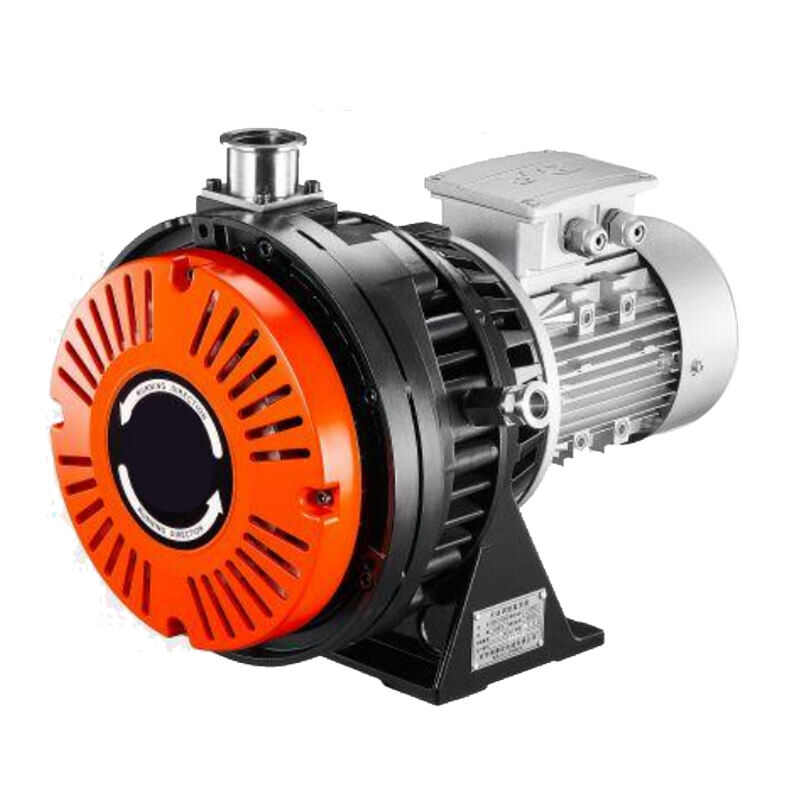
Key Parameters for Chemical Hazard Mitigation:
| Precaution | Purpose | Typical Specification/Note |
|---|---|---|
| Pump Type Selection | Choose technology resistant to process vapors | Diaphragm pumps for many solvents; Chemically resistant rotary vane pumps |
| Inlet Filter/Trap | Prevent particulate and condensate entry | Use chemical-specific adsorbents (e.g., activated carbon for solvents) |
| Exhaust Filter | Capture oil mist and vented vapors | Oil mist eliminators; Activated charcoal canisters |
| Oil Change Frequency | Maintain pump integrity and performance | Drastically reduced interval when pumping solvents (e.g., every 50-100 hrs) |
Pressure Extremes: Avoiding Implosion and Overheating
Another critical scenario involves operating at the pump's limits. You need a deep vacuum for a delicate process, pushing the pump to its ultimate pressure. Meanwhile, the cooling fan is clogged with dust. The pump overheats, oil breaks down, and internal clearances widen. Performance plummets. In a more dramatic failure, using a glass vessel under high vacuum without a protective screen risks an implosion, sending shattered glass flying at high velocity.
Preventing these pressure-related hazards requires respecting operational limits and ensuring adequate cooling. Never exceed the manufacturer's specified ultimate vacuum or maximum inlet pressure. Always ensure the pump's cooling vents are clear and the environment is within the specified temperature range. For applications requiring high vacuum, always use reinforced vessels or install mesh guards. The engineering behind Raydafon Technology Group Co.,Limited's vacuum pumps includes built-in thermal protection and clear performance ratings, giving procurement teams confidence that the equipment has safe operating boundaries designed in.
Key Parameters for Pressure and Thermal Safety:
| Precaution | Purpose | Typical Specification/Note |
|---|---|---|
| Respect Ultimate Pressure | Prevent motor overload and seal failure | Do not operate below pump's rated ultimate vacuum |
| Ensure Proper Cooling | Prevent overheating and oil degradation | Maintain ambient temp < 40°C; Keep vents unobstructed |
| Use Pressure Relief Valves | Protect against sudden pressure surges | Especially important in closed systems |
| Implosion Protection | Contain fragments from broken glassware | Use metal mesh screens or shrouds around vacuum vessels |
Electrical and Mechanical Hazards: The Unseen Dangers
A pump placed near a sink or in a humid environment poses a hidden electrical risk. A fault could lead to electrocution. Similarly, an unguarded rotating shaft or a hot exhaust surface is an accident waiting to happen for a passing technician. These "unseen" dangers are often overlooked during procurement and installation, focusing only on flow and pressure specs.
The solution is strict adherence to electrical safety codes and proper mechanical guarding. Always connect the pump to a grounded (earthed) outlet and consider a GFCI (RCD) in damp locations. Ensure the pump is placed on a stable, level surface to prevent vibration-induced movement. Procurement should specify pumps with integrated protective features. Manufacturers like Raydafon Technology Group Co.,Limited design their units with fully enclosed motors, thermal cut-offs, and guards over moving parts as standard, providing a safer baseline product that reduces site installation risks.
Operational Discipline: Maintenance and Personal Protective Equipment (PPE)
Even the best pump is only as safe as its operator. The final layer of defense is procedural: consistent maintenance and correct PPE. Lockout-Tagout (LOTO) procedures must be followed before any maintenance to ensure the pump cannot be accidentally energized. Operators should wear safety glasses to protect from chemical splashes or debris, and gloves when handling contaminated oil or hot surfaces.
Establishing a simple, clear maintenance log is a powerful tool. Tracking oil changes, filter replacements, and inspections helps predict failures before they happen. Sourcing pumps from a supplier that provides comprehensive manuals, readily available spare parts, and clear maintenance guidelines, such as Raydafon Technology Group Co.,Limited, simplifies this discipline and ensures long-term, safe operation.
Your Safety Questions Answered
Q: What is the single most important safety precaution when operating a vacuum pump?
A: While all are critical, performing a thorough risk assessment before starting any new process is paramount. Understand the chemicals involved, the pressure requirements, and the potential failure modes. This holistic view informs all other precautions, from pump selection to PPE.
Q: How can I ensure the vacuum pump I purchase for my team is safe?
A: Look beyond basic specifications. Prioritize manufacturers that design for safety, with features like automatic oil drains, built-in filtration, thermal protection, and comprehensive safety documentation. Inquire about compliance with international safety standards (e.g., CE, UL). Choosing a partner like Raydafon Technology Group Co.,Limited means investing in equipment where safety is engineered into the core design, not added as an afterthought.
Prioritizing vacuum pump safety protects your most valuable assets: your people and your productivity. It's an investment that pays dividends in avoided incidents and uninterrupted operations. We encourage you to review your current safety protocols and equipment specifications. Does your pump supplier prioritize your safety as much as you do?
For vacuum solutions built with integrity, performance, and safety as core principles, consider Raydafon Technology Group Co.,Limited. As a dedicated manufacturer, Raydafon combines innovative engineering with rigorous testing to deliver reliable pumps that meet the demanding needs of modern industry. Explore our range of products designed for safety and longevity at https://www.raydafon-couplings.com. For specific technical inquiries or to discuss your application requirements, please contact our team at [email protected].
Smith, J., 2021, "Advanced Safety Protocols for High-Vacuum Laboratory Systems," Journal of Chemical Health and Safety, Vol. 28, No. 3.
Chen, L. & Watanabe, K., 2020, "Corrosion Mechanisms in Rotary Vane Pump Oils Exposed to Organic Solvents," Tribology International, Vol. 152.
European Agency for Safety and Health at Work, 2019, "Technical Guide on Risk Assessment for Machinery: Pumps and Compressors," EU-OSHA Publications.
Brown, A.R., 2022, "Mitigation of Implosion Hazards in Vacuum Processing Equipment," Process Safety Progress, Vol. 41, Issue 1.
Kim, S., Park, J., & Lee, H., 2018, "Thermal Management and Failure Analysis of Oil-Sealed Vacuum Pumps under Continuous Operation," Applied Thermal Engineering, Vol. 142.
International Organization for Standardization, 2020, "ISO 21360-3: Vacuum technology - Standard methods for measuring vacuum-pump performance - Part 3: Specific safety requirements," ISO Standard.
Davis, M.P., 2019, "The Role of Filtration in Extending Vacuum Pump Service Life and Reducing Hazardous Emissions," Filtration & Separation Journal, Vol. 56, No. 4.
Roberts, T., 2021, "Electrical Safety Considerations for Industrial Pump Installations in Hazardous Environments," IEEE Transactions on Industry Applications, Vol. 57, No. 5.
Gupta, N., & Schmidt, R., 2017, "A Systematic Approach to Lockout-Tagout (LOTO) Procedures for Maintenance of Rotating Equipment," Professional Safety, Vol. 62, No. 11.
Zhang, Y., et al., 2023, "Material Compatibility and Selection for Chemical-Resistant Diaphragm Pumps in Pharmaceutical Applications," Chemical Engineering Research and Design, Vol. 190.
Related News
- What is the maximum weight you can load on dumbbell discs?
- How do you select the right segmented sprocket for a mining conveyor?
- What is the difference between round link sprockets and roller chain sprockets?
- Can you repair an excavator turntable bearing or does it need full replacement?
- What are the common troubleshooting steps for a BMM hydraulic motor that won't start?
- What is a BM1 series orbital hydraulic motor used for?
Leave me a message