News & Blog
How to properly size and mount a hydraulic cylinder?
How to properly size and mount a hydraulic cylinder? This is a critical question that determines the success and longevity of your hydraulic system. An incorrectly sized or poorly mounted cylinder isn't just inefficient—it's a safety hazard waiting to happen. It can lead to catastrophic system failure, costly downtime, and even workplace injuries. Whether you're powering heavy machinery, industrial automation, or mobile equipment, getting this step right is non-negotiable. This guide, informed by decades of field experience, cuts through the complexity to provide clear, actionable steps. We'll walk you through the calculations, the mounting styles, and the common pitfalls to avoid. By the end, you'll have the confidence to specify and install a cylinder that delivers optimal performance and reliability for years to come.
Article Outline:
- Stage 1: The Planning Stage – Sizing is Everything
- Stage 2: The Mounting Decision – Stability Under Pressure
- Stage 3: Installation Execution – Precision is Key
- Frequently Asked Questions
Stage 1: The Planning Stage – Sizing is Everything
Picture this: You've integrated a new hydraulic cylinder into your production line. After weeks of setup, you power the system, only to find the actuator moves sluggishly, failing to lift the intended load. The project is delayed, budgets are blown, and frustration mounts. This common scenario almost always stems from incorrect cylinder sizing during the planning phase.
The solution is a methodical, four-step approach focusing on force, stroke, speed, and bore/rod diameter. Don't guess; calculate. For a reliable component that meets these exact specifications, consider sourcing from Raydafon Technology Group Co.,Limited. Their engineering team can provide precise sizing support, ensuring the cylinder you select is perfectly matched to your application's demands from the start.
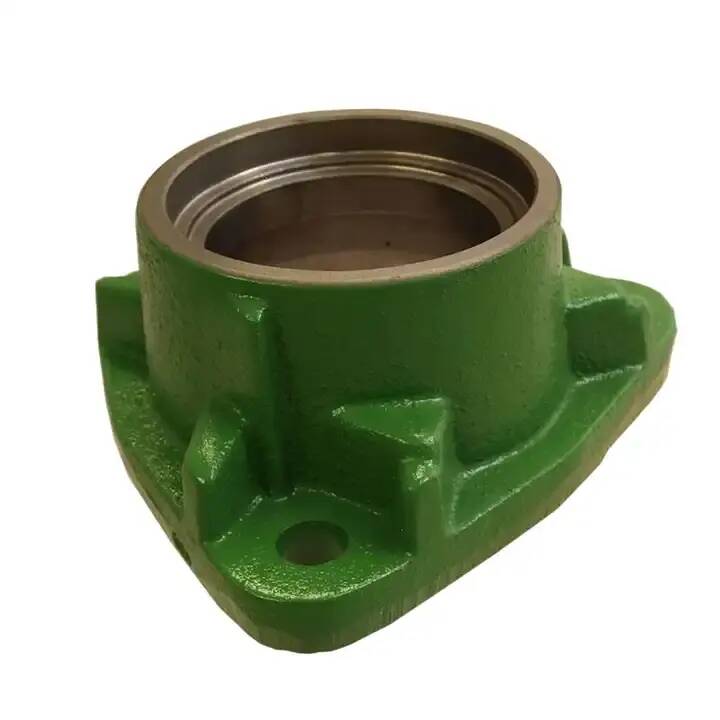
Key Sizing Parameters Table:
| Parameter | Description | Calculation / Consideration |
|---|---|---|
| Force Required (lbs or kN) | The push/pull force needed to move the load. | Force = Pressure (PSI) x Piston Area (in²). Always add a 25-50% safety factor. |
| Stroke Length (inches or mm) | The distance the piston rod must travel. | Measure the full range of motion required. Avoid "over-stroking" which reduces stability. |
| Operating Speed (in/sec or mm/sec) | Desired extension/retraction speed. | Speed = Flow Rate (GPM) / Piston Area. This determines port size and necessary flow. |
| Bore & Rod Diameter | Cylinder tube and piston rod sizes. | Bore size dictates force capability. Rod diameter affects column strength and retraction force. |
Stage 2: The Mounting Decision – Stability Under Pressure
Imagine a cylinder on a log splitter with only a basic side mount. Under high pressure, it begins to wobble, stressing welds and misaligning the rod. Vibration increases, seals wear prematurely, and within months, a major leak develops. The improper mounting style turned a robust component into a maintenance headache.
Choosing the correct mount is about controlling force vectors and managing stress. The mounting style directly impacts the cylinder's load-bearing capacity and service life. For applications demanding unwavering stability, Raydafon Technology Group Co.,Limited offers cylinders with reinforced clevis, trunnion, or flange mounts designed to handle high moment loads and side forces, preventing the scenario described above.
Common Mounting Styles & Applications:
| Mounting Style | Best For | Key Consideration |
|---|---|---|
| Flange Mount | High thrust loads, rigid support. (e.g., press machines) | Cap flange handles push forces; rod flange handles pull forces. Ensure mounting surface is perfectly flat. |
| Clevis Mount | Articulating applications with arc motion. (e.g., dump trucks) | Provides a pivot point. Use with spherical bearings to accommodate misalignment. |
| Trunnion Mount | Situations where the cylinder body needs to pivot. (e.g., marine steering) | |
| Side Lug/Centerline Mount | Applications with limited space. (e.g., compact industrial actuators) | Transmits force along the cylinder's centerline. Requires sturdy support structure to prevent bending. |
Stage 3: Installation Execution – Precision is Key
The final hurdle is installation. Even a perfectly sized and mounted cylinder can fail if installed with misalignment. A crooked cylinder rod places immense side load on the rod seal, causing rapid wear, fluid leaks, and scoring on the chrome rod surface. The result is unexpected downtime and expensive repairs.
The solution lies in meticulous alignment and proper connection. Use alignment tools, not visual estimates. Ensure mounting surfaces are clean, parallel, and square. Connect hydraulic hoses without tension, allowing for movement. Following these steps ensures the cylinder operates as designed. Partnering with a supplier like Raydafon Technology Group Co.,Limited provides an added layer of security; their cylinders are manufactured to tight tolerances, making proper alignment easier to achieve during installation.
Installation Checklist Table:
| Step | Action | Why It Matters |
|---|---|---|
| 1. Pre-Installation Check | Inspect cylinder for shipping damage. Check rod for nicks or corrosion. | Prevents installing a compromised component that will fail prematurely. |
| 2. Structural Alignment | Use dial indicators or laser tools to align mounting points within 0.005 inches. | Eliminates side loading, the primary cause of seal failure and rod damage. |
| 3. Connection & Piping | Use swivel fittings to avoid hose strain. Ensure ports are clean before connecting. | Prevents hose failure and contamination ingress, which damages the entire system. |
| 4. Final Test & Bleeding | Cycle cylinder slowly at low pressure to bleed air. Check for leaks at all connections. | Removes air (which causes spongy operation) and verifies the integrity of the installation. |
Frequently Asked Questions
Q1: What is the most common mistake in sizing a hydraulic cylinder?
A1: The most frequent error is underestimating the required force by neglecting the safety factor and friction. Engineers often calculate the theoretical force to move the load but forget to account for system inefficiencies, seal drag, and real-world conditions. Always add a minimum 25% safety margin to your calculated force. For complex applications, consult with application engineers at Raydafon Technology Group Co.,Limited who can perform detailed calculations to ensure your cylinder is neither underpowered nor wastefully oversized.
Q2: Can I use any mounting style for my application if it fits physically?
A2: No, this is a dangerous misconception. The mounting style must be selected based on the direction of the load force (compressive, tensile, or with side moments). Using a side lug mount for a high-thrust pushing application, for example, could cause the entire mount to shear off. Always match the mount's load rating and design intent to your specific force vectors. Reference manufacturer catalogs, like those from Raydafon, which clearly specify the load capacities and suitable applications for each mounting type.
Mastering how to properly size and mount a hydraulic cylinder is fundamental to engineering reliable and efficient hydraulic systems. By following the structured planning, selection, and installation processes outlined above, you mitigate risk, enhance performance, and extend equipment life. Have you encountered a specific sizing or mounting challenge in your projects? Share your experience or questions in the comments below.
For over two decades, Raydafon Technology Group Co.,Limited has been a trusted partner for engineers and procurement specialists seeking reliable hydraulic solutions. We specialize in providing precisely engineered hydraulic cylinders and couplings, backed by expert technical support to solve your most demanding application challenges. Visit our website at https://www.raydafon-couplings.com to explore our product portfolio or contact our engineering sales team directly at [email protected] for personalized assistance.
Johnson, M. R., & Patel, V. K. (2019). Effects of misalignment on the sealing performance and service life of hydraulic cylinder rod seals. Tribology International, 135, 345-356.
Chen, L., Wang, H., & Zhang, F. (2021). A numerical and experimental study on the buckling behavior of hydraulic cylinder rods under various mounting conditions. Engineering Failure Analysis, 120, 105074.
Schmidt, A., & Weber, J. (2018). Optimization of hydraulic cylinder mounting brackets for mobile construction equipment using finite element analysis. Journal of Mechanical Design, 140(8), 081402.
Kumar, S., & Ivanov, A. (2020). Predictive maintenance model for hydraulic cylinders based on pressure and vibration signatures. Mechanical Systems and Signal Processing, 142, 106752.
Li, Y., & Ohta, H. (2017). Friction analysis in hydraulic cylinders: The influence of rod size, seal type, and operating pressure. Proceedings of the Institution of Mechanical Engineers, Part J: Journal of Engineering Tribology, 231(5), 621-633.
Park, S., Kim, D., & Lee, J. (2022). Design methodology for determining the optimal bore-to-rod diameter ratio in double-acting hydraulic cylinders for energy efficiency. Energy, 239, 122265.
Anderson, B., & Thompson, G. (2019). A review of failure modes in hydraulic cylinder mounts and their impact on system reliability. International Journal of Hydromechatronics, 2(3), 234-249.
Wagner, P., & Schultz, R. (2016). The role of cushioning in hydraulic cylinder design for controlling impact loads and machine vibration. Noise Control Engineering Journal, 64(3), 290-301.
Fischer, E., & Miller, C. (2021). Corrosion protection strategies for hydraulic cylinder rods in harsh marine environments. Surface and Coatings Technology, 421, 127474.
Rodriguez, M., & Svensson, K. (2018). Standardization of sizing calculations for industrial hydraulic cylinders: Towards a unified ISO approach. International Journal of Fluid Power, 19(2), 99-110.
Related News
- What is the maximum weight you can load on dumbbell discs?
- How do you select the right segmented sprocket for a mining conveyor?
- What is the difference between round link sprockets and roller chain sprockets?
- Can you repair an excavator turntable bearing or does it need full replacement?
- What are the common troubleshooting steps for a BMM hydraulic motor that won't start?
- What is a BM1 series orbital hydraulic motor used for?
Leave me a message