News & Blog
What is the difference between a split bush and a solid bush?
When a replacement bushing fails or a new machine specification lands on your desk, the question quickly shifts from basic part numbers to real performance and availability. What is the difference between a split bush and a solid bush? This is not just an engineering curiosity. For purchasing teams, choosing the wrong type can mean extended downtime, higher installation labour, repeated procurement cycles, and even damaged shafts. Imagine a food processing line stopped at 2 a.m. because a worn bush must be replaced, but the shaft cannot be easily removed. A split bush can be opened and placed around the shaft without disassembling the entire drive line, while a solid bush normally requires the shaft end to be accessible for sliding. That single design difference changes installation speed, spare parts planning, inventory value, and total cost of ownership. In this practical guide, we break down the differences in plain language, walk through real maintenance and sourcing scenarios, and show how Raydafon Technology Group Co.,Limited supports purchasing professionals with reliable bushing solutions that reduce downtime and simplify supply decisions. This decision affects not only the immediate repair but also long-term maintenance budgets and supplier relationships.
What Is a Split Bush and Why It Matters in Procurement?
A split bush, also called a split sleeve bearing or split bushing, has a longitudinal cut that allows it to open slightly or separate into halves. This design lets maintenance teams install it around a shaft without removing couplings, gears, or drive components. For buyers, that means fewer associated spare parts, faster emergency repairs, and lower labour costs.
Pain point: many procurement teams struggle with long lead times and urgent breakdowns on agricultural and industrial equipment. A solid bush often forces the maintenance crew to remove the shaft, which can destroy seals and add hours of labour. Solution: stocking split bushes for critical drive positions makes emergency replacement quick and keeps the line moving. Typical applications include conveyor pulleys, tillage equipment, feeder drives, and processing machinery where shaft access is limited.
From a sourcing perspective, split bushes also support modular spare part strategies. Instead of holding multiple full shaft kits, you can store lighter, more affordable bushings that fit existing housings. This reduces inventory value while improving response time for high-wear locations.
Solid Bush Basics: The Traditional Choice
A solid bush is a one-piece cylindrical sleeve without a split. It is machined from bronze, steel, or composite materials and pressed into a housing bore. Because there is no seam, it can provide a continuous contact surface and is often perceived as the simpler, lower-cost option for standard assemblies where the shaft end is accessible.
Pain point: cost savings disappear quickly if installation requires major disassembly. In gearboxes, conveyor head shafts, or pump drives, removing the shaft may demand specialised tools, crane time, and additional gaskets. Solution: procurement teams should evaluate the installed cost rather than the unit price alone. If downtime is expensive, a solid bush may not be the bargain it appears to be.
Solid bushes remain a good choice for new builds, low-wear guide applications, and designs where full shaft removal is already part of the maintenance plan. They also allow tighter initial fitting in some cases, but they offer less flexibility when the shaft has slight wear or surface damage.
Key Differences: Split Bush vs. Solid Bush at a Glance
So what is the difference between a split bush and a solid bush when you compare them side by side? The split design changes the entire replacement workflow. A split bush opens around the shaft and clamps into the housing, while a solid bush slides over the shaft end. This simple distinction affects downtime, labour, and spare parts strategy.
| Parameter | Split Bush | Solid Bush |
|---|---|---|
| Installation without shaft removal | Yes, opens around shaft | No, requires shaft end access |
| Typical replacement time | Shorter, often less than half the time | Longer due to disassembly |
| Load contact | Good, with controlled split gap | Continuous surface, good for uniform load |
| Misalignment tolerance | Slightly more forgiving in many fits | Less forgiving after wear |
| Inventory strategy | Fewer emergency shaft kits needed | May require additional seals and parts |
For procurement teams, this table clarifies why the split bush often wins in maintenance-heavy environments. Raydafon Technology Group Co.,Limited supplies both types but helps buyers select the right configuration based on real shaft access and downtime cost.
Downtime Pain Point: A Maintenance Scenario That Costs Money
Picture a feed mill where the main elevator drive starts vibrating at 3 a.m. The maintenance crew finds a worn bush on the head shaft. If the installed part is a solid bush, the team must remove the coupling, support the shaft, and slide off the bushing. This can take six to eight hours. If the spare is a split bush, the crew opens the bush, cleans the shaft, and places it around the shaft without removing the coupling. The line can return to production before the morning shift.
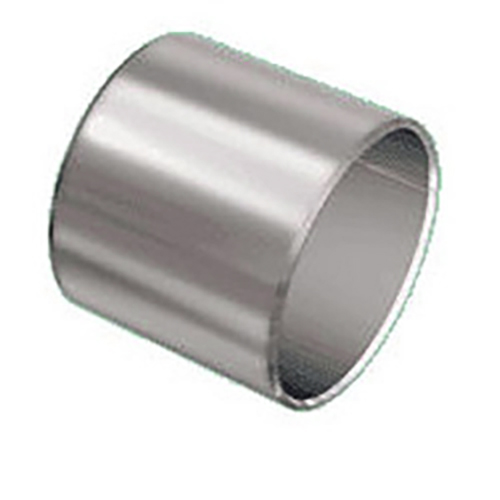
This is where procurement adds direct value. By specifying split bushes for critical shaft positions, you reduce hidden costs that never appear on the purchase order: overtime wages, lost throughput, and rushed freight for extra seals or bearings. The image below shows an Agricultural Spare Parts Split Bush prepared for quick replacement in a demanding drive line.
When comparing quotes, ask suppliers about dimensional accuracy and material options. A low-quality split bush with poor edge finish may not close evenly around the shaft, creating hot spots. Raydafon Technology Group Co.,Limited supports buyers with controlled tolerances and material traceability to avoid these costly repeat failures.
How Raydafon Technology Group Co.,Limited Solves Procurement Headaches
Many buyers face inconsistent quality when sourcing split and solid bushes from multiple vendors. The pain point is not just part failure; it is the time lost in re-qualifying suppliers, checking dimensions, and handling returns. Raydafon Technology Group Co.,Limited addresses this by offering standardised bushing solutions with clear specifications, reliable materials, and technical support that speaks the language of procurement and maintenance.
For example, a purchasing manager for an agricultural equipment distributor needed a split bush that could replace a solid bush in a tillage drive without changing the housing. Raydafon's team confirmed the shaft diameter, housing bore, length, and load rating, then supplied a split bush that matched the existing housing and reduced field replacement time by more than half. The solution was not just a part; it was a faster maintenance process.
We also help buyers consolidate part numbers. Instead of managing separate solid bush and split bush suppliers with different tolerance standards, sourcing through one qualified vendor improves repeatability and simplifies audit trails. This is especially important for export markets and OEM spare parts programmes.
Frequently Asked Questions About Split and Solid Bushes
What is the difference between a split bush and a solid bush?
A split bush has a longitudinal cut or split that allows it to open and wrap around the shaft, so installation does not require removing the shaft from the assembly. A solid bush is a continuous one-piece sleeve that must slide over the shaft end. The split design reduces disassembly time and is particularly useful for repair positions where the shaft cannot be easily pulled.
What is the difference between a split bush and a solid bush in load capacity and wear life?
Both designs can carry similar loads if manufactured with proper material and tolerance control. A solid bush provides a continuous contact surface, which can be beneficial in clean, well-aligned new assemblies. A split bush can provide comparable service life in many industrial and agricultural applications, and its split gap can help accommodate minor shaft wear or slight misalignment. The key is selecting the correct wall thickness, bearing clearance, and material grade for the operating speed and load.
Installation and Tolerance Control: The Hidden Procurement Risk
Pain point: purchasing teams often focus on bore size and outer diameter but ignore fit tolerances, surface finish, and split gap behaviour. A split bush that is too tight can seize the shaft; one that is too loose can spin in the housing. Both failures lead to emergency downtime and warranty disputes.
Solution: define the tolerance class and lubrication path before ordering. Work with a supplier who provides dimensional inspection reports and material certification. Below is a simplified comparison of common tolerance and fitting considerations.
| Inspection Parameter | Why It Matters | Raydafon Approach |
|---|---|---|
| Housing bore vs. bush OD | Correct interference prevents spinning | Clear fit guidance for standard housing sizes |
| Shaft diameter vs. bush ID | Proper clearance avoids seizure and overheating | Machined to specified clearance range |
| Split gap and edge chamfer | Reduces stress concentration and edge loading | Controlled gap and smooth edge finish |
| Material and lubricant path | Affects wear life and maintenance intervals | Material options for dry, grease, or oil-lubricated use |
This tolerance-first approach prevents the most common procurement mistake: buying the cheapest split bush and paying for it later through shaft wear and lost production.
Conclusion: Make the Right Call Before Your Next Replacement
The difference between a split bush and a solid bush comes down to installation access, downtime cost, and maintenance strategy. If your operation frequently repairs mid-shaft positions or handles emergency breakdowns, split bushes provide a practical advantage. If you are building a new assembly with full shaft access and a clean environment, solid bushes may still have a place. Ask your supplier for dimensional data, material options, and realistic lead times before committing.
We invite you to share your current bushing challenge. What shaft size, speed, and load are you working with? Raydafon Technology Group Co.,Limited is a manufacturer and supplier of power transmission components, including split bushes, solid bushes, and couplings. We help procurement teams reduce downtime, consolidate suppliers, and solve shaft access problems with reliable product quality and technical support. Visit https://www.raydafon-couplings.com for product details, or contact [email protected] with your drawing or requirement.
J. F. Archard, 1953, Contact and Rubbing of Flat Surfaces, Journal of Applied Physics, Vol. 24, No. 8, pp. 981–988.
D. Dowson, 1962, A Generalized Reynolds Equation for Fluid-Film Lubrication, International Journal of Mechanical Sciences, Vol. 4, No. 2, pp. 159–170.
B. J. Hamrock and D. Dowson, 1977, Isothermal Elastohydrodynamic Lubrication of Point Contacts: Part 1—Theoretical Formulation, Journal of Lubrication Technology, Vol. 99, No. 2, pp. 264–275.
N. P. Suh, 1973, The Delamination Theory of Wear, Wear, Vol. 25, No. 1, pp. 111–124.
M. M. Khonsari and E. R. Booser, 2006, Effect of Contamination on the Performance of Journal Bearings, Proceedings of the Institution of Mechanical Engineers, Part J: Journal of Engineering Tribology, Vol. 220, No. 5, pp. 427–435.
K. Holmberg, P. Andersson, A. Erdemir, 2012, Global Energy Consumption Due to Friction in Passenger Cars, Tribology International, Vol. 47, pp. 221–234.
I. Etsion, 2005, State of the Art in Laser Surface Texturing, Journal of Tribology, Vol. 127, No. 1, pp. 248–253.
D. Bartel and L. Deters, 2003, Calculation of Journal Bearing Friction Using a Mixed Friction Model, Tribology International, Vol. 36, No. 4–6, pp. 221–227.
J. A. Williams, 2005, Wear and Wear Particles—Some Fundamentals, Tribology International, Vol. 38, No. 10, pp. 863–870.
G. W. Stachowiak and A. W. Batchelor, 2014, Surface Roughness Effects in Sliding Contacts, Wear, Vol. 310, No. 1–2, pp. 1–10.
Previous :
-
Related News
- What is the maximum horsepower rating for a PTO speed reducer gearbox?
- How much land can a horse drawn plough till in a day?
- What is the maximum weight you can load on dumbbell discs?
- How do you select the right segmented sprocket for a mining conveyor?
- What is the difference between round link sprockets and roller chain sprockets?
- Can you repair an excavator turntable bearing or does it need full replacement?
Leave me a message