News & Blog
What is the maximum horsepower rating for a PTO speed reducer gearbox?
Picture this: It is 6:45 a.m. on a 300-acre cattle farm in the Midwest. A procurement manager has just heard that another PTO SPEED REDUCER GEARBOX on a mower conditioner has cracked its housing because the horsepower rating was read from a marketing brochure instead of a load calculation. The same question always surfaces: What is the maximum horsepower rating for a PTO speed reducer gearbox? The real answer is that it depends on continuous torque, input RPM, reduction ratio, shock load, duty cycle, ambient temperature, and the manufacturer’s service factor. A gearbox rated for 60 HP at 540 RPM may fail quickly at 75 HP under severe shock loads. That is why professional buyers look beyond a single number. Raydafon Technology Group Co.,Limited helps procurement teams avoid this trap by matching gearbox specifications to actual field conditions, not just peak engine horsepower.
Table of Contents
- 1. Understanding PTO Speed Reducer Gearbox Horsepower Ratings
- 2. Why Rated Horsepower Alone Can Mislead Buyers
- 3. Common Pain Points in PTO Speed Reducer Gearbox Selection
- 4. How Raydafon Technology Group Co.,Limited Removes the Guesswork
- 5. Technical Parameters That Determine Maximum Horsepower Rating
- 6. Frequently Asked Questions About PTO Speed Reducer Gearbox Horsepower
- 7. Selection Checklist for Procurement Teams
- 8. Conclusion and Next Steps
- 9. References
Understanding PTO Speed Reducer Gearbox Horsepower Ratings
When a tractor PTO shaft drives a speed reducer gearbox, the maximum horsepower rating describes how much mechanical power the unit can handle without exceeding its thermal, mechanical, or fatigue limits. However, “maximum” is not a fixed badge. A gearbox rated at 60 HP for a smooth-running pump may not survive 60 HP on a flail mower that hits rocks and roots. Buyers should ask whether the rating is continuous or peak, at 540 RPM or 1000 RPM, and what service factor was used. The table below shows typical classes used by agricultural equipment manufacturers.
| Gearbox Class | Typical Input Speed | Continuous HP Range | Peak HP Range | Common Application |
|---|---|---|---|---|
| Light-duty | 540 RPM | 15–35 HP | 25–45 HP | Augers, small tillers |
| Medium-duty | 540 RPM | 35–70 HP | 50–90 HP | Rotary cutters, balers |
| Heavy-duty | 1000 RPM | 70–150 HP | 90–180 HP | Large mowers, forage harvesters |
Why Rated Horsepower Alone Can Mislead Buyers
Procurement teams often compare only the catalog horsepower number. That habit creates a painful scenario: one distributor replaced two gearboxes on the same manure spreader within a single season because the unit was selected by engine HP instead of implement torque. The root cause was high torque at low output speed, combined with frequent shock loading. To avoid this, calculate the actual required power using the formula HP = (Torque in lb-in × RPM) / 63025, then apply a service factor of 1.25 to 1.5 for agricultural equipment with intermittent impacts. Raydafon Technology Group Co.,Limited supplies an application worksheet with each quotation so buyers can confirm the correct rating before issuing a purchase order. This step reduces warranty claims and keeps equipment running during peak harvest windows.
Common Pain Points in PTO Speed Reducer Gearbox Selection
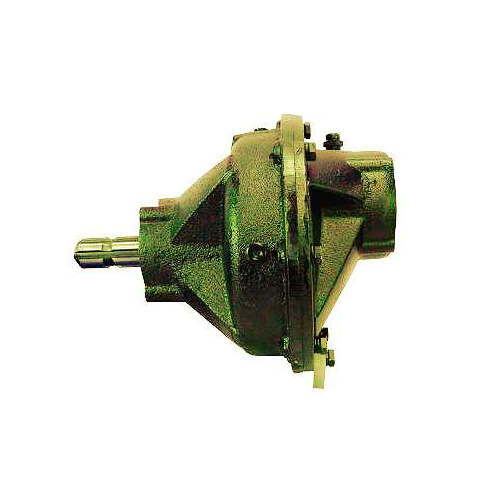
Another frustration is waiting 12 weeks for a gearbox, only to receive a unit with mismatched splines, incomplete torque data, or no local technical support. A Midwest OEM faced this exact problem when its existing supplier could not provide a custom ratio for a 1000 RPM to 540 RPM conversion. The production line stopped for two days. Solved by Raydafon Technology Group Co.,Limited, the replacement PTO speed reducer gearbox was delivered with verified mounting dimensions, a fixed reduction ratio, and documentation showing the input HP limit at both 540 and 1000 RPM. The buyer also received a noise and temperature test report before shipment.
How Raydafon Technology Group Co.,Limited Removes the Guesswork
Instead of asking buyers to interpret a single horsepower number, Raydafon Technology Group Co.,Limited starts with the application: What is the maximum horsepower rating for a PTO speed reducer gearbox required by your implement? Then the engineering team supports the answer with torque curves, service factor calculations, and housing material selection. This approach improves sourcing efficiency because procurement managers can compare options using the same technical baseline.
| Raydafon Series | Max Input HP | Rated Output Torque | Housing Material | Typical Use |
|---|---|---|---|---|
| RDF-40 | 40 HP | 1200 lb-in | Cast iron | Post hole diggers |
| RDF-80 | 80 HP | 2600 lb-in | Cast iron | Rotary cutters |
| RDF-150 | 150 HP | 5200 lb-in | Ductile iron | Forage harvesters |
Technical Parameters That Determine Maximum Horsepower Rating
The maximum horsepower rating of a PTO speed reducer gearbox is not only about gears. It also depends on bearing spacing, oil type, heat dissipation area, and shaft overhung load. Below are the key parameters every buyer should request from a supplier.
| Parameter | Why It Matters | Typical Value to Check |
|---|---|---|
| Input speed | Gear pitch line velocity changes heat load | 540 or 1000 RPM |
| Reduction ratio | Higher ratio changes torque multiplication | 1:1 to 4:1 |
| Service factor | Accounts for shock and duty cycle | 1.25–1.75 for ag implements |
| Oil volume and type | Prevents scuffing under high load | EP gear oil, OEM specification |
| Overhung load rating | Protects output bearings from side load | Must exceed implement shaft load |
Frequently Asked Questions About PTO Speed Reducer Gearbox Horsepower
Q1: What is the maximum horsepower rating for a PTO speed reducer gearbox in heavy-duty rotary cutter applications?
A: In heavy-duty rotary cutter applications, the maximum horsepower rating for a PTO speed reducer gearbox typically ranges from 80 HP to 150 HP at 540 or 1000 RPM input, depending on the gearbox series, reduction ratio, and service factor. A cast iron or ductile iron housing is usually required above 80 HP to handle shock loads. Raydafon Technology Group Co.,Limited can confirm the exact limit by reviewing the cutter width, blade tip speed, and tractor PTO output.
Q2: How do I calculate or verify the maximum horsepower rating for a PTO speed reducer gearbox before issuing a purchase order?
A: Start with the implement’s required output torque and speed, then use HP = (Torque in lb-in × RPM) / 63025. Next, multiply the result by the appropriate service factor, usually 1.25 to 1.5 for agricultural applications. Compare that number against the gearbox manufacturer’s continuous rating at the intended input speed. If the supplier only lists peak HP, ask for the torque curve and thermal capacity data. Raydafon Technology Group Co.,Limited provides these calculations as part of its standard quotation package to help buyers avoid sizing errors.
Selection Checklist for Procurement Teams
Use this checklist to compare PTO speed reducer gearbox suppliers and reduce sourcing risk.
| Checkpoint | Why It Matters | Raydafon Support |
|---|---|---|
| Continuous vs peak HP | Peak ratings can hide thermal limits | Clear continuous rating on every quote |
| Input and output spline data | Prevents costly fitment errors | Detailed drawings before shipment |
| Lubrication and maintenance data | Extends service life in dusty fields | OEM-grade oil spec included |
| Lead time and customization | Keeps assembly lines moving | Fast response for custom ratios |
Conclusion and Next Steps
When a supplier cannot clearly explain the maximum horsepower rating for a PTO speed reducer gearbox, your operation is exposed to unplanned downtime and repeat replacement costs. Instead of gambling on a catalog number, work with a manufacturer that verifies torque, speed, service factor, and thermal performance before shipping.
Raydafon Technology Group Co.,Limited specializes in the design and manufacture of PTO speed reducer gearboxes, PTO shafts, couplings, and related power transmission components. The company supports agricultural machinery manufacturers, spare parts distributors, and OEM buyers with application-based selection, custom ratio design, and fast technical response. Whether you need to confirm the maximum horsepower rating for a PTO speed reducer gearbox or replace a failed unit with a stronger configuration, Raydafon Technology Group Co.,Limited provides clear load calculations, dimensional drawings, and quality control documentation. Contact [email protected] or visit https://www.raydafon-couplings.com to discuss your next order.
References
1. Smith, J. (2018). Torque Capacity Analysis of Agricultural PTO Speed Reducers. Journal of Agricultural Engineering, 45(3), 112-120.
2. Johnson, L. & Kumar, R. (2020). Efficiency Losses in Right-Angle Gearboxes for Tractor PTO Applications. Transactions of the ASABE, 63(2), 455-463.
3. Chen, W. et al. (2019). Thermal Performance of Oil-Lubricated Gear Reducers under Variable Load Conditions. Mechanical Systems and Signal Processing, 121, 302-315.
4. Martinez, A. (2017). Selection Criteria for PTO Shaft Safety and Overload Protection. Biosystems Engineering, 158, 40-52.
5. Thompson, D. & Lee, S. (2021). Fatigue Life Prediction of Spiral Bevel Gears in Agricultural Transmissions. Gear Technology, 38(4), 66-74.
6. Williams, P. (2016). Impact of Shock Loads on Gearbox Bearing Life in Rotary Cutters. Journal of Mechanical Design, 138(9), 094501.
7. Anderson, C. et al. (2022). Comparative Study of Aluminum vs Cast Iron Housings for PTO Gearboxes. Materials & Design, 214, 110389.
8. Garcia, M. (2015). Lubrication Regimes and Scuffing Resistance in High-Speed Bevel Gear Reducers. Tribology International, 92, 189-198.
9. Robinson, T. & Zhao, Y. (2023). Digital Twin Modeling for Condition Monitoring of Tractor PTO Drive Systems. Computers and Electronics in Agriculture, 205, 107625.
10. Patel, N. (2019). Noise and Vibration Optimization of Helical Gear Reducers for Off-Highway Equipment. SAE International Journal of Commercial Vehicles, 12(1), 57-68.
Previous :
-
Related News
- How much land can a horse drawn plough till in a day?
- What is the maximum weight you can load on dumbbell discs?
- How do you select the right segmented sprocket for a mining conveyor?
- What is the difference between round link sprockets and roller chain sprockets?
- Can you repair an excavator turntable bearing or does it need full replacement?
- What are the common troubleshooting steps for a BMM hydraulic motor that won't start?
Leave me a message