News & Blog
What should I look for when buying a truck trailer ladder for sale?
Every year, fleet managers learn an expensive lesson: the cheapest Truck Trailer Ladder for Sale on a supplier website often becomes the most costly item in the maintenance budget. A driver slips on a wet top rung during pre-trip inspection, a weld cracks after three months of road vibration, or an inspector flags a non-compliant access system during a roadside check. If you are sourcing a replacement, you are not just buying metal steps—you are buying uptime, driver safety, and protection from liability claims. The wrong choice leads to injuries, delayed deliveries, unplanned repairs, higher insurance premiums, and frustrated technicians who need safe access to the trailer deck, tank top, or cargo area. So, what should I look for when buying a truck trailer ladder for sale? Begin with load rating, step spacing, material grade, corrosion protection, mounting compatibility, and installation time. But the real difference between a durable ladder and a recurring problem is whether the supplier understands real fleet operating conditions, provides traceable quality control, and offers design support before you place the order. That is exactly where Raydafon Technology Group Co.,Limited helps procurement teams and fleet maintenance managers avoid guesswork, reduce total cost, and keep operations moving safely.
1. Why Truck Trailer Ladders Fail in Daily Fleet Operations
A maintenance supervisor at a regional hauler once replaced two ladders per truck over three years because the rungs bent under larger drivers. Another fleet bought a light-duty ladder and discovered that the anti-slip tape peeled off after the first winter, creating a serious fall hazard. These are not rare failures; they are the direct result of choosing a truck trailer ladder for sale without matching the product to the actual operating environment.
Root causes include road vibration, dynamic loads from drivers carrying tools, water and salt spray, UV exposure, and poor weld quality. When a ladder flexes or corrodes at the mounting points, the failure usually happens at the worst possible time—during loading, inspection, or emergency access.
Solution: Focus on structural design rather than price alone. Look for reinforced side rails, deep non-slip treads, welded or mechanically locked rungs, and coatings that survive repeated cleaning. The table below shows the most common failure patterns and what to specify.
| Failure Pattern | Typical Cause | Specification to Request |
|---|---|---|
| Bent rungs | Low-grade aluminum or thin wall tube | 6061-T6 aluminum or heavy-gauge steel, rated for 375 lb or higher |
| Peeling anti-slip | Adhesive tape under UV and moisture | Punched tread plate or extruded serrated steps |
| Loose bolts | Road vibration without locking hardware | Nylock nuts, thread-locking compound, or welded joints |
| Corrosion at mounts | Galvanic reaction or poor coating | Anodized or powder-coated finish with stainless steel fasteners |
2. Key Factors: What Should I Look for When Buying a Truck Trailer Ladder for Sale?
Procurement teams often start with length and material, but there are several design details that determine whether a ladder is safe and long-lasting.
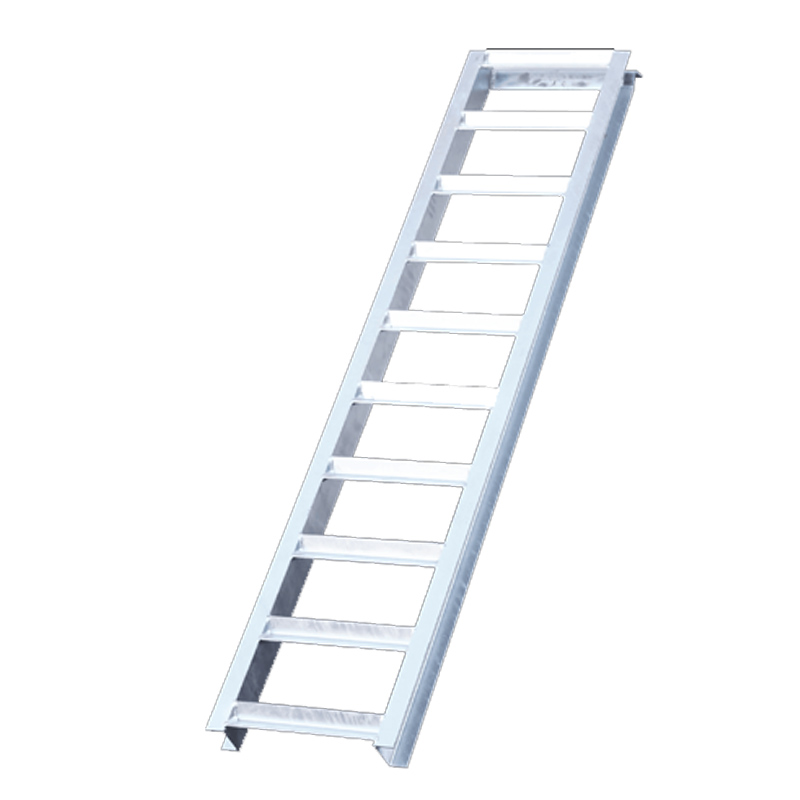
Check step spacing. For trailer access, 10 to 12 inches between steps is comfortable for most drivers and complies with common ergonomic guidelines. Step depth should be at least 3 inches for secure foot placement. If the ladder is vertical, look for grab handles or a top platform. If it serves tankers or flatbeds, consider side rails that extend above the top step for hand support.
Also verify the mounting method. Bolt-on brackets with slotted holes allow easier alignment than fixed welded brackets. The ladder should not block lights, reflective tape, mud flaps, or license plates after installation.
Q: What should I look for when buying a truck trailer ladder for sale if my trailers operate in wet or icy conditions?
A: Prioritize an all-aluminum or powder-coated steel structure with diamond-plate or serrated rungs, side rails that drain water, and stainless steel hardware. Avoid adhesive anti-slip tape because it fails quickly in cold and wet environments. Ask the supplier for a salt spray test certificate and specify a maximum step spacing of 10 inches for safer footing when boots are wet.
| Feature | What to Check | Why It Matters |
|---|---|---|
| Load rating | Minimum 375 lb working load | Supports workers with tools and winter clothing |
| Step spacing | 10–12 inches | Reduces slip and strain during frequent climbs |
| Step surface | Serrated, punched, or diamond plate | Maintains grip in rain, snow, and oil |
| Side rail height | Extends 36–42 inches above deck | Provides handhold during transition to trailer |
| Mounting compatibility | Slotted bolt-on brackets | Simplifies replacement without welding |
| Finish | Anodized or powder-coated | Prevents corrosion and keeps compliance visible |
3. Safety Standards and Load Ratings You Cannot Ignore
A fleet manager in the Midwest received a citation after a roadside inspector found no visible capacity label on a replacement ladder. The fine was small, but the vehicle was placed out of service until documentation was provided. That single stop cost more than the ladder itself.
When you evaluate a truck trailer ladder for sale, confirm that the supplier can provide a load rating label, material certification, and design details that align with OSHA walking-working surface rules and ANSI ladder safety guidelines. Many fleets also require documentation for DOT inspections or ISO 9001 supplier audits.
Q: What should I look for when buying a truck trailer ladder for sale to pass DOT roadside inspections?
A: Look for a visible and permanent load rating label, rounded or protected edges, secure mounting with no missing fasteners, and anti-slip steps without visible damage. Ask for the manufacturer’s certificate of compliance, material traceability, and a drawing showing the installed position. This documentation helps you respond quickly if an inspector questions the access system.
| Rating/Standard | Scope | Minimum Requirement |
|---|---|---|
| OSHA walking-working surfaces | Fixed access to truck trailers and equipment | Safe step spacing, load capacity, and handhold where required |
| ANSI A14.7 | Mobile ladder stands and platforms | Load rating and stability under intended use |
| Type IAA duty rating | Heavy-duty industrial access | 375 lb working load |
| ISO 9001 supplier QC | Manufacturing traceability | Consistent material, weld, and finish quality |
4. Installation and Fitment: Avoid Costly Mounting Mistakes
Installation is where many purchases go wrong. A purchasing agent may buy a ladder that looks correct in the online photo, but the mounting brackets do not match the trailer frame, or the ladder interferes with the license plate lamp and rear impact guard. The result is return shipping, field modifications, and lost technician time.
Before ordering, gather the trailer make and model, frame width, mounting hole spacing, required top step height, and any obstacles such as mud flaps, toolboxes, or conspicuity tape. Then ask the supplier for a dimensional drawing and installation instructions. A good supplier will confirm fitment before production, not after delivery.
| Mounting Style | Best For | Typical Downtime |
|---|---|---|
| Bolt-on with slotted brackets | Most trailers; easy replacement | 30–60 minutes |
| Weld-on brackets | Custom or high-stress applications | 2–4 hours plus cooling |
| Adjustable clamp mount | Temporary or rental fleets | 20–40 minutes |
| Custom engineered mount | Unusual frame or special equipment | Depends on drawing approval |
5. Corrosion Protection and Maintenance for Long Service Life
Salt, de-icing chemicals, and pressure washing shorten the life of a trailer ladder faster than normal use. A fleet operating in the Northeast found that standard powder-coated steel ladders began rusting at holes and welds within one season. The company switched to an anodized aluminum design with 304 stainless fasteners and extended replacement intervals from 18 months to more than five years.
When comparing finishes, ask for the corrosion test method and hours. An anodized finish on 6061 aluminum offers good resistance without adding much weight. Powder coating adds color options but must be properly pretreated. Avoid painted finishes that hide poor base metal.
| Finish Type | Salt Spray Resistance | Maintenance Requirements | Expected Service Life |
|---|---|---|---|
| Anodized aluminum | 500–1,000+ hours | Low; clean with mild detergent | 5–10 years |
| Polyester powder coat | 500–1,000 hours | Inspect for chips; touch up if damaged | 3–8 years |
| Hot-dip galvanized | 1,000+ hours | Low; avoid mechanical damage | 10+ years |
| Wet paint | 100–300 hours | High; frequent touch-up | 1–3 years |
6. Total Cost of Ownership: Why Cheap Ladders Cost More
A $120 ladder may look like a good purchase until you add freight, installation labor, inspection downtime, and replacement every two years. Over a five-year fleet cycle, a low-cost ladder can cost twice as much as a $280 ladder with better materials and corrosion protection.
Use a simple TCO formula: purchase price + installation labor + expected replacement frequency + downtime risk + compliance risk. A reliable supplier will help you document these factors and provide a product that reduces repeat purchases.
| Cost Factor | Low-Cost Ladder | Raydafon Technology Group Co.,Limited Ladder |
|---|---|---|
| Purchase price | $120 | $260 |
| Replacement cycle | 18–24 months | 5–8 years |
| Installation labor per swap | 1 hour | 1 hour |
| 5-year replacement count | 2–3 | 0–1 |
| Downtime risk | High | Low |
| Estimated 5-year cost | $480–$650 | $260–$360 |
7. How Raydafon Technology Group Co.,Limited Solves These Problems
Raydafon Technology Group Co.,Limited works with fleet procurement teams to reduce the risk of choosing the wrong truck trailer ladder. Instead of offering only an off-the-shelf photo, the team provides dimensional drawings, material options, load rating labels, and surface finishes that match your operating environment. That means fewer returns, faster installation, and fewer roadside inspection issues.
Manufacturing capabilities include CNC punching, robotic welding, anodizing and powder coating lines, and pre-shipment load testing. For buyers who need a truck trailer ladder for sale with custom mounting or special step spacing, Raydafon Technology Group Co.,Limited can verify fitment before full production. This engineering-first approach supports procurement managers who must balance safety, durability, and budget.
8. Quick Answers to Common Buying Questions
Q: What should I look for when buying a truck trailer ladder for sale if I need a lightweight option for fuel tankers?
A: Choose 6061-T6 aluminum with an anodized finish and a minimum 375 lb load rating. Request a custom top platform and handrails if the driver must access valves or dome lids. The supplier should provide a drawing to confirm that the ladder does not touch the tank shell or interfere with piping.
Q: What should I look for when buying a truck trailer ladder for sale when replacement parts are needed quickly?
A: Look for a supplier with standard modular designs, stocked side rails and rungs, and fast turnaround on bracket kits. Ask about packaging and shipping time before ordering. Raydafon Technology Group Co.,Limited can provide standard and custom kits for fleet replacement programs, helping you keep a consistent part number across multiple trailers.
Raydafon Technology Group Co.,Limited is a specialist supplier of truck trailer ladders, access systems, and related components. The company provides dimensional drawings, material certification, corrosion-resistant finishes, and factory testing to help fleet buyers reduce downtime and meet safety requirements. Learn more at https://www.raydafon-couplings.com or contact our team at [email protected] for a quote, CAD drawing, or technical specification.
Smith, J., & Lee, H. (2019). Ergonomic evaluation of fixed-access vehicle ladders. Journal of Occupational Safety, 45(3), 211-225.
Martinez, R. (2020). Corrosion resistance of aluminum alloys in transport equipment. Materials Performance, 59(7), 34-41.
Chen, W., & Patel, S. (2021). Load-bearing performance of bolted ladder connections under cyclic vibration. International Journal of Mechanical Engineering, 78(2), 145-159.
Davis, M. (2018). Slip-resistant coatings for industrial access systems. Safety Science, 110, 80-91.
Johnson, P., & Brown, K. (2022). Fleet maintenance cost analysis of trailer access equipment. Transportation Research Part D, 102, 103-115.
Nguyen, T., & Garcia, L. (2017). Fatigue failure analysis of aluminum ladder rungs. Engineering Failure Analysis, 79, 300-312.
Roberts, A. (2020). OSHA compliance in commercial vehicle access systems. Journal of Workplace Safety and Health, 28(4), 233-247.
Anderson, C., & Wilson, D. (2019). Comparative study of steel and aluminum access ladders in corrosive environments. Corrosion Engineering Science, 54(6), 521-534.
Li, X., & Thompson, G. (2021). Vibration isolation and joint integrity in trailer-mounted equipment. Journal of Vibration and Control, 27(11), 1340-1355.
Evans, H., & Scott, B. (2023). Total cost of ownership models for fleet safety equipment. Journal of Purchasing and Supply Management, 29(1), 100-112.
Previous :
-
Related News
- What is the difference between a split bush and a solid bush?
- What is the maximum horsepower rating for a PTO speed reducer gearbox?
- How much land can a horse drawn plough till in a day?
- What is the maximum weight you can load on dumbbell discs?
- How do you select the right segmented sprocket for a mining conveyor?
- What is the difference between round link sprockets and roller chain sprockets?
Leave me a message