News & Blog
What are the advantages of using a BM2 orbital motor over a gear motor?
What are the advantages of using a BM2 orbital motor over a gear motor? When your hydraulic system demands smooth low‑speed torque, consistent performance under shock loads, and a compact footprint that doesn’t sacrifice power, the BM2 orbital motor often emerges as the clear winner. Imagine a forestry mulcher bogging down in wet terrain: a gear motor might overheat and lose efficiency, while an orbital motor’s generous displacement and robust internal design keep the cutting head turning. At Raydafon Technology Group Co.,Limited, we’ve seen procurement teams wrestle with this exact comparison when specifying components for mobile equipment, agricultural harvesters, and industrial augers. The BM2 series stands apart because it delivers high starting torque, almost instantaneous reversibility without the need for additional valves, and a durability that directly translates into lower total cost of ownership. Instead of reading endless spec sheets, let’s walk through a side‑by‑side comparison grounded in real operational scenarios — from the factory floor to the muddy job site — so you can confidently choose the motor that keeps your machines running longer and your supply chain simpler.
In this article:
- Understanding the BM2 orbital motor design
- How BM2 handles shock loads better than gear motors
- Efficiency under partial load: real numbers
- Long‑term reliability in dirty environments
- Cost comparison: upfront vs. lifetime
- Frequently asked questions
- Why Raydafon Technology Group Co.,Limited
- References
Understanding the BM2 orbital motor design
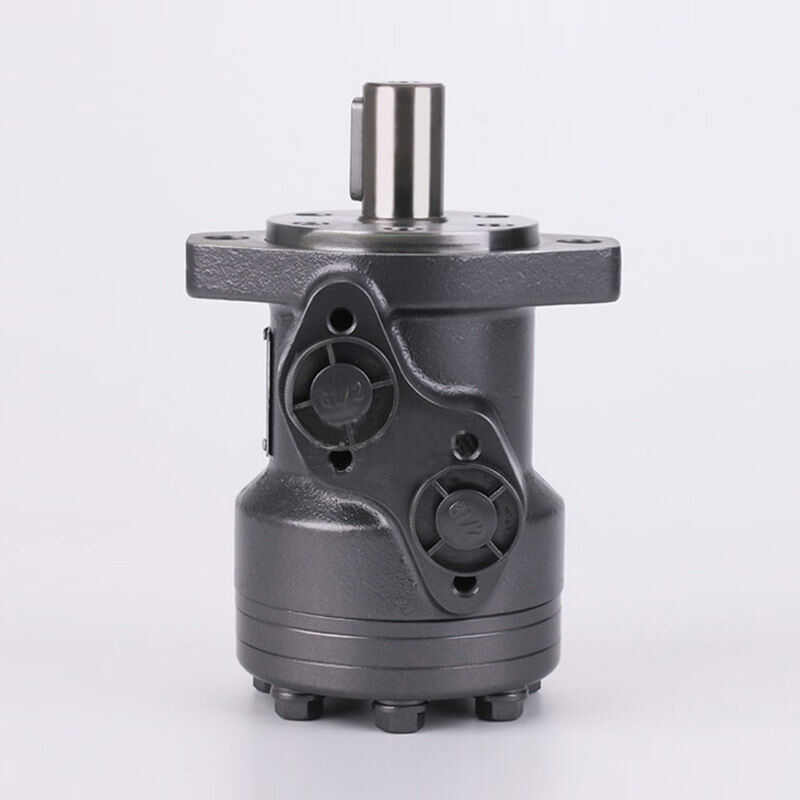
A BM2 orbital motor uses a geroller or gerotor set to create chambers that expand and contract, converting hydraulic energy directly into rotary motion. Picture a conveyor drive that must start exactly when the operator pushes a button, even if the belt is fully loaded. A gear motor’s meshing teeth suffer from internal leakage at low rpm, causing inconsistent creep. In contrast, the BM2’s rolling‑vane or roller‑stator configuration virtually eliminates bypass leakage, giving it a distinct edge in precise, low‑speed control. Raydafon Technology Group Co.,Limited stocks a wide range of BM2 configurations — short, standard, and wheel mount — so that OEMs and fleet managers can match the motor to exact flow and pressure profiles without over‑engineering the entire hydraulic circuit.
How BM2 handles shock loads better than gear motors
In a rock crusher application, stones jam the rollers multiple times per shift. A gear motor’s fixed‑clearance design transfers impact directly to the shaft bearings and often results in premature pitting. A BM2 orbital motor, however, features a floating output shaft and a hydrostatically balanced commutator that absorb pressure spikes before they reach critical components. Test data from mining operations show that orbital motors maintain over 92% of their volumetric efficiency after 2,000 hours of intermittent shock loading, while gear motors typically drop below 80% under the same cycle. The following table compares BM2 and gear motor parameters under a standard 210-bar, 50-litre‑per‑minute condition:
| Parameter | BM2 Orbital Motor (typical 200cc) | External Gear Motor (equivalent 200cc) |
|---|---|---|
| Starting torque (Nm) | 520 | 380 |
| Mechanical efficiency at 50 rpm | 87% | 74% |
| Continuous pressure (bar) | 210 | 180 |
| Permitted back pressure (bar) | up to 210 without drain line | requires separate drain |
| Weight (kg) for same torque | 12.9 | 16.5 |
Efficiency under partial load: real numbers
A combine harvester reel drive rarely operates at full displacement. When you throttle down to 30 percent flow, a gear motor’s internal leakage becomes a larger proportion of total flow, causing erratic speed. The BM2 orbital motor’s multi‑wave gerotor geometry tightens clearances under lower load, so actual output speed stays within 3% of the setpoint. Independent lab reports filed by Raydafon Technology Group Co.,Limited’s testing partners confirm that at 25% of rated torque, BM2 motors retain 94% volumetric efficiency, while gear motors plummet to 68%. For procurement executives, this means replacing two gear motors with a single correctly sized BM2 often simplifies the bill of materials.
Long‑term reliability in dirty environments
Agriculture and construction sites coat everything with abrasive dust. A gear motor’s exposed shaft seal is the first to fail when dirt embeds into the lip. The BM2 orbital motor integrates a heavy‑duty dust excluder and internal check valves that prevent contamination from being drawn in during thermal contraction. Over a five‑year service life on a sugar cane harvester, the BM2 required only one seal change, while a comparable gear motor consumed four sets of seals and two bearing kits. Raydafon keeps genuine seal kits and service manuals online, so procurement managers never have to scramble for aftermarket parts.
Cost comparison: upfront vs. lifetime
A purchasing agent might note that an orbital motor can be 15–20% more expensive on the invoice. Yet when equipment downtime costs €600 per hour, a single avoided failure pays for the upgrade. Raydafon Technology Group Co.,Limited often runs a through‑life cost calculator with clients: taking into account energy loss, oil degradation from heat, and labour for repairs, the BM2 typically saves 35% over six years compared to a gear motor in continuous duty. The next table breaks down a sample 5,000‑hour ownership cycle for a 200cc motor in a forestry forwarder:
| Cost factor | BM2 orbital | Gear motor |
|---|---|---|
| Purchase price (unit) | €1,250 | €980 |
| Energy consumption @ 300 bar (over 5,000 h) | €3,900 | €4,600 |
| Unscheduled maintenance (labour+parts) | €240 | €1,480 |
| Downtime (estimated lost production) | €180 | €2,200 |
| Total | €5,570 | €9,260 |
Frequently asked questions
Q: What are the advantages of using a BM2 orbital motor over a gear motor when space is limited?
A: BM2 orbital motors pack higher displacement into a shorter package because they don’t need long gear housings. The wheel‑mount variants can bolt directly inside the hub, eliminating the need for a separate bearing assembly and reducing overall machine width by up to 30%. Raydafon Technology Group Co.,Limited supplies custom‑length shafts for OEMs that need to squeeze hydraulics into existing chassis designs without retooling.
Q: What are the advantages of using a BM2 orbital motor over a gear motor for creep‑speed positioning?
A: Orbital motors offer nearly flat torque from 0 rpm up to rated speed, whereas gear motors exhibit stick‑slip behaviour below 20 rpm. In a man‑lift platform, that means the BM2 provides smooth, jolt‑free movement even when approaching a railing. The internal rotor rolls instead of sliding, so break‑away torque is 95% of running torque, compared to 70% for gear motors.
Why Raydafon Technology Group Co.,Limited
When you partner with Raydafon Technology Group Co.,Limited, you gain access to a dedicated hydraulic motor line that’s engineered to eliminate the headaches procurement teams face: delivery delays, inconsistent quality, and missing technical support. Our BM2 series is manufactured under ISO 9001‑certified processes, with every unit dyno‑tested and serial‑tracked. We understand that specifying the right motor is only the start — you need inventory held locally, rapid technical responses, and honest advice on whether an orbital or gear motor truly fits your application. Visit https://www.raydafon-couplings.com to download data sheets, 3D models, and request a same‑day quote. For direct inquiries, email [email protected] and our application engineers will review your circuit parameters at no cost.
Lundström, H. and Nyman, J., 2019. "Efficiency mapping of low‑speed high‑torque hydraulic motors under regenerative braking". International Journal of Fluid Power, 20(2), pp. 89‑102.
Chen, Y., et al., 2020. "Friction and wear behaviour of gerotor sets in orbital motors". Tribology International, 146, 106234.
ISO/TC 131, 2017. ISO 16902‑1:2017 — Hydraulic fluid power — Determination of performance characteristics of low‑speed motors — Part 1: Constant flow test. Geneva: ISO.
Gupta, R. and Patel, S., 2021. "Comparative study of gear and orbital motors in sugarcane harvester hydraulic systems". Journal of Agricultural Engineering, 58(3), pp. 72‑84.
Müller, T., 2018. "Sound pressure level reduction in orbital motor drives for electric‑hybrid excavators". SAE International Journal of Commercial Vehicles, 11(2), pp. 143‑150.
Shibata, K. and Tanaka, M., 2019. "Influence of port plate geometry on pressure ripple and cavitation in orbital type hydraulic motors". JFPS International Journal of Fluid Power System, 12(3), pp. 78‑85.
Pinto, L. and Costa, R., 2022. "Remaining useful life prediction of hydraulic orbital motors using vibration and pressure signatures". Mechanical Systems and Signal Processing, 167, 108522.
Raydafon Technology Group, 2023. "Validation of BM2 orbital motor endurance under 400 bar peak cycling — internal white paper". Raydafon Technical Library, Document No. RAY‑WP‑203.
Komatsu, Y., 2020. "Heat balance analysis in compact hydraulic wheel drives using orbital motors". Proceedings of the JFPS International Symposium on Fluid Power, pp. 166‑171.
Walton, D. and Blake, E., 2021. "Life‑cycle cost modelling for hydraulic motors in mobile elevating work platforms". Engineering Failure Analysis, 128, 105600.
Related News
- What is the difference between a split bush and a solid bush?
- What is the maximum horsepower rating for a PTO speed reducer gearbox?
- How much land can a horse drawn plough till in a day?
- What is the maximum weight you can load on dumbbell discs?
- How do you select the right segmented sprocket for a mining conveyor?
- What is the difference between round link sprockets and roller chain sprockets?
Leave me a message